

A signed-off sample is a reference for a defined product and revision; it does not prove that every later production unit will match. Make approval useful by recording what was examined, linking it to controlled drawings and specifications, retaining an identified reference, and defining how production changes will be reviewed.
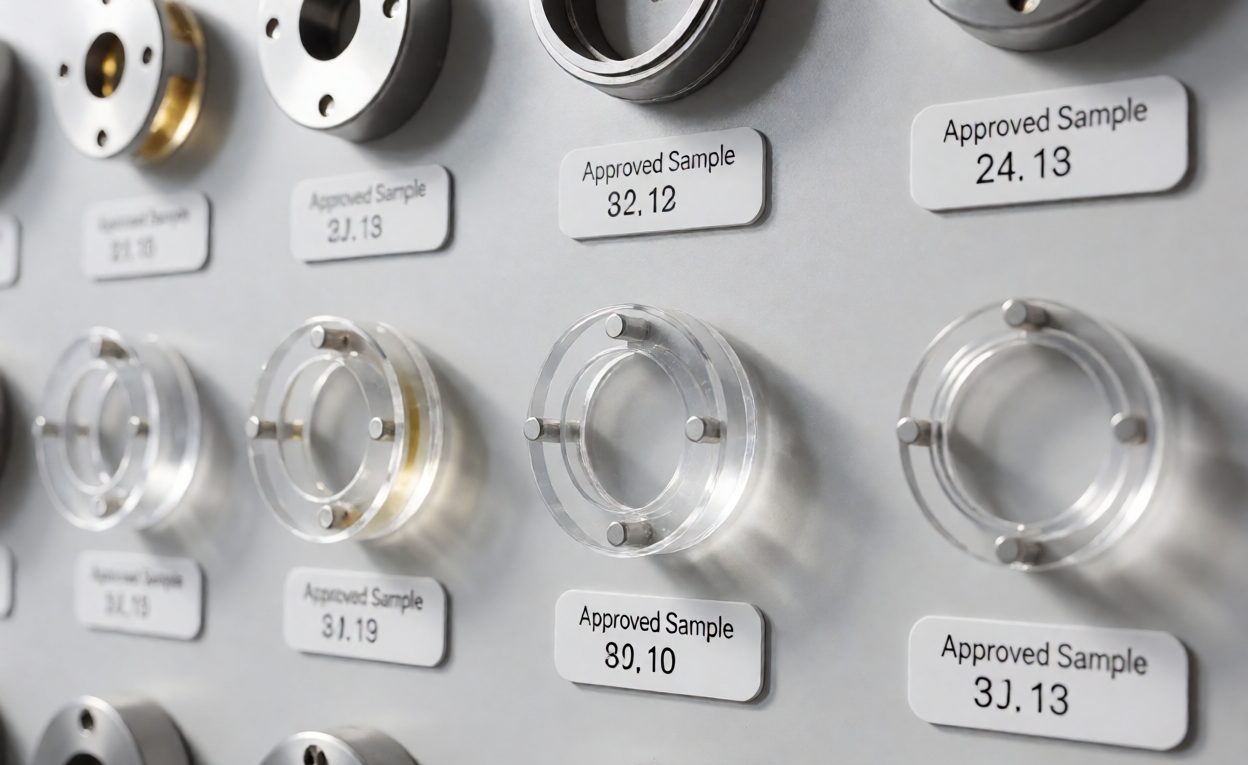
Identify exactly what is being approved
Record the supplier, SKU, finish code, drawing and specification revisions, date, sample source and intended market. State whether the sample is a prototype, pre-production part, first article from production tooling or another type. Do not describe a hand-finished or pilot sample as representative of serial production unless the process and differences have been reviewed.
Check the attributes that affect fit and use
Use the controlled drawing and product specification to define the inspection. Depending on the model, record dimensions and tolerances that affect installation, glass thickness and cutout compatibility, component fit, operation, finish, markings, packaging and instructions. Identify the instrument or method for each measurement. For glass interfaces, use the current model drawing and approved glass-processing specification; do not infer hole locations from a sample alone. See the glass cutout and hole-spacing guide.
For performance or compliance claims, the appearance of one sample is not evidence of test performance. Request a report that names the exact product/configuration, method, criteria, laboratory and date. The hinge durability test guide e finish-test guide explain why scope matters.
Create a controlled approval record
Keep the following in one approval packet:
- Sample identity, supplier, part number, finish, revision, date and source.
- Measurements and inspection results against the identified drawing or specification, including any accepted deviation and its approval.
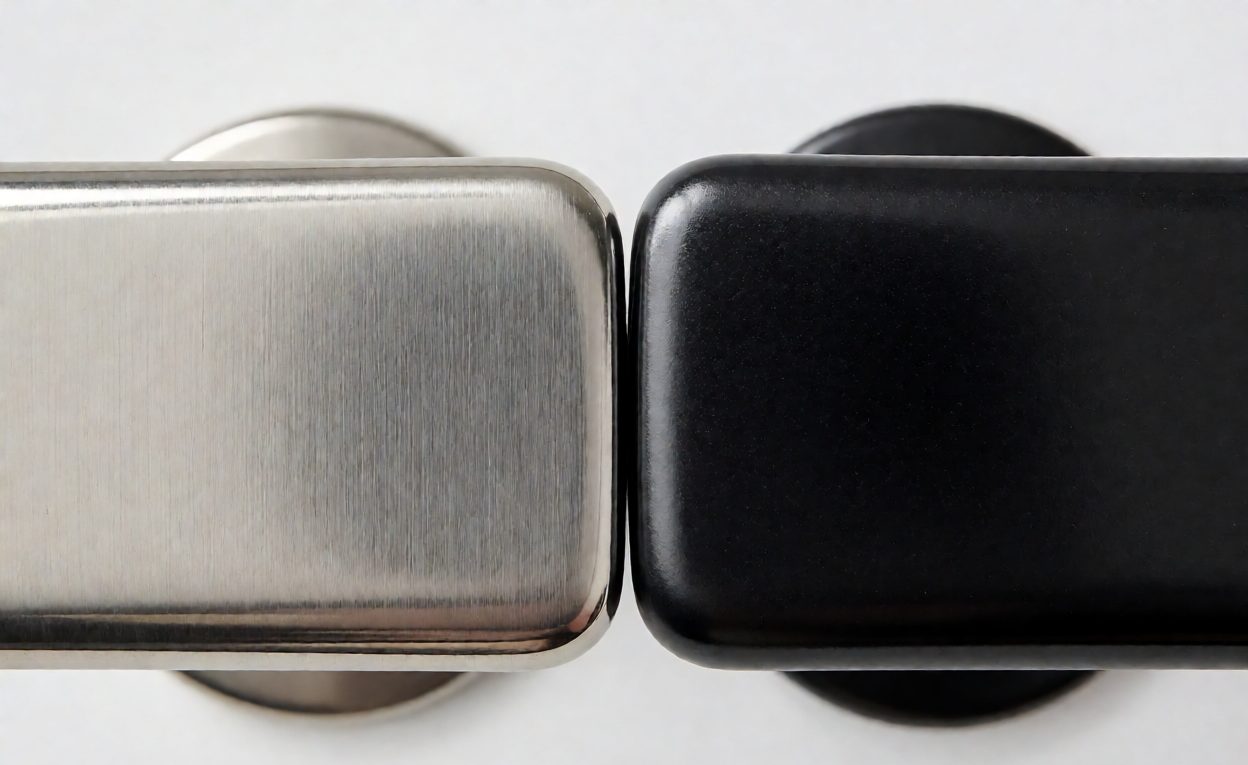
- Photographs of defined sides, interfaces, finish and packaging, with lighting and reference conditions recorded where appearance matters.
- Applicable test reports, material or finish declarations, instructions and label artwork, each tied to the product revision it covers.
- Approval signatures, open actions, reference-sample location, retention owner and date for review.
Choose one source of truth for dimensional limits and defect criteria. State in the approval record what controls if a drawing, written specification, physical sample or purchase order appears inconsistent; resolve discrepancies in writing before production instead of assuming the sample overrides them.
Control changes and production release
Ask the supplier to notify the buyer before changes to material, tooling, process, factory, finishing source, component, packaging or instruction that could affect the approved product. Define which changes require document review, a new sample, repeat testing or formal re-approval. Record the reviewer and decision.
For a new or changed product, agree whether the first article must come from production tooling and the intended production process. Identify the quantity and checks before work starts. Release the balance of the order only under the agreed approval and inspection process. A first-article approval and a lot-sampling plan answer different questions: the former confirms a controlled production reference; the latter evaluates variation in a defined lot. See the AQL inspection-plan checklist.
Do not treat one sample as statistical evidence
A single sample can help approve appearance, interfaces and a documented configuration. It cannot characterize all units in a batch or prove a service life. Set any inspection quantity and acceptance rules from the risk, contract and named sampling plan. If a safety-critical characteristic needs a different control, specify that separately and identify the method and release authority.
Perguntas Frequentes
Is one approved sample enough for a production order?
One sample can establish a visual or dimensional reference for the identified revision, but it does not prove production consistency. Define first-article review, lot inspection and change controls for the order.
What should the approval record include?
Record the SKU and revision, sample source, applicable drawing and specification, measurements, inspection results, photographs, deviations, test evidence, approvers and reference-sample location.
Should I approve the first article from the production run?
For a new or changed product, agree in advance whether a sample from the intended production process is required before the rest of the lot is released. State what will be checked and who may release production.
When does a supplier change require re-approval?
Define triggers in the purchase agreement. Material, tooling, finish source, factory, process, component, packaging or instructions may warrant review depending on their effect on fit, function, appearance or compliance.
Does an approved sample prove durability or corrosion performance?
No. Appearance and fit approval do not establish durability or corrosion performance. Request applicable test reports for the exact model and configuration, and review what the method and results actually cover.