
A shower glass clamp quote should identify the glass interface and panel preparation, not just the clamp finish. This guide centers on dimensions and cut-outs that must be settled before fabrication.
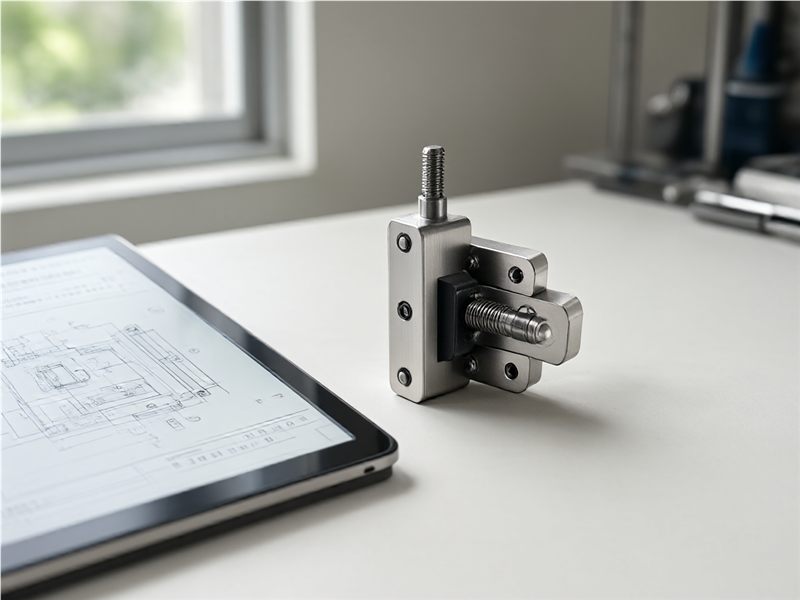
Locate every clamp on the glass drawing
Mark the clamp model and position at each panel edge, wall, floor, or support point. Record the panel ID, glass thickness, edge distance, and hole or cut-out details that apply to that location. Different clamp positions may use different hardware even within one enclosure. Send the controlled drawing rather than a screenshot so the supplier can reference the same dimensions as the glass fabricator.
Verify the clamp opening and interface parts
Ask for a dimensioned section showing the clamp opening, supplied pads or inserts, fasteners, and the surfaces that contact the glass. Confirm which glass range is approved for the exact model and whether the interface changes between options. Keep those details tied to the selected clamp revision; a generic family page does not confirm that a particular insert is included in the quoted set.
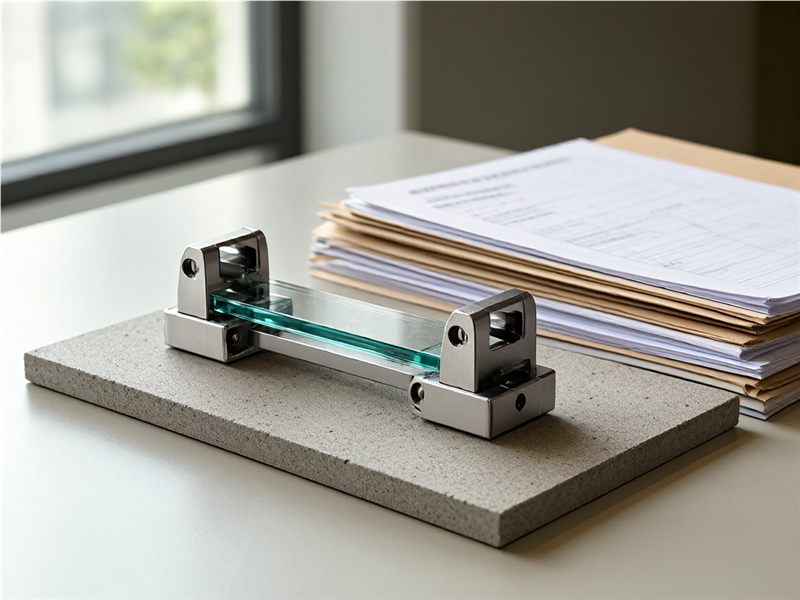
Separate glass preparation from site fixing
The clamp's glass-side geometry and its wall or floor fixing are different checks. Confirm the required hole pattern in the panel drawing, then identify the substrate and anchoring assumption for the building-side connection. Record who approves each interface. If one side remains unresolved, mark the package as pending instead of approving the clamp based only on its visible housing.
Review a sample against the production drawing
Check model identity, orientation, cover fit, fastener access, and finish on a sample. Compare the physical part to the same revision used for glass fabrication. Keep approved photographs or a retained sample with the drawing number. A substitute that looks alike should be reviewed again if its opening, insert, or fastening detail differs.
Glass clamp RFQ questions
What makes two clamp models non-interchangeable?
Their glass opening, inserts, hole pattern, fixing route, or installation orientation may differ even when the housings look alike.
What should be fixed before the glass is ordered?
The clamp model, panel thickness, hole or cut-out schedule, edge position, and the supplier-confirmed interface details.
Связанные ресурсы: Информация по стеклянному крепежу и фурнитуре Zimmor; ANSI Z97.1-2026: Защитные остекляющие материалы, используемые в зданиях.
