Frameless shower doors are a stunning addition to any bathroom, offering a sleek, open, and modern aesthetic. However, the beauty of that heavy glass panel relies entirely on one unsung hero: the hinge. Choosing the right shower door hinge isn’t just about style; it’s about safety, functionality, and ensuring your door swings smoothly for years without sagging.
With so many options on the market, selecting the correct hardware can feel overwhelming. Here is a practical guide to help you understand the different types of shower door hinges and choose the perfect fit for your frameless glass enclosure.
Why the Hinge Matters in Frameless Design
Unlike framed doors that have a metal grid for support, frameless glass doors carry all their weight on the hinges. A frameless glass panel is typically 3/8” to 1/2” thick and can weigh anywhere from 80 to 150 pounds. If you choose the wrong type of hinge or install it incorrectly, the glass can shift, leak, or even shatter.
The golden rule of selection is this: The hinge must be rated for the specific thickness and weight of your glass. Always check the manufacturer’s specifications before purchasing.
The Main Types of Frameless Shower Door Hinges
Here is a breakdown of the most common styles you’ll encounter, each suited for different configurations.
1. The Classic Glass-to-Glass Pivot Hinge
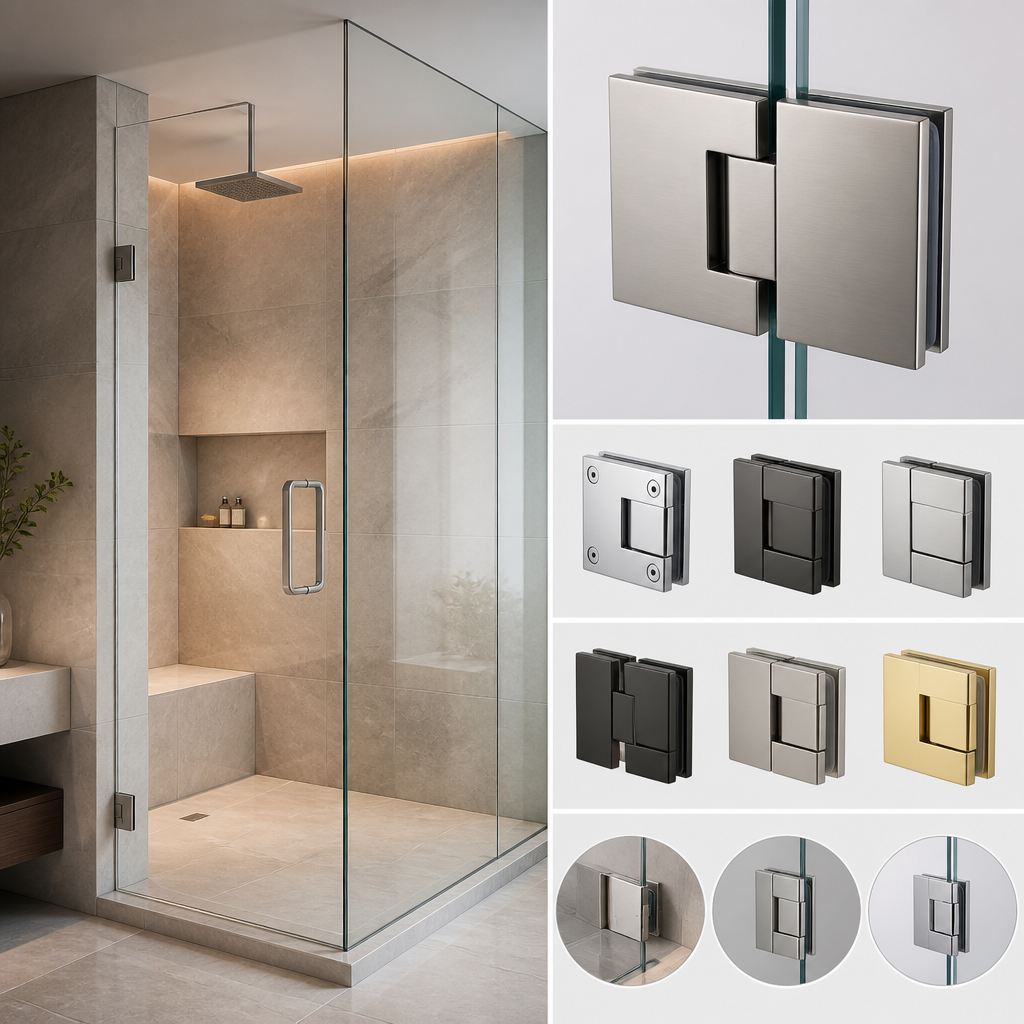
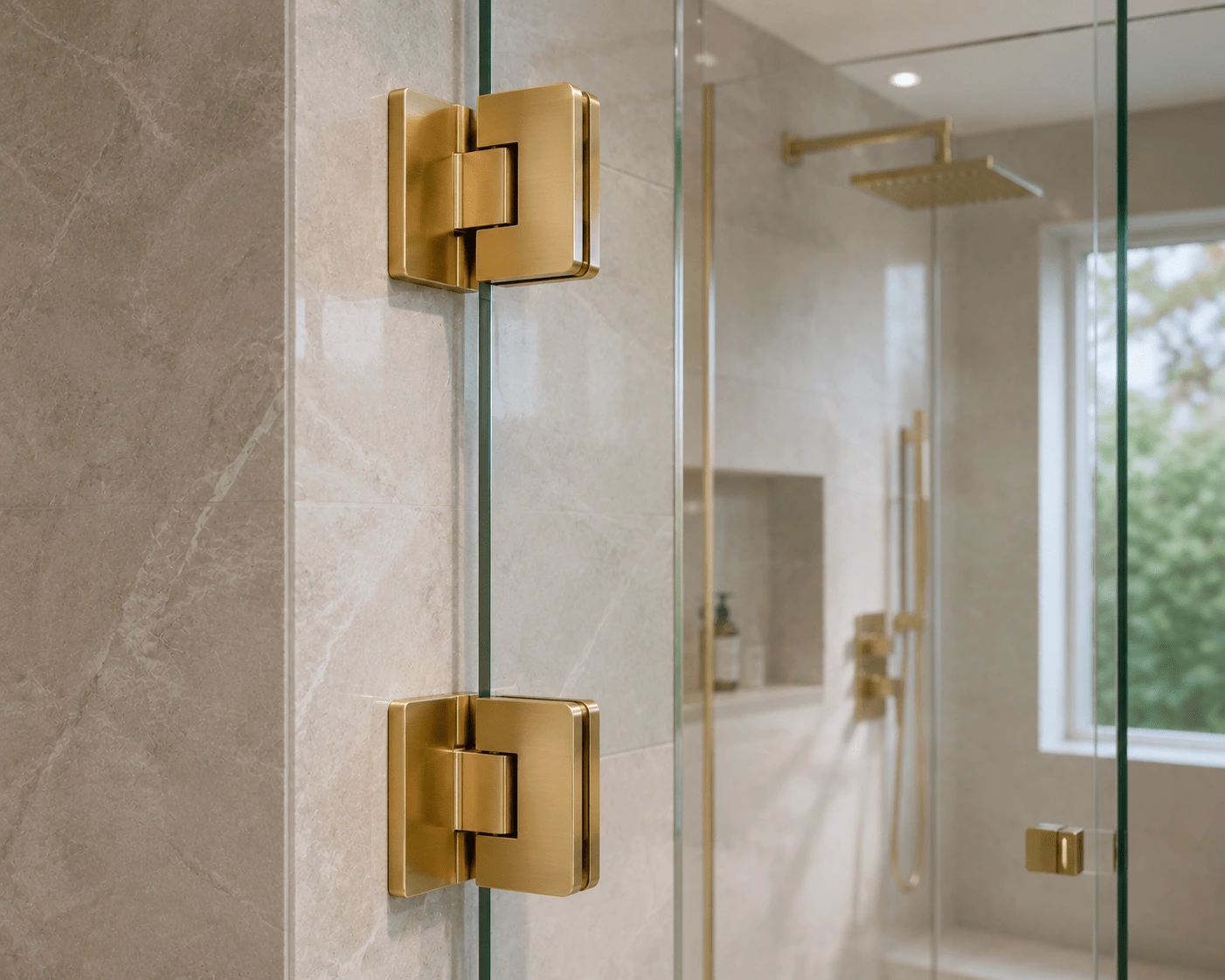
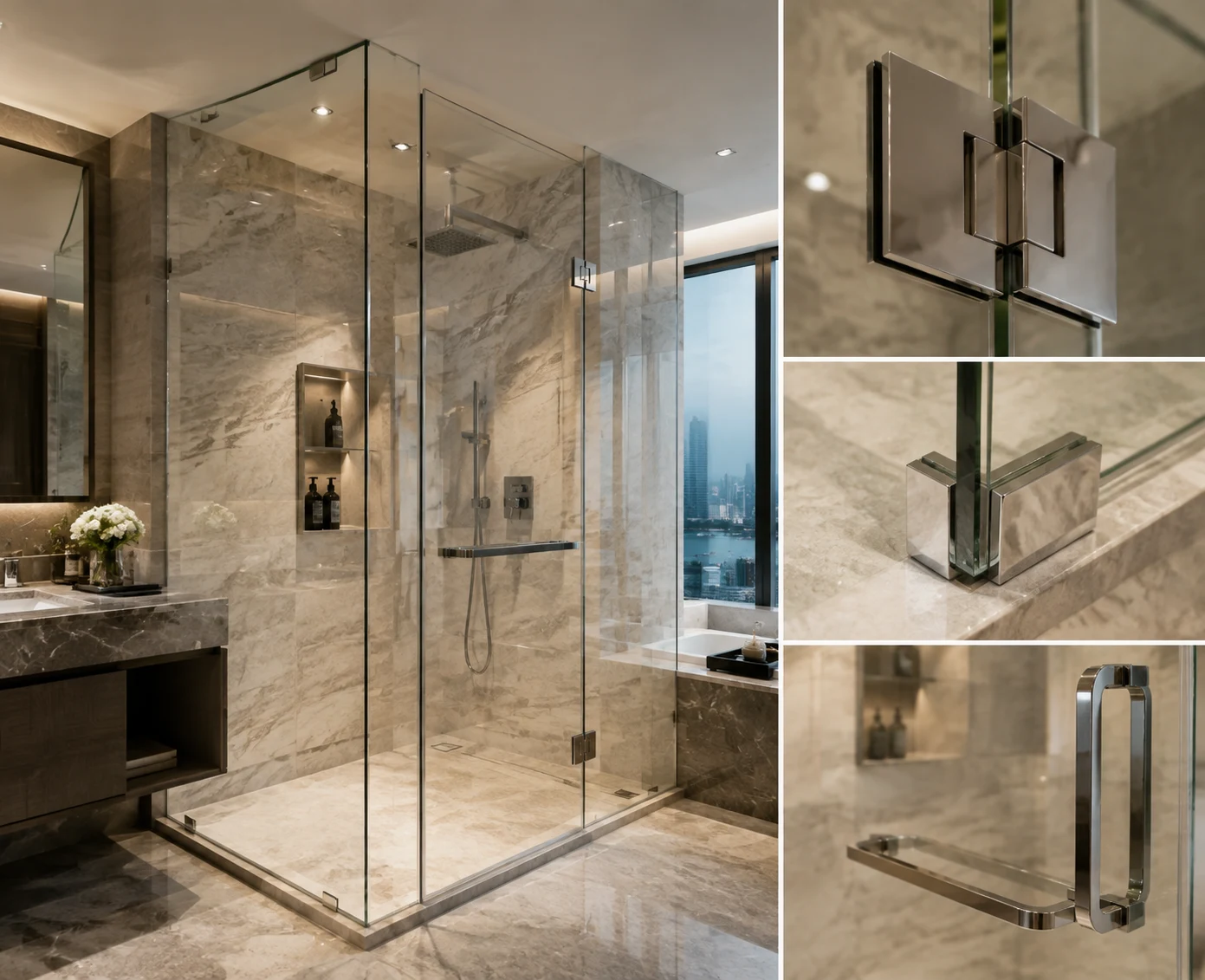
If your shower has a fixed side panel and a swinging door, a glass-to-glass pivot hinge is often the best choice. This type clamps directly onto the fixed glass panel and the swinging door simultaneously. It creates a seamless look because there is no structural wall or stud involved.
- Best for: Showers where the door is adjacent to a fixed glass panel.
- Pros: Minimal hardware visibility, clean aesthetic.
- Cons: Requires precise alignment during installation; the glass panels must be perfectly squared.
2. Wall-Mounted Pivot Hinges
As the name suggests, these hinges attach directly to the tiled wall (or a wooden stud behind it). A shower door pivot hinge of this variety uses top and bottom pivots, allowing the door to swing inward and outward. This is a favorite for many homeowners because it doesn’t require a return panel to support the door.
- Best for: Single door openings where the door is anchored only to one sidewall.
- Pros: Very secure, handles heavy glass well.
- Cons: Requires solid backing in the wall; the pivot point means the door can swing both ways, which might splash water if you aren’t careful.
3. Glass-to-Wall Side-Mount Hinges
These are the most common type of bisagras para puertas de ducha sin marco. Side-mount hinges are surface-mounted onto the wall (or a jamb) and clamp onto the side of the glass door. They usually come in a set of two or three per door. These are typically “in-swing” or “out-swing” only, depending on how the hinge is set.
- Best for: Standard alcove showers with a structural wall on the hinge side.
- Pros: Strong support, easier to install alignment than glass-to-glass.
- Cons: More visible hardware compared to pivot options.
Key Factors to Consider Before Buying
Before you rush to add that glass shower door hinge to your cart, run through this quick checklist to avoid costly mistakes.
Espesor del vidrio
Measure your glass precisely. Most hinges are made for 10mm (3/8”) or 12mm (1/2”) glass. Some cheap hinges are “universal,” but they often lack the grip strength needed for safety. Never guess this measurement.
Upholstered vs. Uncovered Hinges
Modern hinges come with a plastic or rubber bushing (upholstery) inside the clamp. Ensure the hinge has a protective lining to prevent the metal from chipping the glass edge. Uncovered hinges often lead to stress fractures after the door is used over time.
Finish Matching
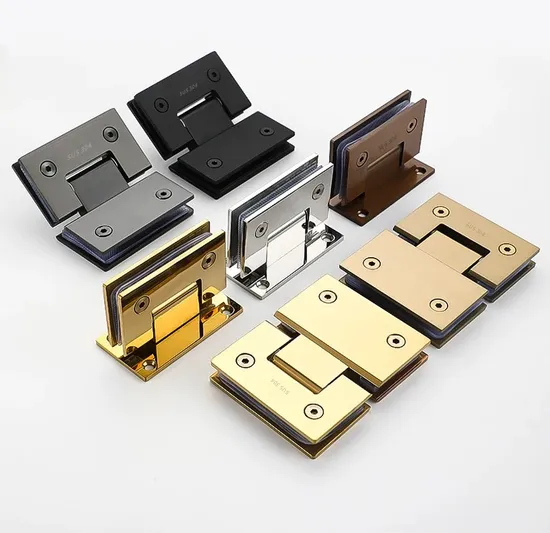
Since the hinges are highly visible, match them to your faucet and showerhead finish. Popular choices include brushed nickel, matte black, and chrome. Choose a finish with a high-quality PVD coating to resist corrosion and water spots over time.
Installation Tips for Longevity
Once you have the right hinges, a few installation tips can make the difference between a solid door and a wobbly one.
- Use the right hardware: Never use drywall anchors for hinges. You must screw into wood studs or use heavy-duty toggle bolts designed for metal framing.
- Level everything: If the floor isn’t level, your door will swing open or closed on its own. You may need shims under the bottom pivot to adjust the plumb line.
- Don’t overtighten: When clamping a glass-to-glass hinge, tighten just enough to grip. Overtightening creates micro-cracks that eventually explode the glass.
Final Thoughts
Elegir el correcto shower door hinge is a balance of engineering and design. For most homeowners, hiring a professional for installation is worth the cost, as glass is unforgiving. However, if you are a DIY expert, focusing on the weight rating and the specific style (pivot vs. side-mount) will ensure your frameless shower looks spectacular and functions flawlessly for decades. Take your time, measure twice, and invest in quality brass or stainless steel hinges for the best results.