
Use this overview to decide what information belongs in a glass shower door seal request. It is a buying map that links seal location, profile family, and replacement evidence to the more focused pages in this cluster.

Sort the seal by location before material
Begin by labeling the edge that needs sealing: bottom, closing edge, wall jamb, or a glass-to-glass meeting point. The location determines the contact surface and the kind of profile to investigate. Then record whether the door swings or slides and how the panels meet. This first step narrows the search before material labels or finish choices are compared.
Capture the measurements that describe fit
Record the panel thickness, edge geometry, installed gap, finished length, and any carrier or insert that holds the seal. Measure at more than one point if the gap varies, and identify the measurement datum. Use a section sketch or retained sample to show orientation. These details create a repeatable request without assuming that a broad seal category defines the exact profile.
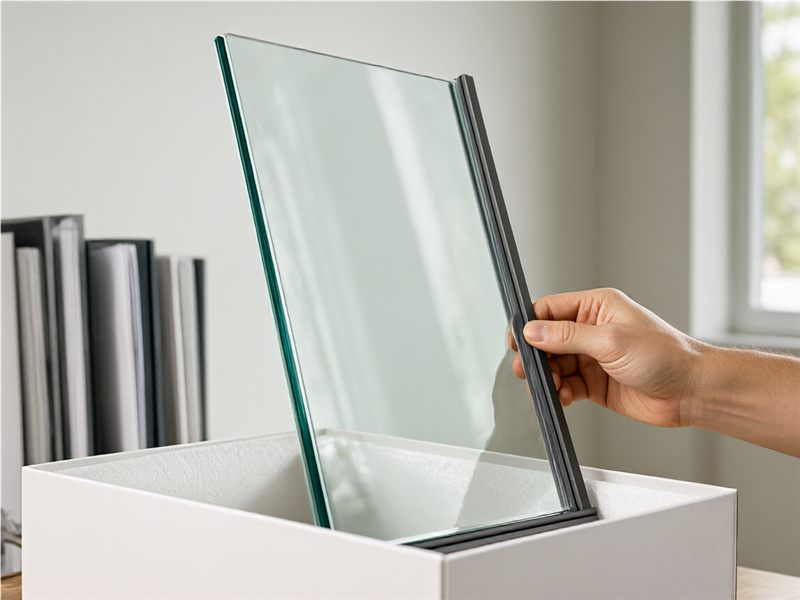
Compare water path and movement as separate checks
A profile can fit the glass and still leave a route for water or obstruct the door. Show where the seal should contact the threshold, wall, or mating panel when closed. Then review the full movement path for drag, folding, or interference. Keep these observations separate in the sample record so an adjustment that improves one check does not hide a failure in another.
Choose a focused specification page
Use a página de selagem magnética para perfis emparelhados e orientação, a página de selagem de PVC para questões de compra específicas do material, e as páginas de varredura para a geometria da borda inferior e do limiar. Vincule o desenho do perfil selecionado e o ID de reposição ao cronograma de vedação. Esta página deve permanecer como um guia de roteamento de alto nível; a aprovação específica do modelo pertence ao detalhe de vedação focado.
Perguntas sobre o resumo da seleção de vedantes
O que deve ser enviado para um orçamento inicial de vedante?
Local do vedante, medidas do vidro e da folga, foto ou amostra da seção transversal, comprimento acabado, direção da água, quantidade e qualquer número de modelo conhecido.
Um único tipo de vedante pode cobrir todas as bordas da vedação?
Normalmente, cada borda requer sua própria revisão de encaixe; especifique cada local em vez de tratar todos os vedantes como uma única tira intercambiável.
Recursos relacionados: Informações sobre ferragens e acessórios de vidro Zimmor; ANSI Z97.1-2026: Materiais de vidro de segurança usados em edifícios.
