
Use this overview to decide what information belongs in a glass shower door seal request. It is a buying map that links seal location, profile family, and replacement evidence to the more focused pages in this cluster.

Sort the seal by location before material
Begin by labeling the edge that needs sealing: bottom, closing edge, wall jamb, or a glass-to-glass meeting point. The location determines the contact surface and the kind of profile to investigate. Then record whether the door swings or slides and how the panels meet. This first step narrows the search before material labels or finish choices are compared.
Capture the measurements that describe fit
Record the panel thickness, edge geometry, installed gap, finished length, and any carrier or insert that holds the seal. Measure at more than one point if the gap varies, and identify the measurement datum. Use a section sketch or retained sample to show orientation. These details create a repeatable request without assuming that a broad seal category defines the exact profile.
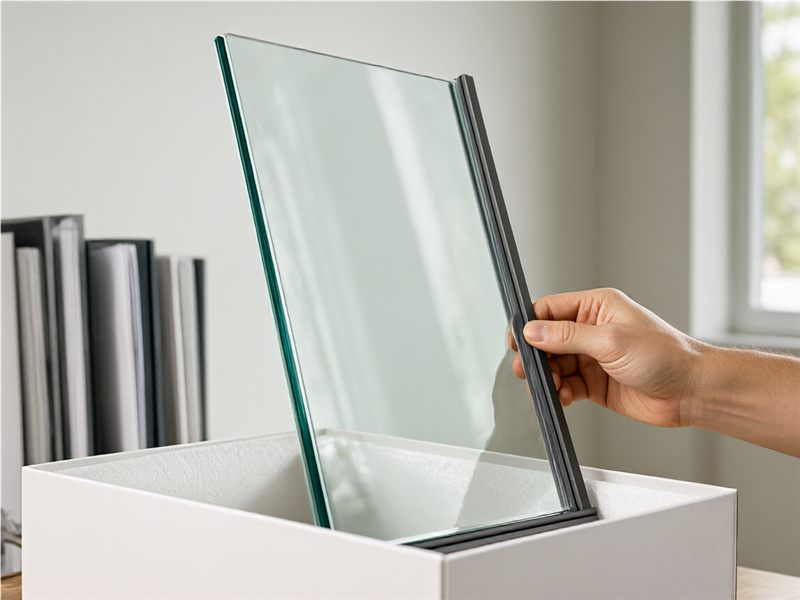
Compare water path and movement as separate checks
A profile can fit the glass and still leave a route for water or obstruct the door. Show where the seal should contact the threshold, wall, or mating panel when closed. Then review the full movement path for drag, folding, or interference. Keep these observations separate in the sample record so an adjustment that improves one check does not hide a failure in another.
Choose a focused specification page
Use the magnetic seal page for paired profiles and orientation, the PVC seal page for material-specific purchasing questions, and the sweep pages for lower-edge and threshold geometry. Link the selected profile drawing and replacement ID to the enclosure schedule. This page should remain a high-level routing guide; the model-specific approval belongs with the focused seal detail.
Seal selection overview questions
What should be sent for an initial seal quote?
Seal location, glass and gap measurements, cross-section photo or sample, finished length, water direction, quantity, and any known model number.
Can one seal type cover every enclosure edge?
Usually each edge needs its own fit review; specify each location rather than treating all seals as one interchangeable strip.
Related resources: Zimmor glass hardware and fitting information; ANSI Z97.1-2026: Safety glazing materials used in buildings.
