

Безрамные душевые двери опираются на саму стеклянную панель для обеспечения прочности, так как металлической рамы, которая могла бы скрыть узлы крепления, практически нет. Указанная вами толщина определяет максимально допустимый размер двери, требуемую грузоподъемность петель и общую безопасность конструкции. В данном руководстве приведены фактические параметры для закаленного стекла толщиной 8 мм, 10 мм и 12 мм.
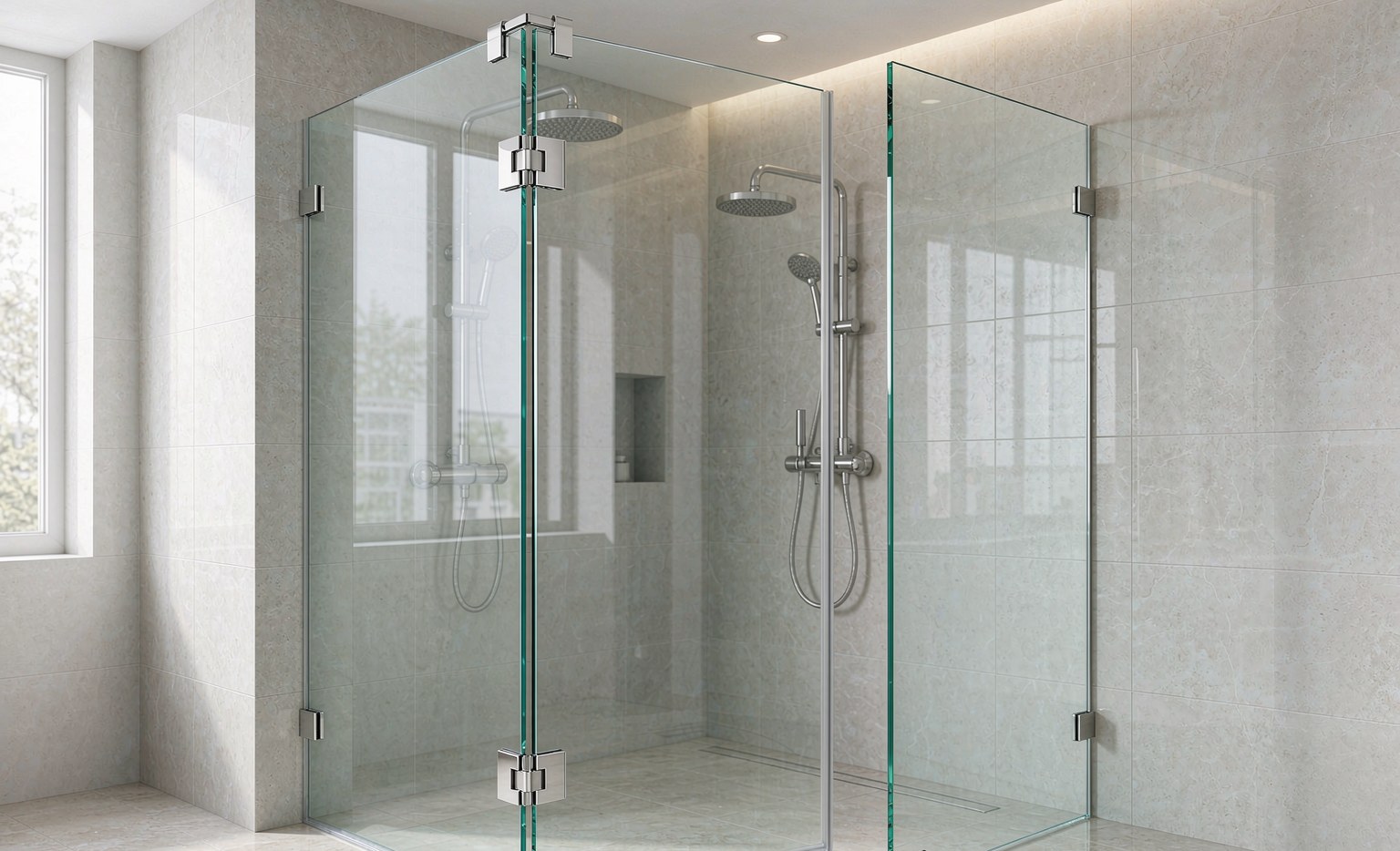
| Толщина | Типичное применение | Максимальная высота двери | Категория по нагрузке петель |
|---|---|---|---|
| 8 мм | Малые бытовые секции | ~2000 мм | Стандартная пара |
| 10 мм | Стандартные безрамные двери | ~2200 мм | Пара для стекла высокой плотности |
| 12 мм (1/2″) | Крупные / тяжелые двери | ~2400 мм и более | Стекло высокой плотности, усиленная конструкция |
Стекло должно быть закаленным, предназначенным для обеспечения безопасности (например, стандарт EN 12150 в ЕС, ANSI Z97.1 в США) с полированными кромками. Указанные значения являются типовыми рекомендациями; обязательно согласуйте их с поставщиком стекла и местными строительными нормами.
Почему закаленное, а не отожженное
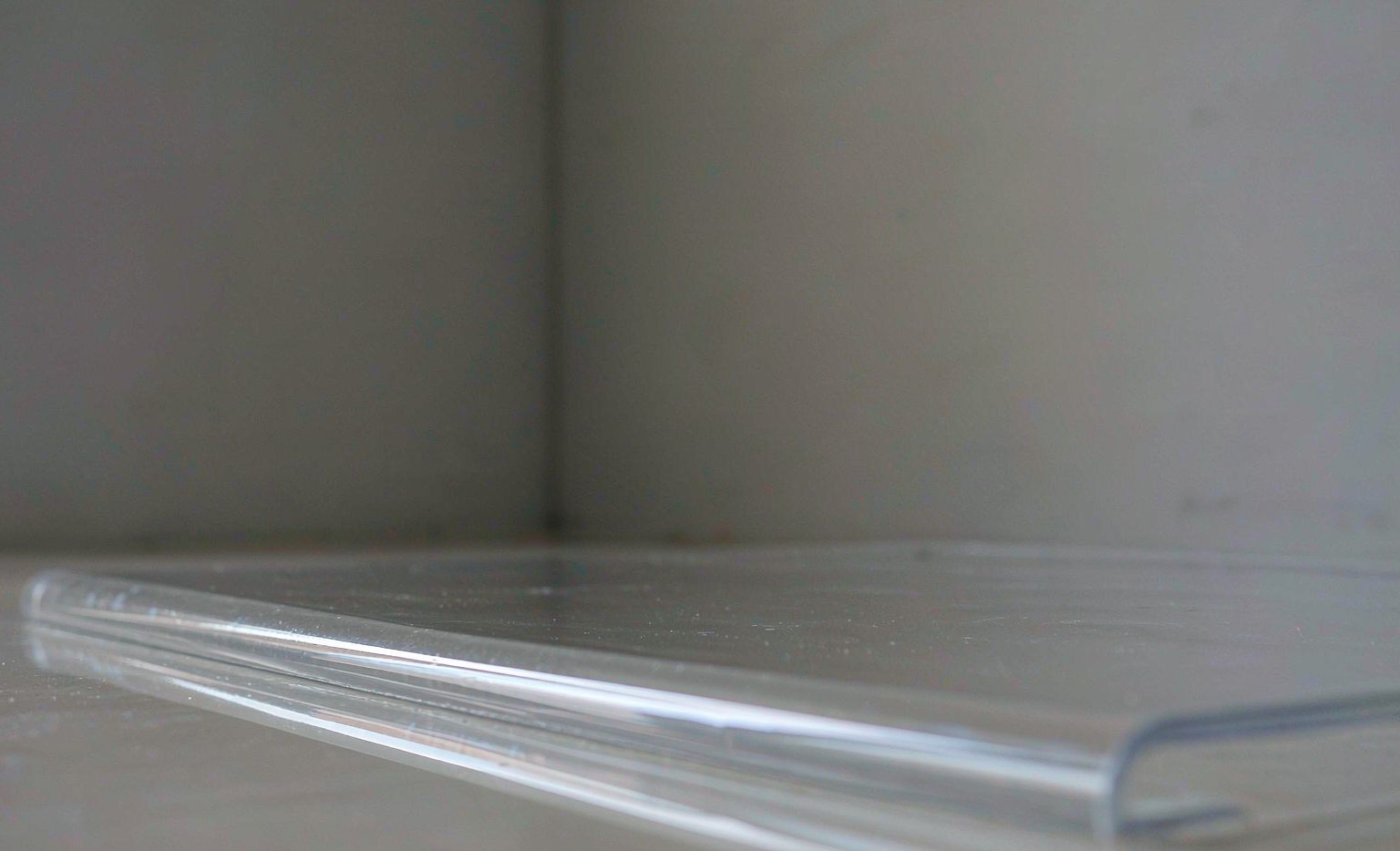
Закалка предполагает нагрев стекла с последующим быстрым охлаждением, что создает поверхностный слой со сжатым напряжением, делающий материал в несколько раз прочнее отожженного стекла. При этом при разрушении он распадается на мелкие тупоугольные кубики вместо осколков. Душевая дверь — критически важная с точки зрения безопасности поверхность, находящаяся рядом с человеком; использование закаленного стекла не является опциональным. Указывайте в спецификации “полностью закаленное” и проверяйте наличие маркировочного этч-знака.
Толщина и размер двери
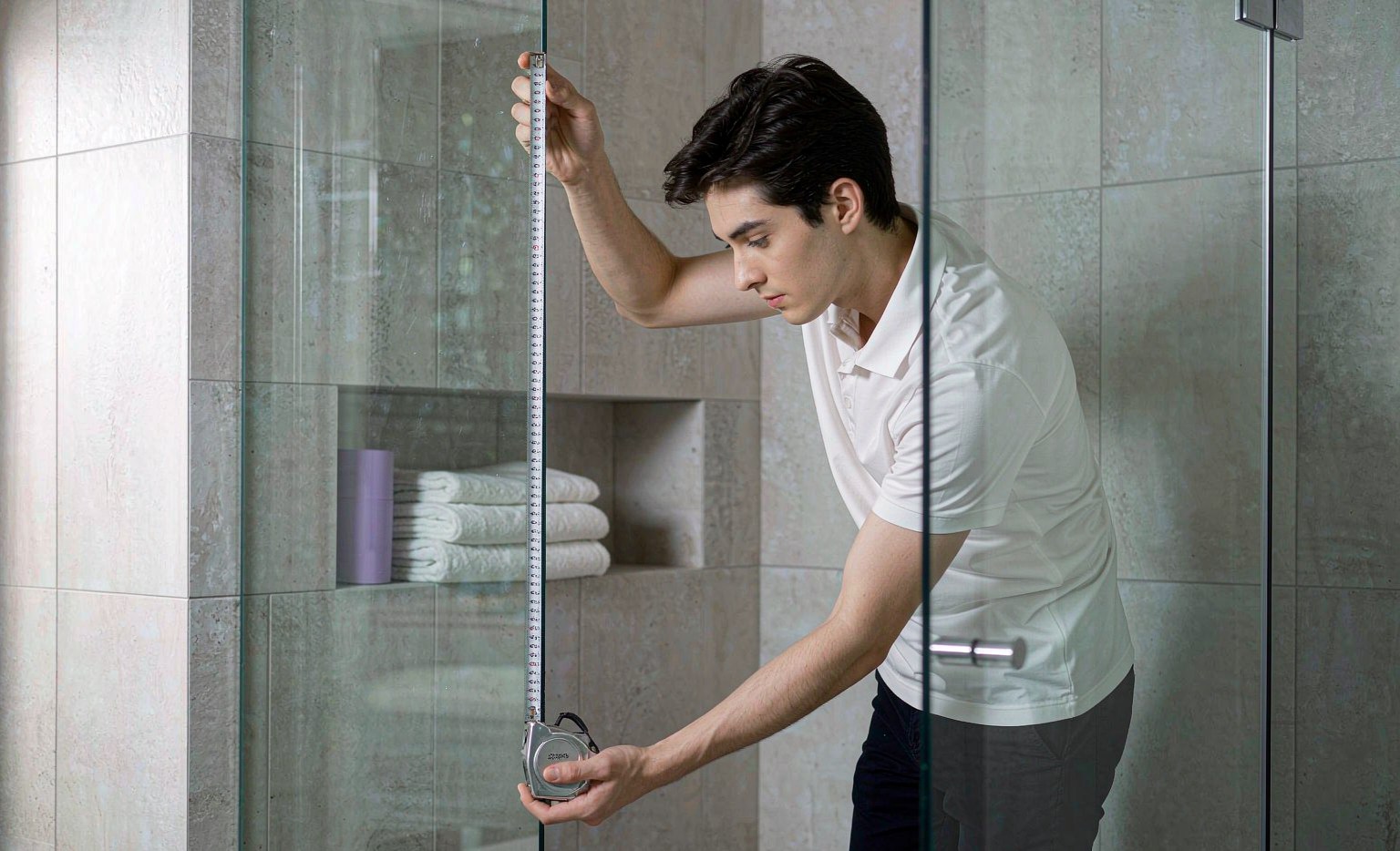
Более толстое стекло лучше сопротивляется прогибу в более высоких дверях, поэтому для двери высотой 2200 мм требуется толщина 10 мм или больше, а для очень крупных секций — 12 мм. Если стекло слишком тонкое для данной высоты, дверь заметно прогибается, а петли работают с повышенной нагрузкой; если оно слишком толстое, вы переплачиваете за лишнюю массу и фурнитуру. Подбирайте толщину с учетом высоты и ширины двери, а не исходя из привычек.
Петли должны соответствовать стеклу
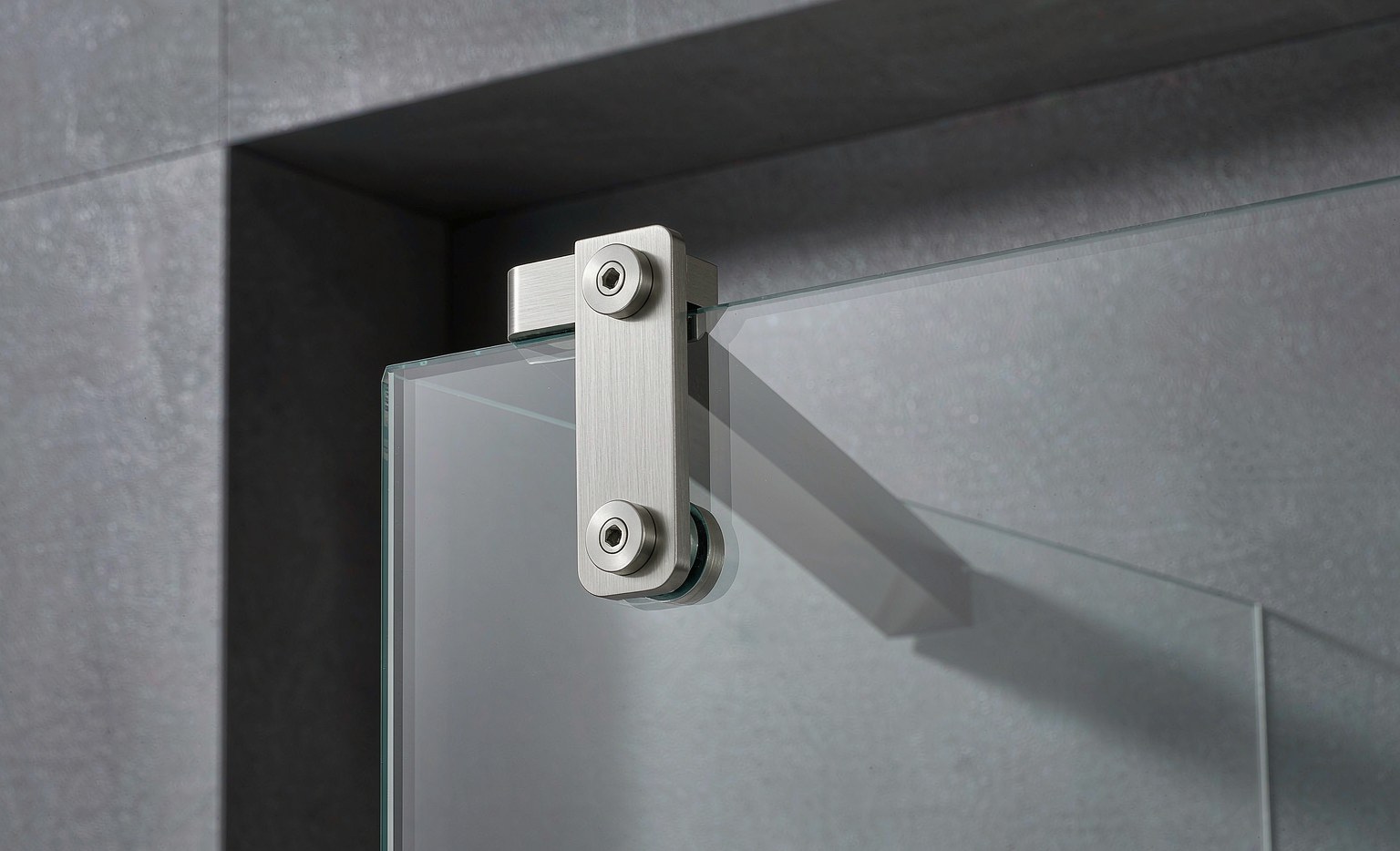
Петли с рейтингом для 8 мм не могут безопасно удержать панель толщиной 12 мм, а допустимая нагрузка на парные петли пропорциональна толщине стекла и площади двери. Петли для стекла высокой плотности (для 1/2″ / 12 мм) используют другой механизм зажима и часто оснащены усиленным опорным узлом. Указание в спецификации петель под точную толщину стекла предотвращает смещение или провисание двери — самая частая претензия к безрамным дверям возникает именно из-за несоответствия на этом этапе.
Фурнитура и покрытие
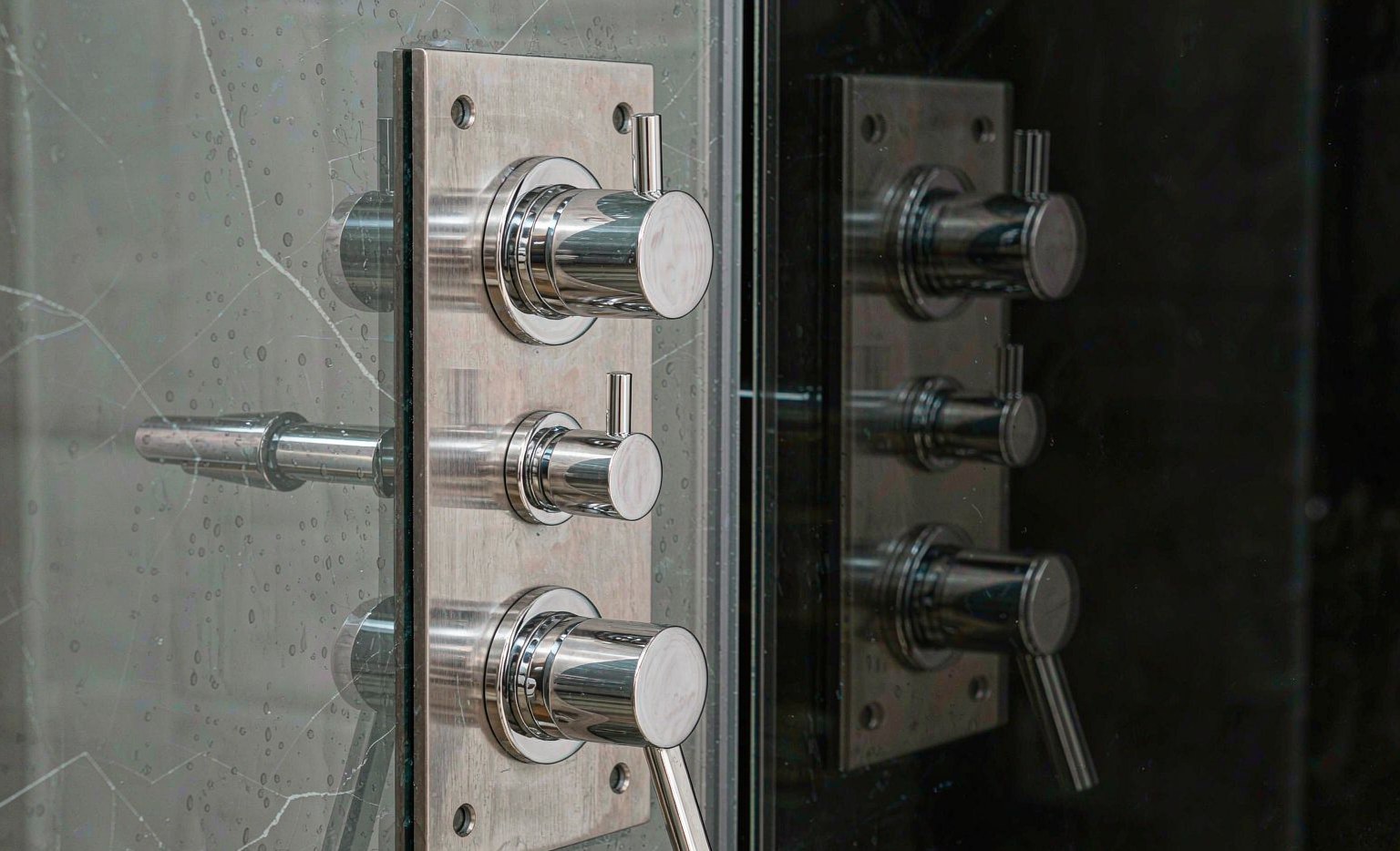
Зажимы, кронштейны и ручки обычно изготовлены из латуни или нержавеющей стали с PVD-покрытием или электролитическим гальванопокрытием. Толщина стекла определяет зазор в зажиме, поэтому фурнитуру подбирают под стекло, а не наоборот. Закупка стекла и фурнитуры в рамках единой спецификации позволяет избежать ситуации на объекте, когда зажимы просто не закрываются.
Защитная пленка и ламинирование
Закаленное стекло распадается на мелкие кубики при разрушении, что делает его стандартным выбором для душевых дверей. В местах, где панель должна сохранять целостность после разбивания (например, высокая стационарная боковая секция), используется ламинированное стекло с пластиковым промежуточным слоем, которое удерживает осколки на месте. В некоторых установках на закаленные панели дополнительно наносится защитная пленка для удержания осколков, однако сама панель должна оставаться закаленной.
Допуски при установке
Безрамное стекло не прощает отклонений: стены должны быть строго перпендикулярны, а пол идеально ровен, так как нет рамки, которая скрыла бы зазоры. Установщики сначала проверяют вертикальность, горизонтальность и перпендикулярность, а затем планируют расположение петель и зажимов исходя из реальных параметров проема. Силикон и уплотнители компенсируют небольшие отклонения, но если стена сильно искажена, может потребоваться изготовленная на заказ секция или возвращающая панель, чтобы вернуть проему правильную геометрию.
Обработка кромок и вырезы
Термостойкое стекло не подвергается резке или сверлению после закалки, поэтому каждая кромка, вырез для петли и отверстие для ручки должны быть указаны до термической обработки. Кромки шлифуются для безопасности и эстетического вида, а вырезы должны иметь достаточный запас материала вокруг них, чтобы избежать создания концентрации напряжений, способной привести к разрушению панели. Изменения после закалки означают необходимость изготовления новой детали, поэтому чертеж должен быть окончательно утверждён до подачи заказа.
Заказ и срок изготовления
Более толстое стекло тяжелее и может потребовать усиленного крепежа, более длительного срока изготовления и осторожной транспортировки на объекте. Оформляйте заказ у поставщика, который обеспечивает закалку и сертификацию панели и может подобрать соответствующий крепеж, чтобы зазоры зажимов и вырезы совпали. Замер готового проёма — а не черновой рамы — это ключевой этап, предотвращающий дорогостоящий повторный заказ.
Стекло по типу применения
Толщина выбирается исходя из роли и размеров двери, а не по единому стандарту по умолчанию:
| Применение | Типовая толщина |
|---|---|
| Маленькая фиксированная боковая панель | 8 мм |
| Стандартная распашная дверь | 10 мм |
| Крупная / тяжёлая дверь | 12 мм |
| Кладовая для сауны / парной | 10 – 12 мм |
| Ламинированная защитная панель | 10 мм + межслойный пакет |
Закупка стекла и фурнитуры? Наш услуга точной ЧПУ-обработки определяет допуски, от которых зависят толщина стекла и посадка хомутов, а также процесс контроля качества обеспечивает стабильность экспортных партий.