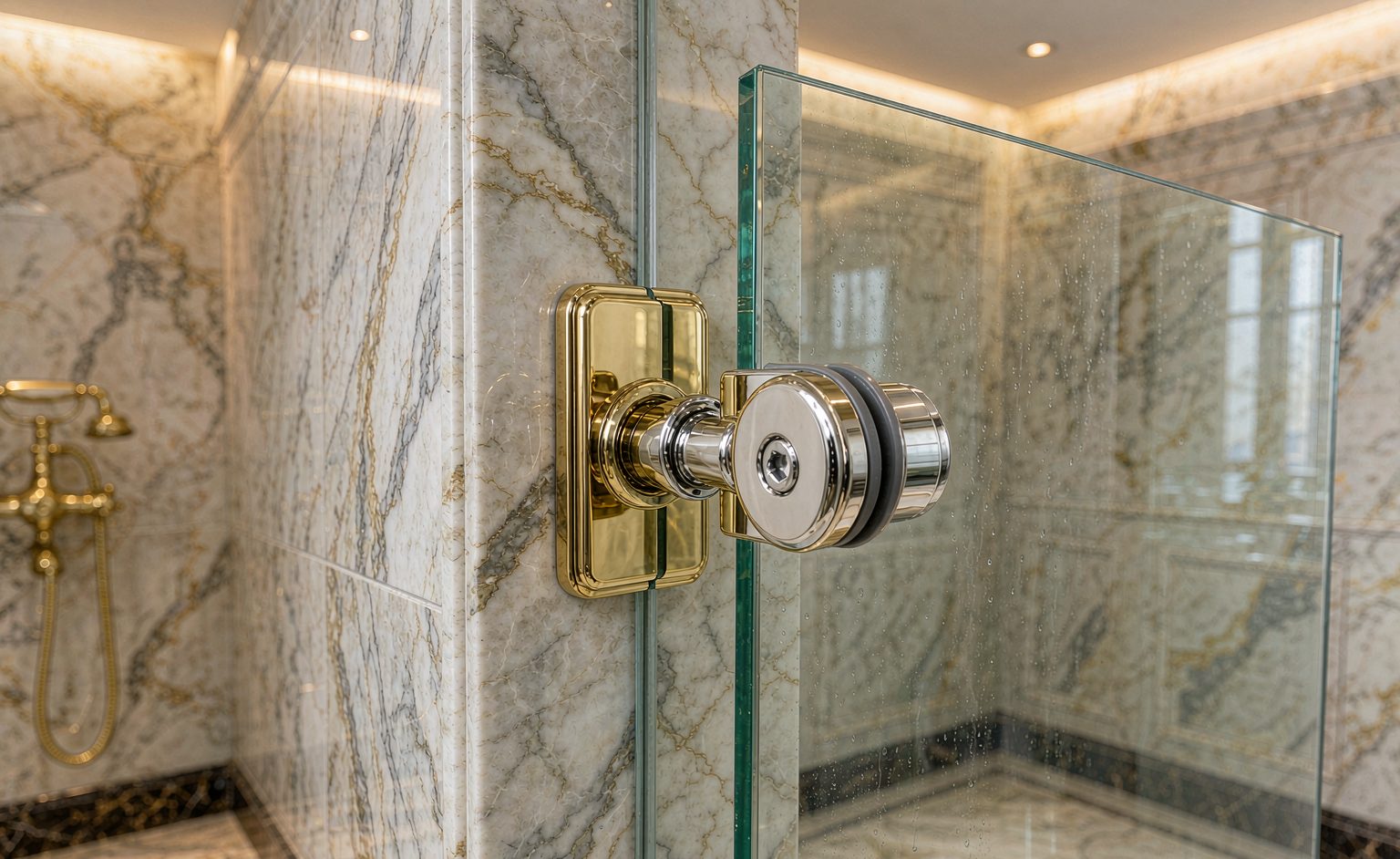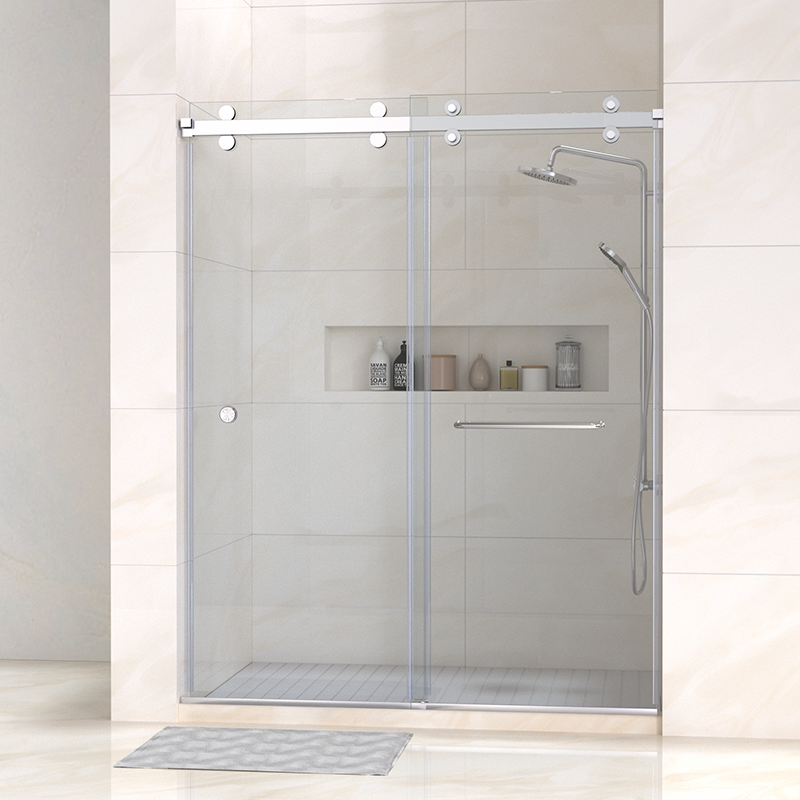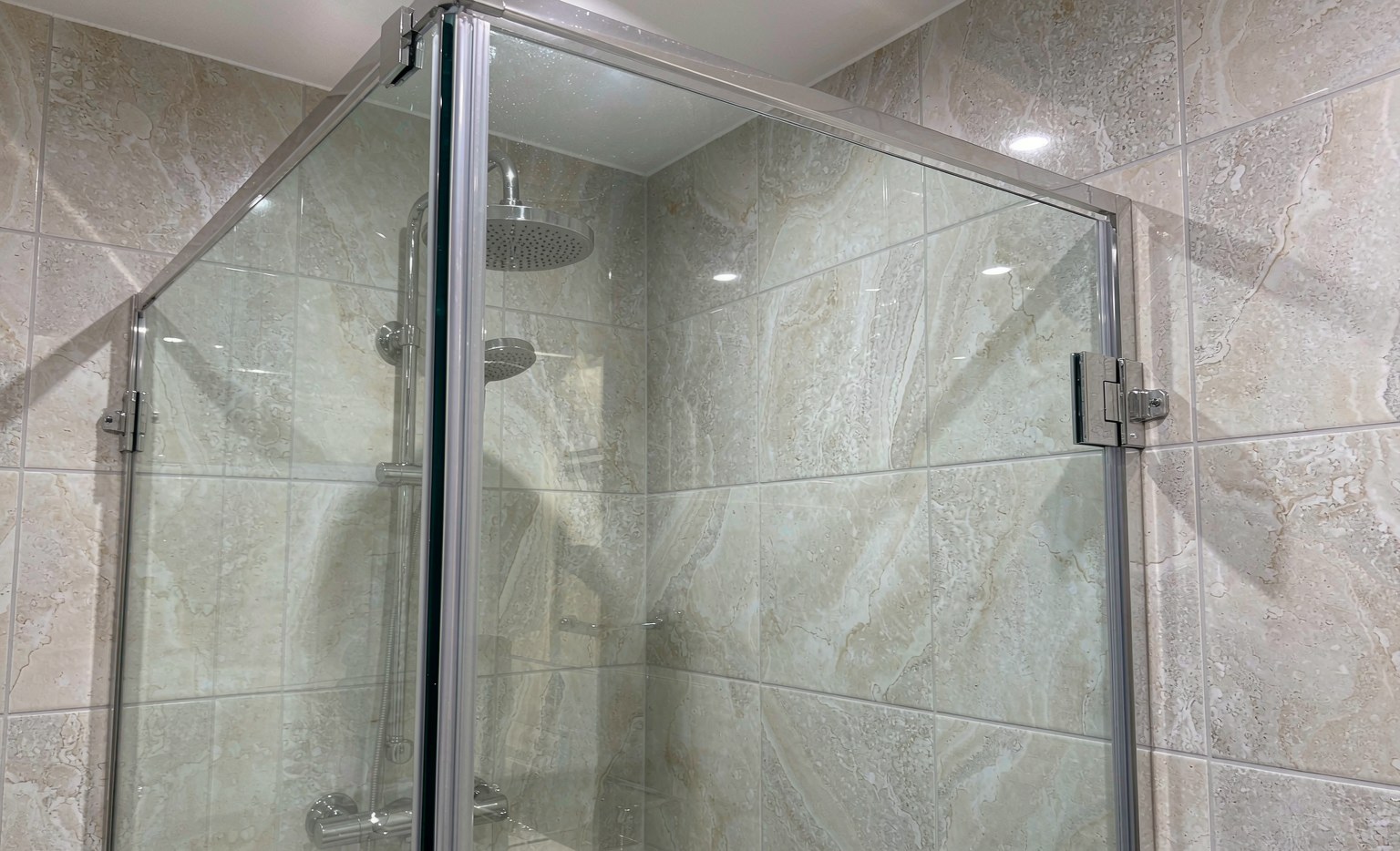

Molas de vidro para box de chuveiro são os fixadores que sustentam um painel de vidro fixo — o painel estacionário, painel de retorno ou painel lateral de um gabinete sem moldura — contra uma parede ou contra outro painel de vidro. A escolha do item adequado depende de uma lista curta de variáveis: a espessura e o tamanho do slot do vidro, o ângulo da junta, a carga que o painel suporta, a superfície à qual a mola é fixada, o material e o acabamento da mola, e como o fixador combina com o restante do hardware no gabinete.
As seções abaixo explicam o que cada tipo de mola faz, onde é utilizada e como especificá-la sem criar problemas futuros durante a instalação.
O que as molas de vidro para chuveiro fazem em um gabinete sem moldura
Em um chuveiro sem moldura ou semimoldurado, o próprio vidro faz parte da estrutura. As dobradiças suportam a porta móvel, as molas sustentam os painéis que não se movem e as barras de suporte ou estabilizador tornam os painéis altos mais rígidos. Uma mola de vidro para chuveiro transfere o peso do vidro, e qualquer força lateral atuando sobre ele, para a parede ou para um painel adjacente — e também define a posição do painel.
Como não há uma moldura para esconder as tolerâncias, o alinhamento das molas tem um efeito direto na instalação final: a altura do painel, o tamanho da folga entre os painéis e a uniformidade com que a porta fecha. É por isso que as molas geralmente são selecionadas junto com as dobradiças, vedações e barras de suporte, em vez de serem uma compra isolada.
Molas, grampos, dobradiças e barras de suporte: esclarecendo a terminologia
“mola de vidro para chuveiro” é uma descrição de categoria, não um nome de produto único. Em catálogos e em desenhos técnicos, a mesma família de fixadores pode aparecer como grampos de vidro, fixadores de vidro-para-parede, molas de painel, molas de fixação ou molas de canto. Os fornecedores não usam esses termos todos da mesma maneira, portanto, vale a pena confirmar o que é pretendido antes de fazer o pedido.
Como uma distinção prática:
- Molas e grampos sustentam um painel fixo em sua posição.
- Dobradiças suportam e giram a porta móvel.
- Barras de suporte e estabilizador span entre painéis, ou entre um painel e uma parede, para limitar o movimento em montagens altas ou largas.
- U-canais e cabeceiras suportam painéis fixos ao longo de uma borda em alguns sistemas e podem substituir molas em certos projetos.
Tipos de molas de vidro para chuveiro
Molas de parede-para-vidro
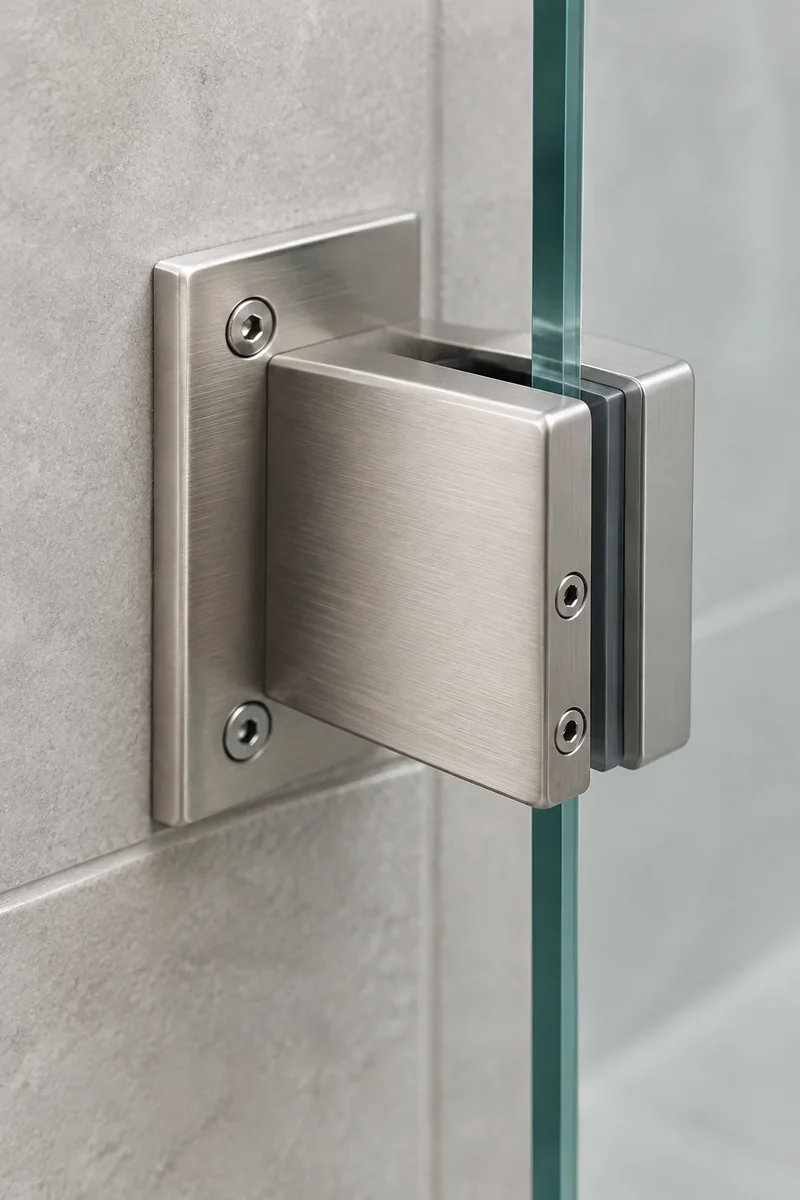
Estas fixam um painel de vidro a uma parede. O lado da parede é parafusado à base — azulejos sobre um revestimento adequado, alvenaria ou montante reforçado — e o lado do vidro sustenta o painel em um slot com vedação ou através de um furo perfurado. São comumente usadas onde um painel fixo encontra uma parede na extremidade de um gabinete, no canto de uma instalação de passagem e onde um painel de retorno volta para uma parede.
As configurações mais comuns são 90° (painel perpendicular à parede) e 180° (painel correndo plano contra a face da parede). As molas de parede-para-vidro também são oferecidas como fixadores de um lado ou de dois lados; a escolha depende de se o grampo deve ser amplamente escondido atrás do painel ou visível do lado do chuveiro.
Molas de vidro-para-vidro
Os suportes vidro-vidro unem dois painéis onde não há parede na junção. Eles são usados para cercas de canto formadas por dois painéis fixos, para painéis de retorno que se encontram com um painel fixo, e para layouts em L e em escada. As duas versões comuns são de 90° (painéis se encontram em ângulo reto) e de 180° (painéis se encontram em linha).
Suportes de ângulo ajustável
Nem toda cerca se encaixa em 90° ou 180°. Suportes ajustáveis ou multângulos permitem que o ângulo seja definido durante a instalação, o que é útil para quartos fora de esquadro, paredes inclinadas e layouts não padrão. Eles tipicamente contêm mais componentes do que os suportes de ângulo fixo, portanto, o alinhamento e o aperto exigem mais cuidado no local. Para juntas de ângulo reto padrão e alinhadas, um suporte fixo é mais simples e geralmente mais rígido.
Suportes de sustentação e estabilização
Alguns acessórios existem principalmente para impedir que uma borda livre se mova: um pequeno suporte da parede para a parte superior de um painel, ou um suporte usado junto com uma barra de estabilizador através do topo da cerca. Estes são importantes quando um painel é alto, quando uma porta é articulada de um painel em vez de uma parede, ou quando a cerca é larga. Assim como com outros suportes, o número e a posição apropriados dependem das dimensões do painel e dos dados de carga do fornecedor para aquele acessório específico.
Projetos de encaixe em ranhura e montados em furo
Existem duas formas amplas pelas quais um suporte segura o vidro:
- Encaixe em ranhura: a borda do vidro assenta em uma ranhura U com vedaço e é mantida por parafusos de ajuste. Não é necessário furo no painel.
- Montagem em furo: o painel é perfurado ou entalhado para que a placa de parede, o rebite ou o parafuso de fixação passe através do vidro. Esta abordagem é usada em muitas aplicações parede-vidro onde o grampo precisa de se encaixar compactamente ou a borda do vidro está totalmente exposta.
A consequência importante é o cronograma. O vidro flutuado pode ser perfurado, mas o vidro temperado não pode ser cortado ou perfurado após o temperamento. Se o suporte requer um furo, esse furo tem de estar mostrado no desenho do fabricante do vidro e perfurado antes de o painel ser temperado. Confirme o requisito de furo, diâmetro e posição do suporte antes de liberar o vidro para produção.
Comparando os tipos principais
| Tipo de suporte | O que conecta | Aplicação típica | Verificação principal antes de encomendar |
|---|---|---|---|
| Parede-vidro, 90° | Painel de vidro a uma parede perpendicular | Cercas de canto e de passagem | Fixação na parede e se o vidro precisa de furo |
| Parede-vidro, 180° | Painel de vidro a uma face da parede | Painéis correndo paralelos a uma parede | Deslocamento do painel e espessura total do grampo |
| Vidro-vidro, 90° | Dois painéis em ângulo reto | Cercas de canto sem parede na junção | Tamanho da ranhura e conjunto de vedaço para a espessura do vidro |
| Vidro-vidro, 180° | Dois painéis em linha | Corridas de painéis fixos largos | Alinhamento das bordas dos dois painéis |
| Ângulo ajustável | Dois painéis, ou painel na parede, em um ângulo definido | Quartos fora do quadrado e paredes com ângulo | Faixa de ângulo e como o ângulo é bloqueado |
| Suporte / estabilização | Borda livre de um painel na parede ou em uma barra | Painéis altos e painéis com dobradiça de porta | Dados de posição e carga do fornecedor |
Onde os suportes de vidro de box são usados
As mesmas famílias de suportes aparecem na maioria dos formatos de box de vidro sem moldura:
- Cabines de chuveiro residenciais: disposições de canto e nicho onde um painel fixo encontra uma parede ou um painel de retorno.
- Chuveiros de acesso aberto e áreas molhadas: um único painel fixo estabilizado na parede e na borda livre.
- Telas de banho sobre uma banheira: painéis fixos combinados com uma seção articulada ou pivotante.
- Banheiros de hotéis e comerciais: cabines padronizadas repetidas em muitos quartos, onde dimensões consistentes e acabamentos são tão importantes quanto a instalação individual.
- Divisórias de vidro em áreas molhadas: onde a linha do painel do chuveiro continua em uma divisória ou tela fixa.
Em projetos com quartos repetidos, os suportes geralmente são especificados uma vez e então repetidos no edifício. Isso torna a precisão dos desenhos e a consistência do acabamento os dois atributos de fornecedor mais importantes, porque painéis de reserva e pedidos posteriores precisam corresponder ao hardware original. Veja como o fornecimento de hardware de chuveiro pronto para projeto para hotéis e resorts é estruturado para esse tipo de especificação repetida.
Como escolher o suporte de vidro de chuveiro certo
Confirme a espessura do vidro e o tamanho do encaixe
Os suportes de vidro de chuveiro são fabricados para espessuras específicas de vidro, mais comumente 8 mm, 10 mm e 12 mm, e geralmente são fornecidos com vedações adequadas. Verifique a faixa de encaixe declarada do suporte contra a espessura real do vidro: um grampo que for largo demais não será confiável, e um que for estreito demais não fechará sobre o vidro. Se um projeto usar uma mistura de espessuras, certifique-se de que cada suporte esteja compatível com o painel que ele segura.
Iguale o ângulo da junta e a geometria da cabina
Meça o ângulo na junta, não apenas do quarto. As paredes revestidas com azulejos frequentemente estão ligeiramente fora do prumo ou fora do quadrado, e um suporte de 90° instalado em um canto de 88° pode puxar o painel da posição. Onde o quarto não for verdadeiro, um suporte ajustável ou um painel de vidro medido no local geralmente funciona melhor do que forçar um encaixe fixo.
Verifique a carga e o número de suportes
O tamanho, a espessura e o método de suporte do painel determinam quantos suportes são necessários e onde ficam. Um painel fixo alto com uma porta pendurada nele suporta cargas diferentes de um pequeno painel de retorno. Use as informações de carga do fornecedor para o suporte específico e mantenha a configuração dentro das dimensões do painel que o fornecedor declara para aquele encaixe. O subforneçamento de suportes é uma causa comum de movimento do vidro e de portas que não permanecem alinhadas.
Verifique o que a parede pode suportar
Uma suporte só é tão resistente quanto sua fixação. Azulejos sobre uma base sólida, concreto e paredes de estuques reforçados comportam-se de maneira diferente, e alguns tipos de parede exigem uma placa de reforço ou entreeixo atrás do acabamento. Decida o método de fixação antes de fazer o pedido e verifique se a placa de parede oferece posições de parafuso suficientes para a carga e a base.
Decida cedo se será encaixe em fenda ou montagem em furo
Essa decisão afeta a fabricação do vidro. Se o projeto exigir painéis perfurados, as posições e diâmetros dos furos devem constar no pedido do vidro, e a perfuração deve ocorrer antes do temperagem. Escolher a suporte depois que o vidro for temperado não deixa margem para alterar o design.
Escolha o material e o acabamento
O hardware do box é exposto à umidade e a produtos de limpeza, portanto o material é tão importante quanto a aparência:
- Aço inoxidável 304 e 316: escolhas comuns para hardware de box e vidro arquitetônico; o 316 costuma ser especificado para ambientes mais corrosivos, como regiões litorâneas ou locais com cloração intensa.
- Latão maciço: usado quando se deseja uma peça de fixação mais pesada e substanciosa, e para certos acabamentos com eletrodeposição.
- Liga de zinco e alumínio: usados em alguns componentes e em sistemas em que o peso e o custo são a prioridade; a adequação depende do sistema de acabamento aplicado sobre eles.
Os acabamentos comumente disponíveis incluem cromo polido, preto fosco, níquel escovado, latão acetinado, ouro escovado, metal de pistola e bronze antigo, com opções de PVD e outros revestimentos usados para melhorar a resistência ao desgaste. Se suportes e dobradiças forem visíveis no mesmo gabinete, geralmente vale a pena pedi-los no mesmo acabamento e da mesma fonte para que a cor e a superfície coincidam em todo o conjunto.
Coordene com dobradiças, puxadores e barras de apoio
Suportes, dobradiças, puxadores, vedações e barras de apoio formam uma única montagem. Misturar hardware de sistemas diferentes pode criar lacunas, revelamentos de vidro irregulares e bordas sem suporte. É mais fácil especificar o pacote de hardware como um conjunto — tipo e capacidade da dobradiça, posições dos suportes, comprimento do puxador, perfil da vedação — do que selecionar cada peça individualmente. A mesma lógica se aplica ao hardware da porta, conforme explicado neste guia sobre escolher dobradiças para portas de box para portas de vidro sem moldura.
Verifique a documentação e a qualidade da amostra
Para projetos, solicite o desenho da abraçadeira, a especificação do material e do acabamento, os detalhes da junta e qualquer documentação de teste ou inspeção que o fornecedor possa fornecer. Uma amostra física é a maneira mais confiável para verificar o acabamento superficial, a qualidade do usinagem e a forma como a abraçadeira se fecha sobre o vidro antes de comprometer-se com um pedido completo. Nosso guia completo de especificação de ferragens para boxes lista os componentes e dimensões que normalmente fazem parte de uma especificação de projeto.
Notas de instalação e segurança
- Utilize vidro de segurança temperado para divisórias de box, e cumpra os requisitos de envidraçamento e construção aplicáveis à localização do projeto.
- Não perfure, corte ou lixe vidro temperado no local. Todo o usinagem é realizado pelo fabricante do vidro antes do temperamento.
- Encaixe as juntas fornecidas com a abraçadeira. O contato direto entre metal e vidro deve ser evitado, e juntas ausentes ou incorretas são uma causa comum de danos à borda.
- Aperte os parafusos de fixação e as ancoragens na parede no nível especificado pelo fabricante. O aperto excessivo pode estressar o vidro, enquanto o aperto insuficiente deixa o painel livre para se mover.
- Confirme se a parede é adequada para a fixação antes da instalação. Quando a base não é conhecida, consulte o contratante.
- Os painéis de vidro são pesados e frequentemente precisam de duas pessoas para posicionar. O equipamento de içamento e manuseio deve ser adequado ao tamanho do painel.
Fornecimento e personalização de abraçadeiras para vidro de box
Para distribuidores, marcas de divisórias de box e contratantes, as perguntas práticas ao fazer o fornecimento geralmente são sobre consistência e controle de mudanças, em vez de sobre um único ajuste. Pontos úteis a estabelecer com um fornecedor incluem: se a abraçadeira é um item de catálogo padrão ou feito sob desenho, o grau do material e do acabamento, se as juntas e fixações são fornecidas, o empacotamento e a etiquetagem para o mercado de destino, e como os pedidos repetidos são mantidos na mesma especificação.
A Zimmor Hardware é um fabricante B2B de ferragens para boxes de vidro semoldurados e ferragens de vidro arquitetônicos, com sede em Foshan, Guangdong, desde 1999. A empresa produz suportes e abraçadeiras de vidro, dobradiças para boxes, puxadores, barras de apoio, sistemas deslizantes, canais em U e vedações, em materiais incluindo latão maciço, aço inoxidável 304/316, alumínio e liga de zinco, com acabamentos como cromado polido, preto fosco, níquel escovado, dourado escovado, latão satinado e metal de canhão. Como a usinagem CNC, o acabamento e o cromagem internos são realizados na fábrica, a consistência do acabamento em um conjunto de ferragens pode ser controlada na fonte, em vez de em vários fornecedores.
Para compradores que trabalham a partir de um design existente, a Zimmor pode fabricar abraçadeiras conforme desenhos, arquivos CAD ou amostras físicas, incluindo personalização de dimensões, estrutura, material, acabamento, cor, logotipo, embalagem e marca própria. Para compradores desenvolvendo um novo produto, Fabricação de ferragens para boxes sob OEM e marca própria abrange o correspondência de amostras e a produção em lote, enquanto o suporte ODM pode estender desde o conceito e a engenharia até o design 3D, avaliação DFM, prototipagem, tooling e produção piloto antes da fabricação em volume.
Perguntas Frequentes
Os suportes de vidro para banheira requerem furos no vidro?
Depende do design. Suportes de encaixe em canal seguram a borda do vidro em um canal com vedação e não precisam de furo, enquanto encaixes de parede-vidro montados por furos exigem que o painel seja perfurado ou chanfrado. Como o vidro temperado não pode ser perfurado após o tratamento, confirme o requisito com o fornecedor antes da fabricação do vidro.
Quantos suportes são necessários para um painel de vidro?
Não existe um número único. Depende do tamanho e espessura do painel, se uma porta está articulada a partir do painel, e dos dados de carga para o suporte específico. Siga as orientações de configuração do fornecedor para as dimensões do painel que você está usando, em vez de copiar uma contagem de um layout diferente.
O mesmo suporte pode ser usado em vidro de 8 mm e 10 mm?
Alguns suportes aceitam uma faixa de espessuras com juntas diferentes, e outros são fabricados para apenas uma espessura. Verifique a faixa de canal declarada e o conjunto de juntas para cada suporte, e combine cada suporte com o painel que ele realmente sustenta.
Qual material é o melhor para suportes de vidro de banheira?
Aço inoxidável 304 e 316 são amplamente usados para hardware de banheira, com o 316 frequentemente especificado onde a resistência à corrosão é mais importante, como em projetos costeiros. Latão maciço é escolhido por ter uma sensação mais pesada e para certos acabamentos galvanizados. Em todos os casos, a qualidade do acabamento superficial e o sistema de galvanização ou revestimento afetam o desempenho do acessório em um banheiro úmido.
Suportes de vidro de banheira podem ser usados em corrimãos ou divisórias de vidro?
Não são intercambiáveis. O hardware para corrimãos e balaustradas é projetado para cargas, vãos e normas de segurança diferentes das cabines de banheira. Suportes de banheira devem ser especificados para aplicações de banheira, e projetos de corrimão devem usar acessórios específicos para corrimão.
Suportes podem ser personalizados em um acabamento específico ou com um logotipo da marca?
Muitos fabricantes oferecem isso. A Zimmor produz acessórios de vidro personalizados a partir de desenhos, arquivos CAD, amostras ou produtos de referência, com personalização de dimensões, estrutura, acabamentos, cores, gravação de logotipo, embalagem e marca privada para clientes B2B.
Além da seleção de tipos, o lado da carga é igualmente importante: classificações de carga dos suportes e prática de fixação na parede decidir se o hardware escolhido merece sua década.