
A magnetic shower door seal relies on two compatible profiles meeting in the closed position. Specify the pair, orientation, glass fit, and closing gap as one set rather than ordering a single strip by appearance.

Identify both mating profiles
Record the fixed and moving panel edges, the direction each profile faces, and the seal pair's model or cross-section. Note whether the magnet is embedded, exposed, or held by a carrier as shown in the supplier drawing. A single sample may not identify the matching polarity or shape, so request a complete pair for the intended door configuration.
Confirm orientation and closing line
Mark the magnetic faces and intended contact line on an elevation. Check how the door approaches the seal and whether the profiles meet continuously from top to bottom. If the door is handed, label the left and right configuration from the installer's viewpoint. Have the supplier confirm the pair using the actual drawing rather than a generic color or part label.
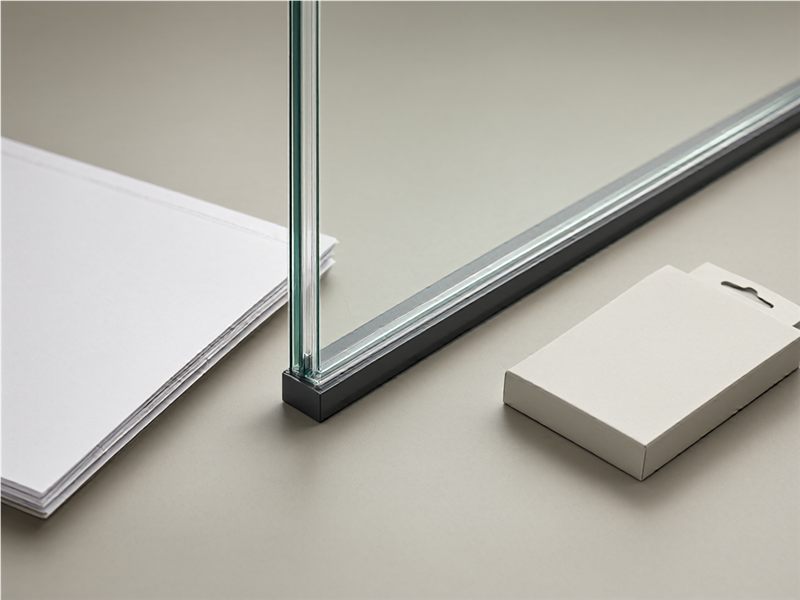
Measure the gap and glass interface
Provide the measured closing gap, panel thickness, edge position, and any carrier or insert dimension requested by the supplier. Check the profile depth against the panel and the available clearance when the door swings. Keep the selected profile pair linked to the glass and enclosure revision so a later replacement reproduces the same contact geometry.
Test closure and water path together
On a representative door, check that the profiles meet without forcing the panel or preventing the intended latch position. Observe the water path at the full closing line and confirm that the seal does not catch during movement. Record the orientation, adjustment, and sample used. If the door or frame is re-aligned, repeat the seal check before accepting the work.
Magnetic seal questions
Can a magnet strip be ordered by length alone?
No. The mating profile, orientation, glass interface, and closing gap determine whether the pair meets as intended.
What if the seal repels instead of meeting?
Stop installation and verify the profile pair and orientation with the supplier before trimming or altering the parts.
Related resources: Zimmor glass hardware and fitting information; ANSI Z97.1-2026: Safety glazing materials used in buildings.
