For glass fabricators, shower enclosure OEM brands, building-materials importers, and hotel or commercial contractors, the finish on a shower hinge or handle sets the service life of the entire assembly in a humid, chlorinated environment. PVD coating shower hardware has become the reference finish for projects where corrosion resistance and color stability weigh more than the lowest unit cost. This guide explains what the coating is, how it compares to electroplating for bathroom fixtures, and what B2B specifiers should request when sourcing PVD-coated bathroom hardware for coastal and high-traffic installations.
1. What Is PVD Coating on Shower Hardware?
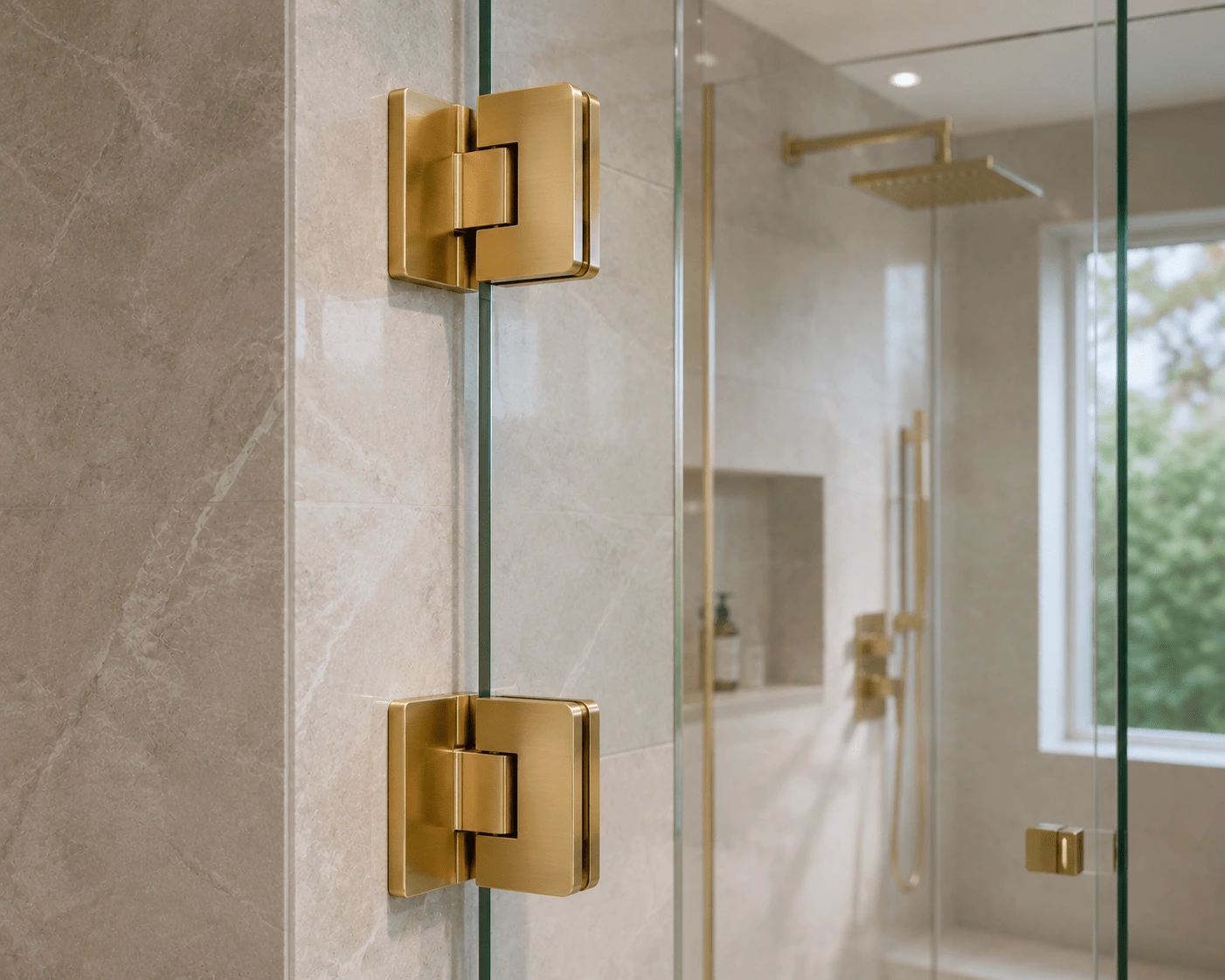
Physical Vapor Deposition (PVD) is a vacuum-based surface treatment that bonds a thin, dense metallic film to the substrate of a component. On shower hardware, the process deposits a titanium- or zirconium-based nitride layer onto stainless steel hinges, handles, and clamps. The resulting finish is colored and wear-resistant, and it is integral to the surface rather than a film applied on top.
The distinction matters for specifiers because it changes how the part behaves over time. A PVD layer forms a metallurgical bond at the substrate interface, so the color and hardness survive the abrasive pads and descaling agents used in commercial housekeeping. By contrast, a finish that merely sits on the metal can show edge wear where a glass panel loads the hinge. Our application process uses stainless steel bases rated for continuous exposure to wet, chlorinated air, with coating thickness held to a controlled tolerance so the added layer does not alter hinge geometry.
The deposition sequence runs in discrete stages: the parts are cleaned and loaded, the chamber is evacuated, the target material is vaporized by arc or sputtering, and the vapor condenses as a uniform layer on the substrate before the part is cooled and inspected. Each stage is controlled so coating uniformity holds across a batch of hinges, which is what lets a fabricator order repeat volumes without re-qualifying the finish.
2. PVD vs Electroplating: Why It Matters for Bathroom Fixtures
PVD and electroplating are two established surface treatments, and both remain in active production for bathroom fixtures. Electroplating deposits metal ions from a liquid bath onto the part; it is a mature, cost-efficient process suited to standard residential lines where budgets are tight and exposure is moderate. PVD offers superior corrosion resistance for coastal installs; electroplated options cover standard residential lines.
The trade-off is environmental and performance-related, not a judgment that one process is “better” in every case. The eco-friendly PVD process runs in a closed vacuum chamber with no liquid plating waste stream, which is why specifiers under corporate sustainability mandates evaluate it against the sustainable surface treatment route described on our development page. Electroplating, for its part, is the appropriate call for cost-sensitive series where the finish sees light duty.
At Zimmor Hardware, we maintain our own electroplating facility alongside PVD lines, so both routes ship from one supply source. This coexistence lets a brand run a PVD line for marine-grade and coastal projects and an electroplated line for standard residential stock without splitting its vendor base. From a sourcing standpoint, running both finishes through one supplier also simplifies the certificate package: the same ISO-certified facility issues the documentation for the PVD and the electroplated lines, so an importer clearing customs on a mixed shipment deals with one quality system rather than two. For PVD vs electroplating bathroom fixtures, the practical decision comes down to exposure hours, cleaning chemistry, and whether the program values a consistent finish across properties. We address the hinge-specific implications next.
3. PVD Finish Options for Shower Door Hinges & Handles
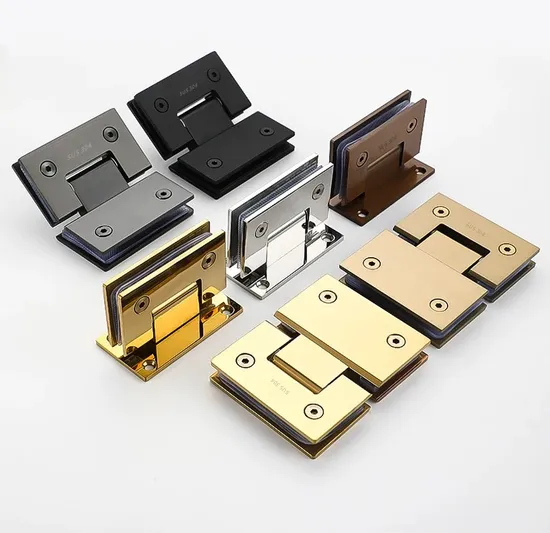
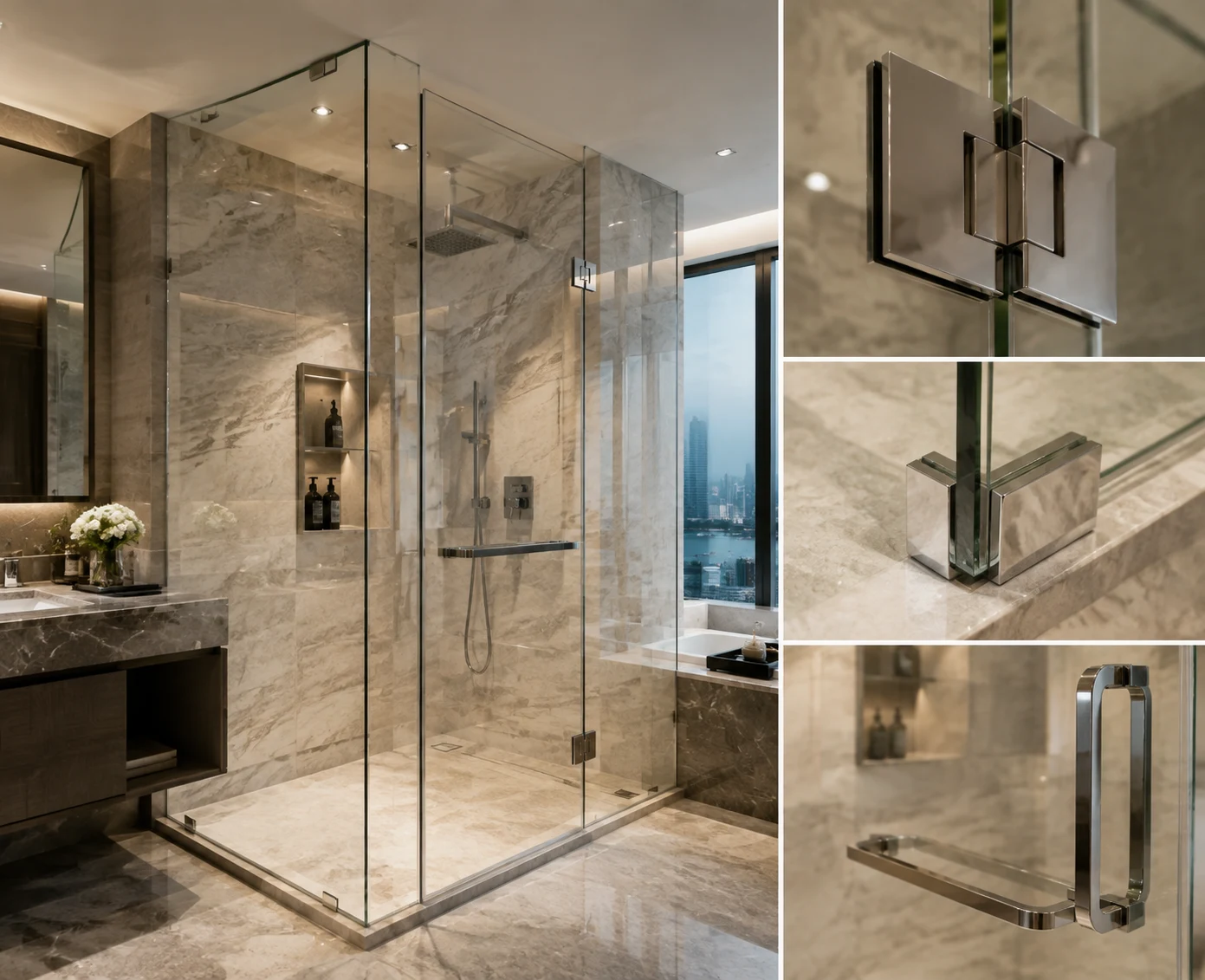
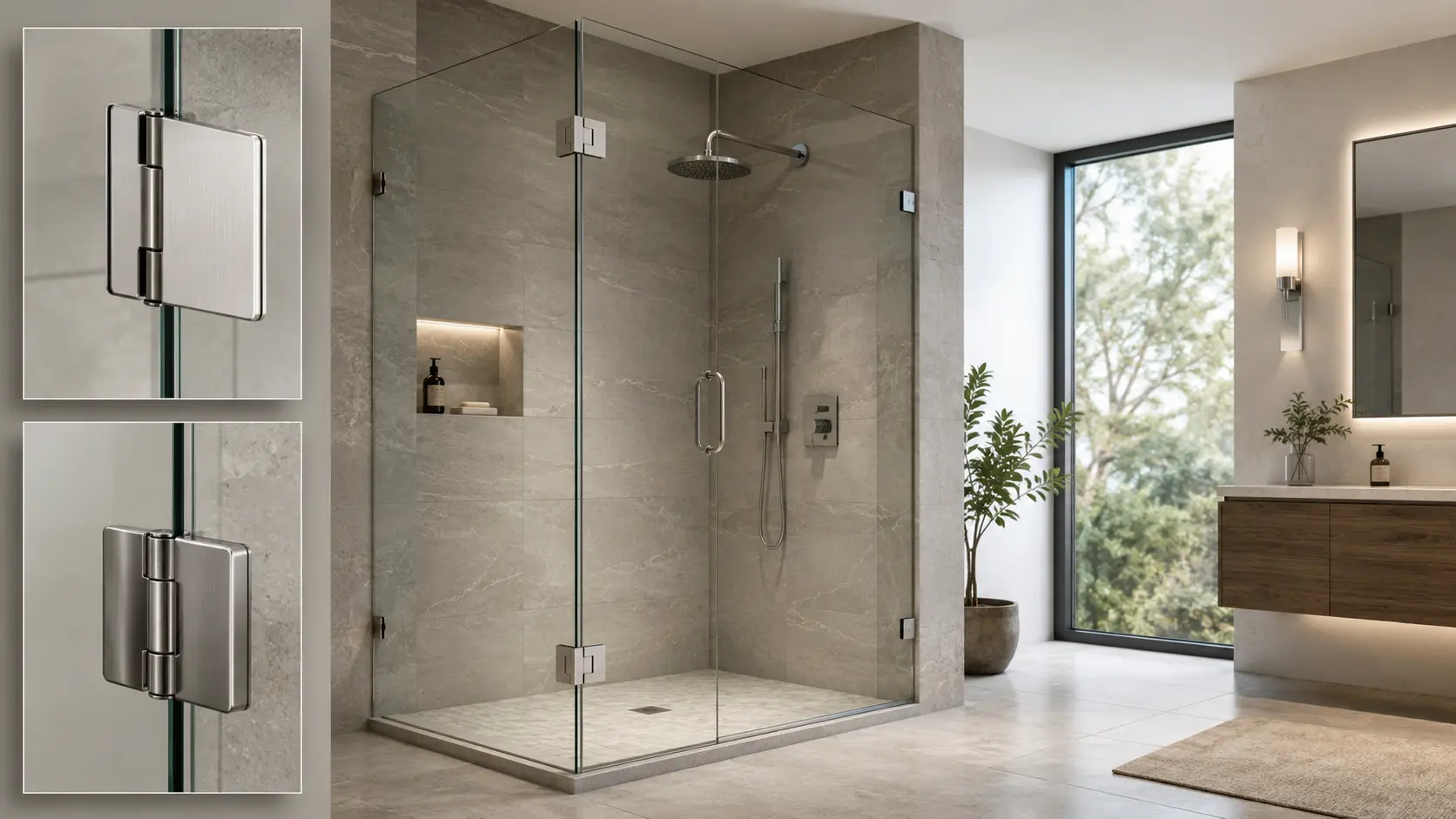
PVD applies across the hardware families that carry a visible finish in a shower enclosure. PVD-coated shower door hinges are the most common specification because the hinge sits at the wettest point of the assembly and carries the load of a glass panel. Handles and clamps receive the same coating with matching color and hardness so the finished enclosure reads as one system.
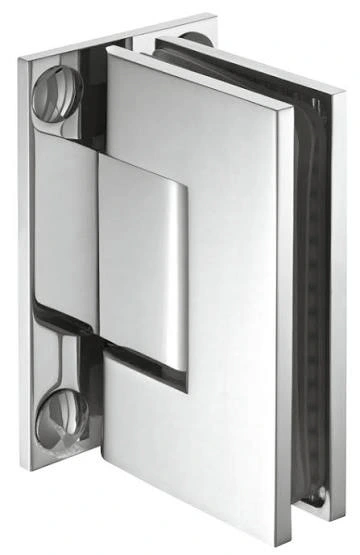
The base material matters as much as the coating. A 316 stainless steel PVD-coated shower hinge performs differently from a 304 base because 316 adds molybdenum for chloride resistance. For coastal hotels and pool-adjacent bathrooms, marine grade PVD bathroom hardware on a 316 substrate is the combination we recommend, and it is the configuration most requested by importers serving humid markets. The deposition thickness is controlled to tight tolerances so that hinge geometry and the 90°±1 closing angle of a glass door are not affected by the added layer.
For clamp and handle families, the same rules apply: the finish is specified by base grade and color, and the load-bearing dimensions are held independent of the coating. That separation of variables is what lets a fabricator order hinges, handles, and clamps in one finish without re-validating the mechanical fit of the enclosure.
4. Durability & Corrosion Resistance: Salt-Spray & Coastal Performance
Durability claims for PVD-coated bathroom hardware should be tied to a test method, not a marketing phrase. Salt-spray resistance is evaluated per ASTM B117, the standard neutral salt-fog procedure used across the hardware and fastener industries. PVD coating durability (corrosion resistance) is characterized by running the coated part in a salt-fog chamber and measuring the onset of red-rust or coating breakdown against a control sample. Zimmor Hardware provides rigorous testing backed by our in-house salt-spray validation reports so results are reported against industry standards rather than estimated.
Hardness is characterized by Vickers microhardness (HV) testing, the standard method for thin-film coatings; the reported value depends on coating composition and is listed per finish on the spec sheet. That hardness is what lets the finish resist the abrasive pads used in commercial cleaning without showing the edge wear common on softer surfaces.
Cleaning chemistry is the variable specifiers underweight. Hypochlorite and acidic descalers accelerate wear on any finish; PVD’s denser, bonded layer resists them longer than a plated surface of equal thickness, but the gain is realized only when housekeeping uses the dilution and contact time the coating is rated for. We document the compatible cleaning agents on the spec sheet so a facilities team does not void the finish through routine service.
For PVD for coastal hotels, the practical question is not “will it corrode” but “under what exposure class does the finish need to perform.” On a 316 base, the combination is engineered for continuous exposure to salt-laden air, which is why it is the default for marine-grade projects rather than a coastal upsell. We do not quote a single salt-spray hour figure because performance scales with base material, cleaning chemistry, and ventilation; instead, the spec sheet states the ASTM B117 result measured for the exact configuration you order.
5. Is PVD Coating Worth It for Hotels & Commercial Projects?
This is the question most procurement teams ask, and the answer sits in lifecycle cost rather than sticker price. For a high-traffic hotel bathroom, a finish that holds color and resists corrosion through daily cleaning reduces replacement cycles and protects the brand’s appearance standard across properties. When is PVD coating worth it? It is worth specifying when three conditions hold: the installation is coastal or pool-adjacent, the traffic is commercial, and the buyer values a consistent finish across a multi-property program.
For standard residential stock with moderate exposure, the electroplated line remains the cost-efficient choice. Both routes ship from the same facility, so the decision is about project fit, not vendor lock-in or one process displacing the other. The total-cost view also accounts for the documentation burden: a single supplier for both finishes simplifies the spec sheet, the certificate package, and the reorder process for importers managing several SKUs.
Replacement-cycle math makes the case without exaggeration. A finish that needs no touch-up across a multi-property rollout removes the logistics of matching a discontinued color two seasons later; an electroplated line that is cheaper per unit but replaced sooner can cost more across the program once labor and color-matching are counted. The breakpoint is the exposure class, which is why the same brand often runs PVD on coastal properties and electroplating on inland standard stock.
To validate the specification for your project, talk to our specifiers at Zimmor Hardware about the exposure class, base material, and finish color you need. We can map a coastal hotel program to a 316-base PVD configuration and provide reference installations from our 136-country shipping history since 1999.
6. PVD Finish Selection: Matte Black, Brushed Nickel, Gold & Gunmetal
The four color families below are produced by adjusting the reactive gas and target composition in the deposition chamber. The substrate and base process are identical; only the optical and compositional profile changes, so the corrosion-resistance and hardness behavior stay constant across the range.
- Matte black: a widely specified color for contemporary hotel and multi-family projects; low reflectivity reduces the visible impact of water spotting between cleanings.
- Brushed nickel: a neutral, low-sheen option that matches existing bathroom fixtures in renovation programs where the owner wants continuity with installed stock.
- Gold: a titanium-nitride tone used for hospitality and cruise interiors where a warm metallic look is specified by the design package.
- Gunmetal: a dark grey-brown tone favored for industrial and loft-style commercial bathrooms.
The comparison buyers raise most often is PVD finish vs brushed nickel or matte black. Both are available as PVD; the choice is aesthetic and program-driven, not a performance difference. A PVD matte black and a PVD brushed nickel share the same corrosion-resistance and hardness profile and the same ASTM B117 validation route; they differ only in reflectivity and tone. For a coastal hotel, the color decision should follow the design brief, because the engineering case for PVD is identical regardless of which of the four families is selected.
7. Specifying PVD-Coated Hardware: What B2B Buyers Should Request
A spec-sheet request should name four variables so the supply side can quote accurately: base material (304 or 316 stainless steel), finish color, coating-thickness tolerance, and the test standard behind any durability claim. Ask for salt-spray data referenced to ASTM B117 and hardness reported in Vickers (HV), and request the numbers for the exact configuration rather than a generic range.
On the compliance side, the sustainable surface treatment route supports REACH and RoHS alignment because the vacuum process avoids liquid plating chemistry. Request the relevant declaration for your market when the project is governed by EU or similar regulations. Our manufacturing facilities at Zimmor Hardware are ISO-certified, and the same manufacturing base has served 136 countries since 1999, which streamlines documentation for importers and simplifies audits.
Before a production order, we supply finished samples so your QA team can verify color, fit, and coating on the actual substrate. Sample lead time and production minimums scale with finish and base grade; a 316 matte-black hinge program and a 304 brushed-nickel handle program carry different MOQs because the deposition setup differs. Stating the volume up front lets us quote both the sample and the production run in one response. To move from specification to supply, request a PVD coating quote with your finish, base material, and volume. We return a spec sheet, sample lead time, and minimum order quantity for your program, and our specifiers can review the exposure class before you commit to a configuration.
Frequently Asked Questions
Is PVD coating better than electroplating?
Neither process replaces the other across the product range. PVD offers superior corrosion resistance for coastal and high-traffic installs and runs as a closed, low-waste process; electroplating remains the cost-efficient route for standard residential lines. Both are produced at our Zimmor Hardware facility, so the choice is project fit rather than one process eliminating the other.
How long does PVD coating last?
Service life depends on base material, exposure class, and cleaning chemistry rather than a single fixed number. On a 316 stainless steel base in coastal and high-humidity service, the coating is engineered for continuous exposure; durability is verified per ASTM B117 salt-spray testing and reported as a standard-referenced result on the spec sheet. We do not quote one salt-spray hour figure because performance is tied to the installation environment.
Can PVD be applied to 316 stainless steel hinges?
Yes. A 316 stainless steel PVD-coated shower hinge is a standard configuration we supply for marine-grade and coastal hotel projects. The 316 substrate adds molybdenum for chloride resistance, and the PVD layer is deposited without changing the hinge’s load-bearing geometry or its 90°±1 closing tolerance.
Ready to Specify PVD-Coated Shower Hardware?
Ready to specify PVD-coated shower hardware for your next project? Request a PVD coating quote with your base material, finish, and volume, or talk to our specifiers about salt-spray specifications and exposure class. We return a spec sheet, sample lead time, and MOQ for your program.