

Glass is unforgiving freight. A framed panel can be gripped anywhere; a frameless shower panel cannot. Between the workshop rack and the finished bathroom, every frameless panel — the door, the fixed lights, the return panel, the mirror — has to be lifted, tilted, carried through doorways and lowered onto setting blocks by hand. That is the job glass suction lifters were built for, and it is also where most chipped corners, cracked panels and strained backs actually happen.
Yet suction lifters are usually the least specified tool in a shower hardware project. Installers specify hinge load, glass thickness and bracket finish in detail, then arrive on site with whatever cup lifter was in the van. This guide closes that gap: how vacuum grip actually works, how to choose between single-, double- and triple-cup setups, which glass surfaces refuse to seal, and the handling habits that keep both the panel and the installer safe. The principles apply whether you are setting a 10 mm door leaf, a fixed return panel or a wall mirror.
How a suction lifter holds glass
Every suction lifter works on the same principle: a flexible cup is pressed against the glass, the air inside is expelled, and the pressure difference between the sealed vacuum pocket and the atmosphere presses the cup onto the surface. The holding force therefore grows with the sealed cup area and the quality of the seal — not with muscle. (The physics behind the hold — atmospheric pressure doing the work — is outlined in atmospheric pressure.)
Three practical consequences follow from that simple physics:
- Area is grip. A larger cup diameter, or more cups, gives more holding force on the same panel. That is why a triple-cup lifter can carry panels that a single cup cannot safely manage.
- The seal is the weak point. Grip fails at the rim of the cup long before the vacuum “strength” runs out. Dust, water, texture and grease on the glass rim are the usual suspects.
- Direction matters. A cup pulls straight off a surface far more easily than it slides. Lifting a panel off a rack (pull direction is perpendicular) is the easy case; carrying a panel vertically by a single top cup is the hardest, because the panel’s weight works to peel the cup edge away.
This is why professional practice counts cups the way riggers count slings: not by how much force you hope for, but by how much margin survives when conditions on site are worse than expected.
One, two or three cups: choosing the setup
Cup count is the main specification decision, and it should follow the panel you are moving — not the other way around.
| Setup | Typical use in shower & bathroom work | Why it works | Watch out for |
|---|---|---|---|
| Single cup | Mirrors, small clear panels, repositioning light panels on a bench or rack | Fast to place, one-hand operation, easy on curved or tight spaces | Smallest margin; only for light, small panels and short carries |
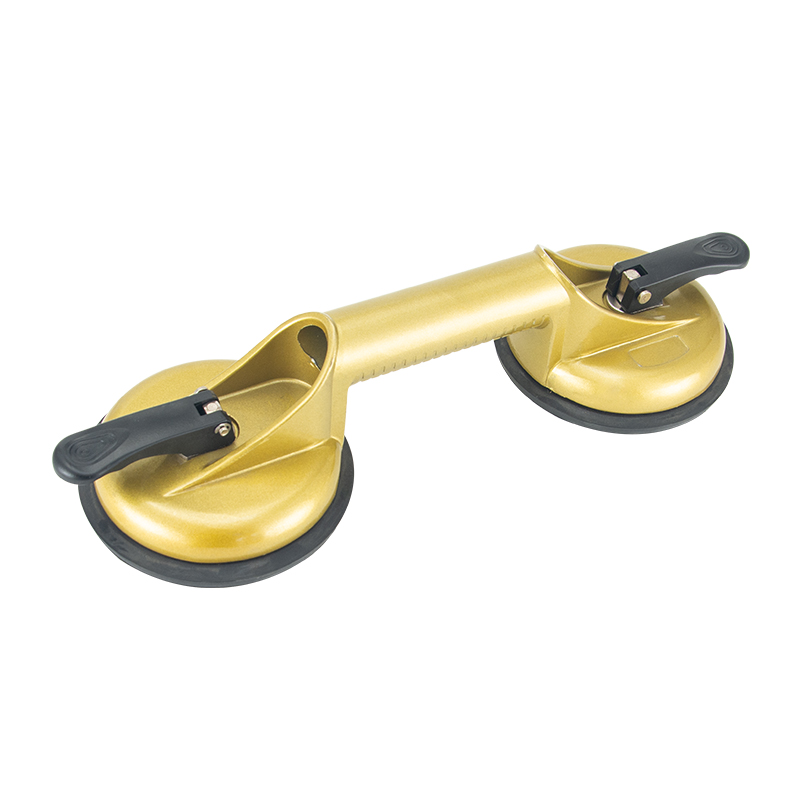
| Double cup | Shower door leaves and fixed panels carried vertically; the everyday frameless-work tool | Two sealed areas share the load and resist peeling; panel stays balanced under carry | Cups must land on clean, flat glass; spacing should match the panel width |
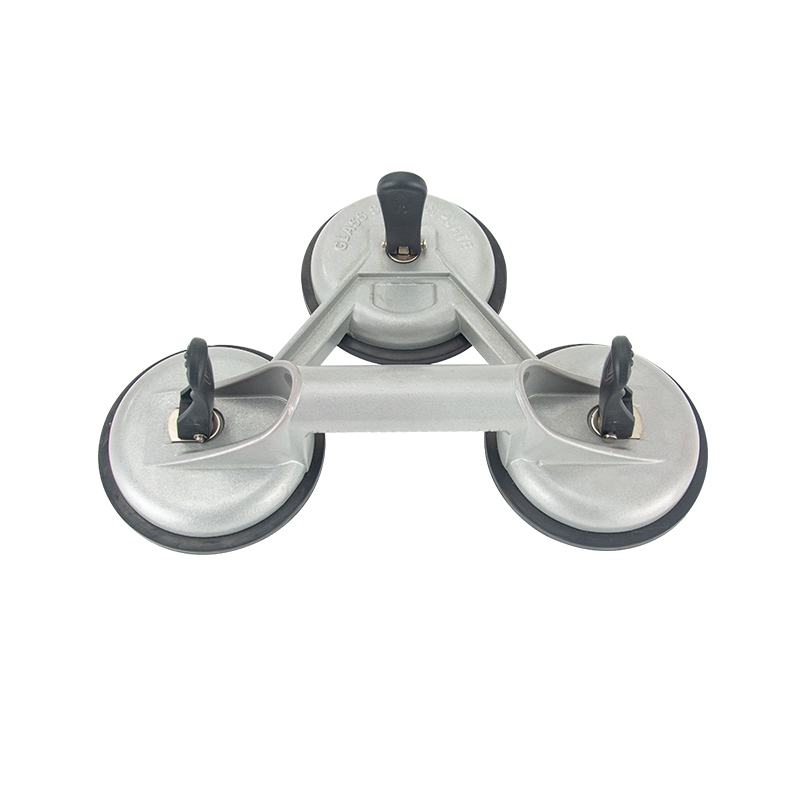
| Triple cup | Wide or heavy fixed lights, long mirror strips, panels handled repeatedly during a fit-out | Maximum sealed area and stability; the load spreads across three contact patches | Needs flat continuous glass area; overkill for small parts |
For a frameless shower fit-out, a double-cup lifter is the working default — it matches the size and weight class of a typical door leaf while staying quick to reposition. A triple-cup lifter earns its place on the van when the project includes large fixed panels, back-painted glass or full-height mirrors, where extra contact area is the difference between a controlled lift and a nervous one. Zimmor’s own line follows exactly this logic: the Double-Cup Glass Suction Lifter 522 for everyday panel handling, and the Triple-Cup Glass Suction Lifter 530 when the panel outgrows two cups.
Glass surfaces that refuse to seal
Most suction failures are surface failures, not tool failures. Before every lift, check the landing zone for the cup:
- Textured or cast glass. Patterned glass never seals — the cup rim bridges over the relief and leaks instantly. Lift textured panels by edge or frame only.
- Fritted, etched and coated zones. Ceramic frit bands and frosted areas are rough at microscopic level. Place cups on the clear, polished face; on a fritted band edge, keep the cup fully on one side of the transition.
- Condensation and cleaning residue. A thin water film can let a cup feel sealed and then release without warning on a warm panel. Wipe the landing zone dry — a clean, dry rim is worth more than any extra cup.
- Curved panels. Flat cups seal only on flat or very gently curved glass. For bent shower screens, contact your hardware supplier about dedicated curved-cup options rather than forcing a flat cup to seal.
- Edges and joints. A cup that overhangs a panel edge, or lands across a lamination line, leaks from day one. Keep the whole cup well inside the glass.
Safe lifting practice on site
The tool is half the system; the other half is how it is used. These are the habits that separate a smooth installation from an insurance claim:
- Test before you trust. After seating the cup, apply a gentle downward tug and watch the cup rim. If the rim lifts anywhere, re-seat it. Never skip the test because the panel “is not that heavy”.
- Keep the load path in the cups. Carry panels as close to vertical as practical, with the cups’ pull direction aligned to gravity. Tilting a vertically-carried panel loads the cup edge in peel — the weakest direction.
- Two hands, short carries. Even with a triple cup, walk panels in short, planned moves. Swing and momentum are what convert a sealed cup into a dropped panel.
- Respect temperature. Cold glass in a warm, humid bathroom fogs the landing zone; hot glass thins the cup compound over time. Let panels acclimatise and inspect cups more often in extreme weather.
- Inspect cups like consumables. The cup is a wearing part. Cracked, glazed or permanently deformed rims must be replaced immediately — grip is only as good as the rim.
Where the lifter fits in a frameless installation
On a typical frameless project, the suction lifter appears at three moments: unloading and racking panels on delivery, positioning a panel while hinges, clamps and seals are set, and final adjustment of door swing before the hardware is torqued down. It pairs directly with the rest of the specification chain described in the frameless shower door hardware guide — glass thickness, hinges, clamps and seals — and with the step-by-step sequence in the professional installation guide.
During positioning, the lifter also protects the hardware you have already installed. A panel lowered edge-first onto a wall-mounted glass bracket chips the polished edge; the same panel lowered under vacuum control lands on its setting blocks. This is also why glaziers keep a lifter on the van even for jobs where every panel is small — repositioning a panel by hand against a freshly installed glass clamp is how clamps get scratched and panels get chipped.
Care and maintenance of the cups
- Clean the rim, not just the face. Wipe the cup rim with a lint-free cloth; embedded grit acts as a leak path.
- Store unloaded. Cups left compressed on a bar or edge deform permanently. Store lifters cup-up, unloaded, away from direct sun.
- Keep seals intact. The check valve and seal surfaces are the lifetime of the tool. Do not oil them with anything not specified by the manufacturer.
- Retire on sight. Any visible crack, shiny glazed rim or slow leak under a static test is a retirement notice. Replacement cups are cheap; panels are not.
Frequently asked questions
Can one suction lifter carry a shower door leaf alone?
It depends on the panel size, thickness and the carry path — which is why professional installers choose cups by panel, not by habit. For a typical frameless door leaf carried vertically, a double-cup setup is the standard choice because two sealed areas share the load and resist peeling. Treat a single cup as a bench-and-mirror tool.
Why did my cup release even though the glass looked clean?
Look for invisible leaks: micro-dust on the rim, a fine water film from condensation, a cup overhanging the panel edge, or a textured/fritted zone under part of the cup. The seal fails at the rim, so what matters is the condition of a ring a few millimetres wide — not the whole panel.
Are more cups always safer?
More cups give more sealed area, but only when every cup lands on clean, flat, continuous glass and the load stays aligned with the pull direction. A triple-cup lifter placed carelessly can have a worse effective seal than a double-cup lifter placed well. Choose the setup that matches the panel, then place it properly.
Summary
A suction lifter is a small specification with an outsized effect on installation quality. Match the cup count to the panel, land every cup on a clean flat surface, keep the load path vertical, and treat the cup rim as a consumable. For everyday frameless panel work start with the 522 double-cup lifter; step up to the 530 triple-cup lifter for wide fixed lights and mirrors. For the surrounding hardware decisions — thickness, hinges, clamps, seals — continue with the complete frameless shower door hardware guide.