
This shower door seal guide is a measurement worksheet for a specific opening: capture the glass edge, gap, seal location, and water direction before requesting a replacement or project quote.
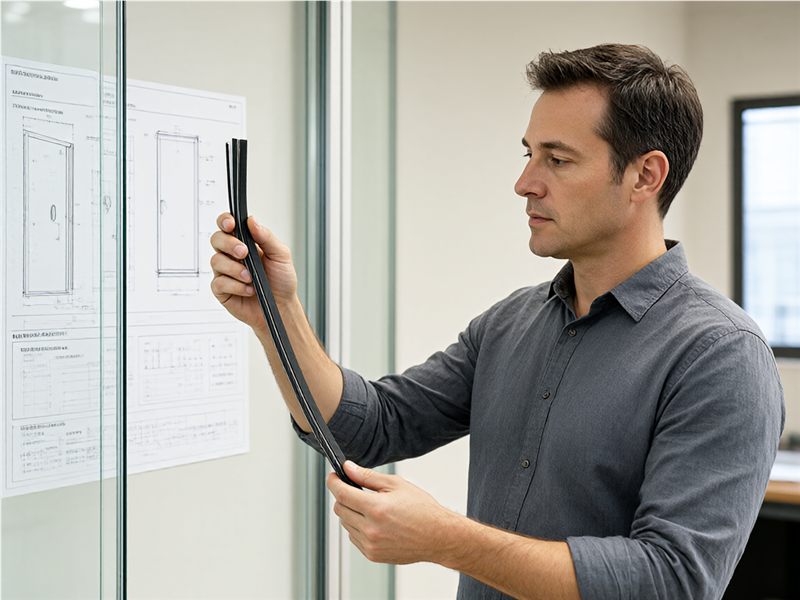
Record where the seal is used
Mark each seal position on a door elevation: bottom edge, closing edge, wall jamb, or meeting edge. Note which panel moves and how the door closes. Take measurements at several points where the gap may change, and label each value with its position. This prevents a supplier from treating one sample dimension as the specification for every edge in the enclosure.
Describe the profile and glass interface
Provide the panel thickness confirmed by the glass supplier and a sketch or sample of the seal cross-section. Record the insertion depth, lip direction, magnetic face if present, and any rigid carrier. Use a ruler and a close-up photo as supporting evidence, not as substitutes for the profile dimensions. Ask the supplier to return the matched profile drawing before ordering a full production length.
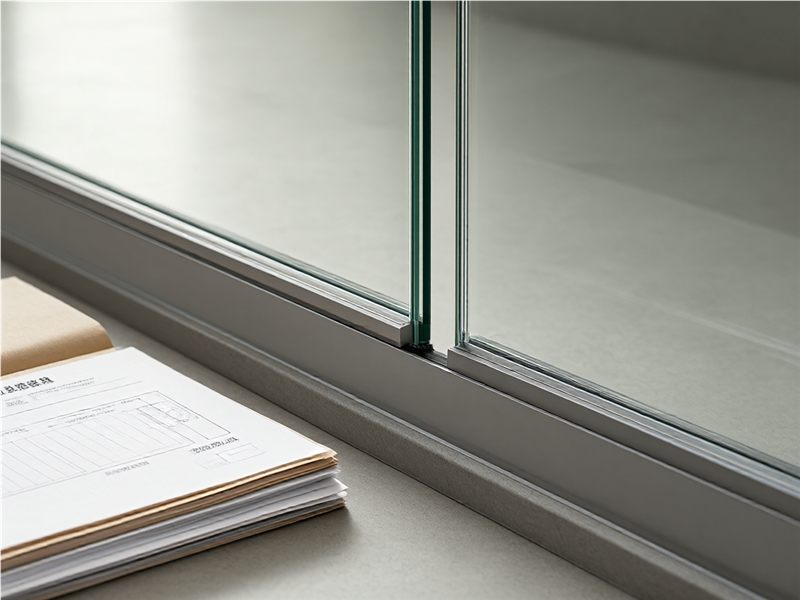
Follow the water path and door movement
Show the intended water direction and the point where the seal should meet the adjacent surface. Check the closed position and the moving path for contact with the threshold, wall, or neighboring panel. A seal that closes one gap may create drag or an open route elsewhere. Record any location that depends on door adjustment so it can be rechecked after installation.
Prepare a replacement request that can be repeated
Include enclosure or room ID, measured locations, sample photos, finished lengths, quantity, color preference, and the part identifier if known. Ask for a sample confirmation when the old seal is worn or distorted. Keep the accepted profile and drawing revision in the maintenance record so future orders do not depend on memory or a loosely described clear strip.
Seal measurement questions
Is a glass thickness value enough to identify a seal?
No. The profile shape, insertion depth, edge location, gap, and water direction also affect fit.
Should the old seal be sent as a sample?
It can help identify the profile, but measure it in place as well because wear or compression may alter its shape.
Related resources: Zimmor glass hardware and fitting information; ANSI Z97.1-2026: Safety glazing materials used in buildings.
