
A shower enclosure care plan should follow the finish and seal instructions supplied for the installed models. Give users simple routines and tell service staff what to inspect without prescribing unverified chemicals or intervals.

Use care instructions matched to each finish
List the installed hardware models and finish names, then obtain the supplier's cleaning guidance for those exact surfaces. State which cloths or cleaners are allowed only when the product instructions say so. Avoid copying one generic cleaner recommendation across different finishes or seal materials. Keep the product care document with the handover pack and make it easy for the user to find.
Keep seals and tracks clear
Describe how to remove loose residue from the seal, track, and guide without pulling or twisting parts that are not designed to be removed by the user. Include the water path and drainage areas that should remain unobstructed. If a seal becomes loose, cracked, or no longer meets its mating surface, tell the user how to identify the part and request a replacement.
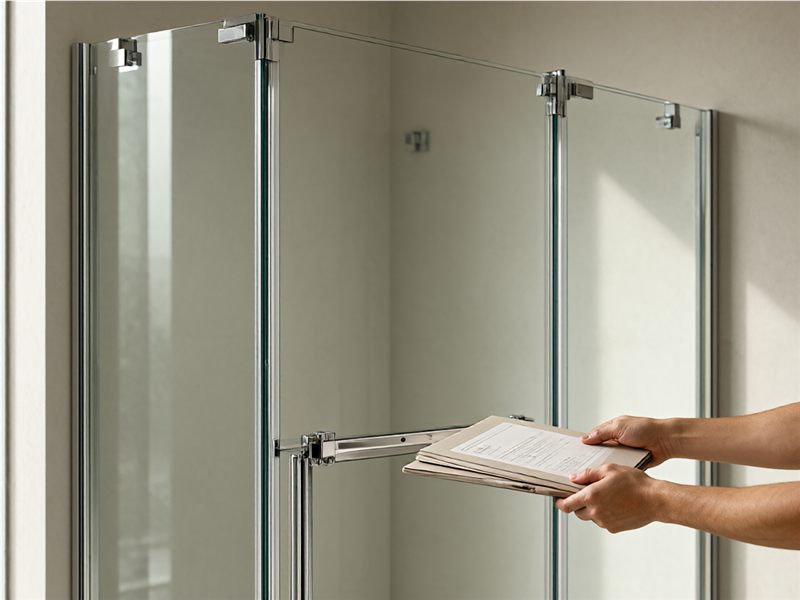
Check movement and visible hardware
Give a simple visual check for door travel, unusual rubbing, loose covers, changed gaps, or a seal that no longer closes consistently. Do not invite users to tighten glass fittings unless the supplier's instructions permit it. Route adjustment or repair to the responsible installer or service contact, especially when the glass panel must be supported during work.
Make replacement information usable
Provide model and finish identifiers, room or enclosure location, approved replacement parts, and the contact path for service. Keep a record of any changed hinge, roller, or seal so future maintenance does not rely on photos alone. Update the care sheet if a product is substituted after handover.
Shower care questions
Can one cleaning product be recommended for all finishes?
Use only the care guidance supplied for the installed finish; do not assume different coatings share the same cleaner limits.
What should a user do if the door begins to bind?
Stop forcing it, keep clear of the glass, and contact the installer or service provider for an assessment.
Related resources: Zimmor glass hardware and fitting information; ANSI Z97.1-2026: Safety glazing materials used in buildings.
