
A shower shelf has to work with the selected glass or wall support, remain accessible for cleaning and suit the water-exposed location. The shelf material is only one part of the decision: the support path and installation surface determine whether the assembly is suitable for the project.
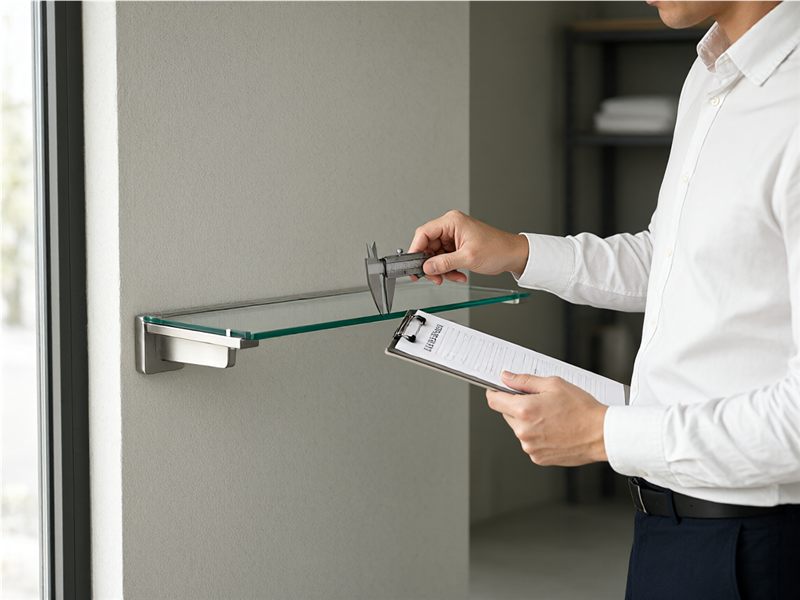
Place the shelf in the wet-area layout
Mark the proposed position relative to the shower head, door swing, controls and daily reach. Check whether the shelf blocks a moving panel or creates a hard-to-clean corner. The best location depends on the enclosure layout and users, so confirm it on the room drawing rather than relying on a generic height recommendation.
Trace the load path
Identify what carries the shelf and where that support transfers into the wall or glass. If a clamp or bracket is used, confirm the supported glass or substrate and the fixing method from its documentation. Ask for load evidence for the complete shelf-and-support arrangement under stated installation conditions; do not treat a material description as proof of capacity.
Match clamp or bracket to glass
For glass-mounted shelves, verify glass thickness, clamp opening, contact pads and edge clearance against the selected model drawing. For wall-mounted versions, verify the anchor and reinforcement detail for the actual substrate. Do not mix components from different systems unless the manufacturer confirms the interface.
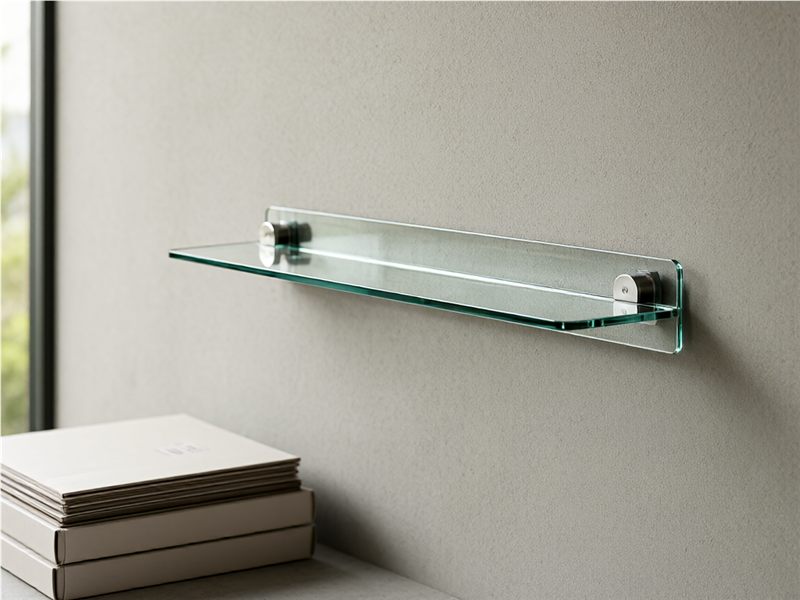
Check drainage and cleaning access
Review the shelf shape and orientation for water run-off and for access around the support points. Confirm whether the selected design requires a particular installation angle or has drainage features; do not assume all shelves drain the same way. Keep care instructions compatible with the finish and cleaning routine.
Record the approved assembly
The project record should identify shelf dimensions, material and edge requirements, support model, mounting surface, finish, installation drawing and any load evidence. Approve one complete sample or documented assembly before ordering multiples. This gives the installer and maintenance team a consistent reference.
Shower shelf fitment questions
Can a shelf clamp be chosen by appearance?
No. Check its opening, contact surface and approved glass thickness against the exact clamp drawing.
What should a buyer request for a load-sensitive installation?
Request evidence for the complete support configuration and have the project designer or installer confirm the site substrate and fixing detail.
Browse shelf clamp options, Zimmor product and fitting information. For a project-specific quotation, provide the current drawing and request model-level fitment details before approval.
