

This guide covers seven common shower door handle styles, explains their key differences, and outlines the factors to consider before selecting hardware for residential, hotel, or commercial bathroom projects. You can also explore Zimmor’s shower door handles and knobs to compare available designs.
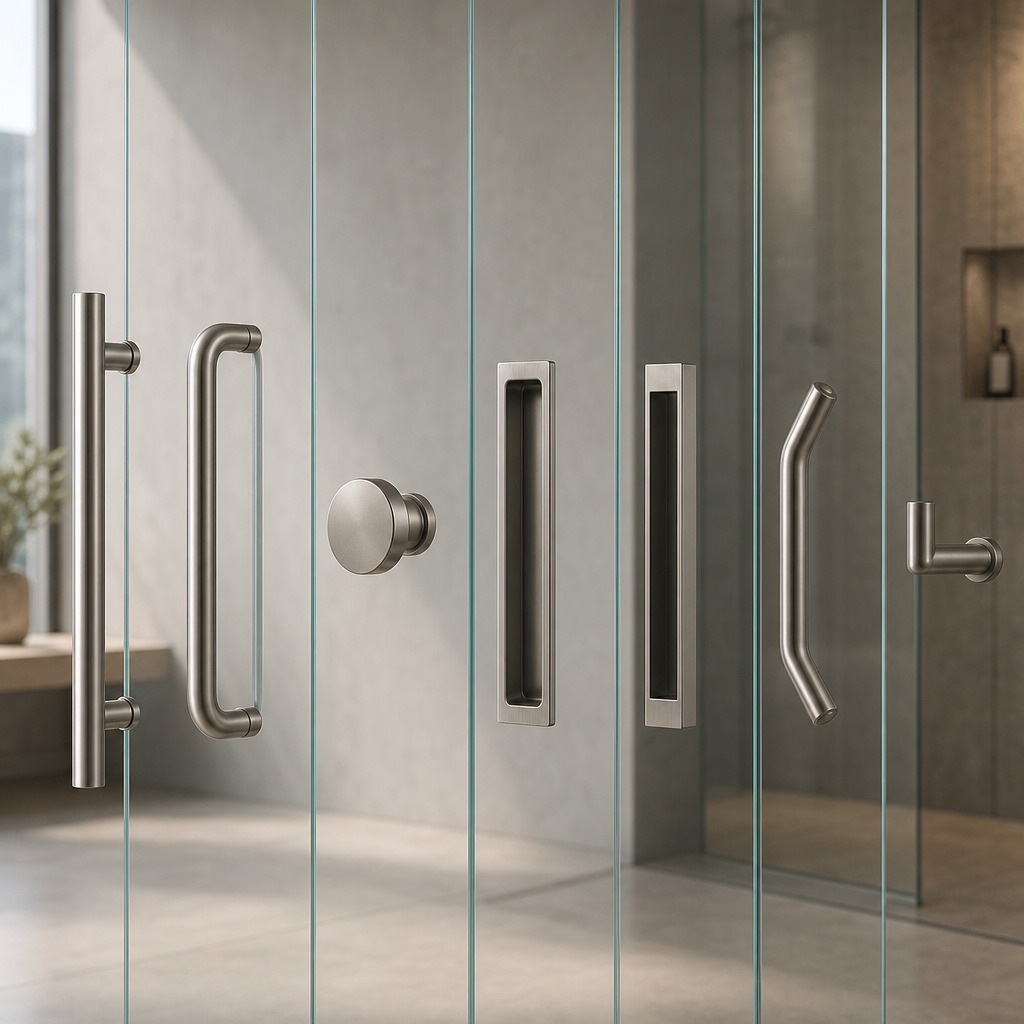
7 Shower Door Handle Types for Frameless Glass
Shower door handles are available in different shapes and configurations. The following styles are commonly considered when choosing hardware for frameless glass doors. Availability and suitability depend on the specific product design and installation requirements.
1. Straight Tubular Bar Handle
A straight tubular bar handle has a simple, linear shape that works well with contemporary bathroom designs. Its elongated grip provides a clear handhold and pairs naturally with frameless glass panels, where a clean and uncluttered appearance is often preferred.
When selecting this style, check the handle length, mounting configuration, and required glass-hole positions. These details should match the door design before the glass is fabricated.
2. U-Shaped Curved Handle
A U-shaped handle has two mounting points connected by a curved grip. Its shape provides space for the hand and creates a more rounded appearance than a straight bar. It can suit bathrooms that combine curved fixtures with glass shower enclosures.
Before choosing this design, confirm the distance between mounting points and the available clearance around the door. The handle should be comfortable to grip without interfering with nearby walls, panels, or other hardware.
3. Round Knob Handle
A round knob offers a compact alternative to an elongated bar handle. Its small footprint can suit minimalist shower designs, especially where a simple, understated grip is preferred.

Knobs generally provide less gripping area than bar handles. Consider the needs of the intended users, the door’s size, and the knob’s mounting method when deciding whether this style is appropriate.
4. Recessed C-Shaped or D-Shaped Pull Handle
Recessed C-shaped and D-shaped pulls sit within a cutout in the glass rather than projecting outward like a conventional bar handle. This design can help reduce protrusions and maintain a relatively flush appearance.
These handles require particular attention to glass preparation. Confirm the cutout dimensions, glass thickness, and installation details with the hardware supplier and glass fabricator before ordering.
5. Square or Rectangular Tube Handle
Square and rectangular tube handles use angular profiles instead of rounded tubing. They are often chosen for bathrooms with geometric design elements, straight edges, and modern fixtures.
The profile affects both appearance and grip. Compare the tube dimensions, edge treatment, finish, and mounting details to make sure the handle fits the intended design and is comfortable to use.
6. Angled or Tilted Handle
An angled or tilted handle has a grip that changes direction rather than following a single straight line. Depending on its design, this shape can provide a distinctive visual feature and a different hand position from a conventional straight handle.
Check the handle’s orientation, mounting points, and clearance from adjacent surfaces. The product drawing should show the installed position clearly so the door layout can be checked before fabrication.
7. L-Shaped Pin Handle
An L-shaped pin handle combines a compact profile with a short projecting grip. It can suit shower doors where a smaller handle is preferred over a long bar.
Because L-shaped designs vary in dimensions and mounting configuration, review the product drawing rather than relying on the shape alone. Confirm that the grip is accessible and that the installed handle will not interfere with the door or surrounding hardware.
Comparison of Shower Door Handle Types
Use the following table as a starting point when comparing handle styles. The actual fit, comfort, and installation requirements depend on the selected model.
| Handle Type | Design Characteristics | What to Check |
|---|---|---|
| Straight tubular bar | Linear, simple appearance | Handle length and mounting-point spacing |
| U-shaped curved | Curved grip with two mounting points | Grip clearance and mounting dimensions |
| Round knob | Compact, minimal profile | Grip comfort and mounting method |
| Recessed C-shaped or D-shaped pull | Set into a cutout in the glass | Cutout dimensions and glass preparation |
| Square or rectangular tube | Angular, geometric profile | Tube dimensions and edge treatment |
| Angled or tilted | Grip follows an angled orientation | Orientation and door clearance |
| L-shaped pin | Compact grip with a projecting section | Projection, accessibility, and mounting details |
How to Choose a Shower Door Handle
1. Confirm the Glass Specifications
Glass thickness, hole positions, and any required cutouts must match the selected handle. Do not assume that handles with similar appearances share the same mounting dimensions. Confirm the product specifications before glass fabrication or replacement.
2. Check the Mounting Configuration
Shower door handles can differ in how they attach to the glass. Some designs use mounting points on both sides of the door, while others use a different configuration. Confirm whether the selected model is suitable for the intended door arrangement and whether its mounting hardware is included.
For example, a back-to-back shower door handle is a specific handle configuration. Check the product details and mounting requirements to determine whether it matches your project.
3. Consider Grip Comfort and Accessibility
Handle shape and size affect how easily users can open and close the door. A long bar offers a different grip from a small knob or recessed pull. Consider the users, the door’s position, and the available hand clearance rather than selecting a handle based on appearance alone.
4. Match the Finish to the Bathroom Design
The handle finish should coordinate with other visible bathroom hardware. Common design considerations include finish consistency, resistance to wear, cleaning requirements, and suitability for the intended environment.
For more information on finish selection, see
the B2B buyer’s guide to PVD coating for shower hardware.
Installation Considerations
The installation method depends on the handle design and the shower door construction. Before installation, confirm the mounting hardware, glass preparation, hole spacing, and manufacturer’s instructions. Glass should not be drilled or modified without the correct specifications and appropriate professional handling.
If the project also requires hinges, make sure the hinge configuration is suitable for the glass door and its installation conditions. Refer to this guide to choosing shower door hinges for frameless glass doors for related selection considerations.
Frequently Asked Questions
What are the most common types of shower door handles?
Common styles include straight tubular bars, U-shaped handles, round knobs, recessed pulls, square or rectangular tube handles, angled handles, and L-shaped pin handles. The appropriate option depends on the door design, mounting requirements, and preferred appearance.
Can I use a knob on a frameless glass shower door?
A knob may be suitable if the specific product is designed for the glass door and its mounting requirements. Check the glass thickness, mounting method, grip comfort, and product instructions before choosing one.
Should I choose a bar handle or a knob?
A bar handle provides an elongated gripping area, while a knob uses a smaller footprint. Compare the available clearance, intended users, door dimensions, and overall design before making a decision.
What should I confirm before ordering shower door handles for a project?
Confirm the handle dimensions, mounting configuration, glass thickness compatibility, required hole positions, finish, and quantity. For commercial projects, also check consistency across the required hardware and whether product drawings or samples are available for review.
Conclusion
The right shower door handle should suit the glass door, provide a practical grip, and complement the bathroom design. Comparing handle shape, mounting configuration, dimensions, and finish helps reduce selection errors before fabrication and installation.
For project requirements or product comparisons, visit Zimmor’s shower door handles and knobs to review the available range and identify a model that fits your application.