

Choose a frameless shower door hinge by matching the glass preparation, panel layout, opening direction and mounting surface to the current drawing for the exact hinge model. A hinge style or advertised load figure alone cannot confirm that a complete door assembly is suitable.
Key Takeaways
- Identify whether the hinge connects glass to a wall, glass to glass or a door to a pivot fitting.
- Match the model drawing to the glass schedule, holes, cut-outs, edge details and supplied gaskets.
- Verify the door swing, mounting substrate, fixing method and documented limits for the exact configuration.
- Have a qualified glazing professional resolve drawing conflicts before glass fabrication or installation.
- Do not cut or drill fully tempered glass after heat treatment.
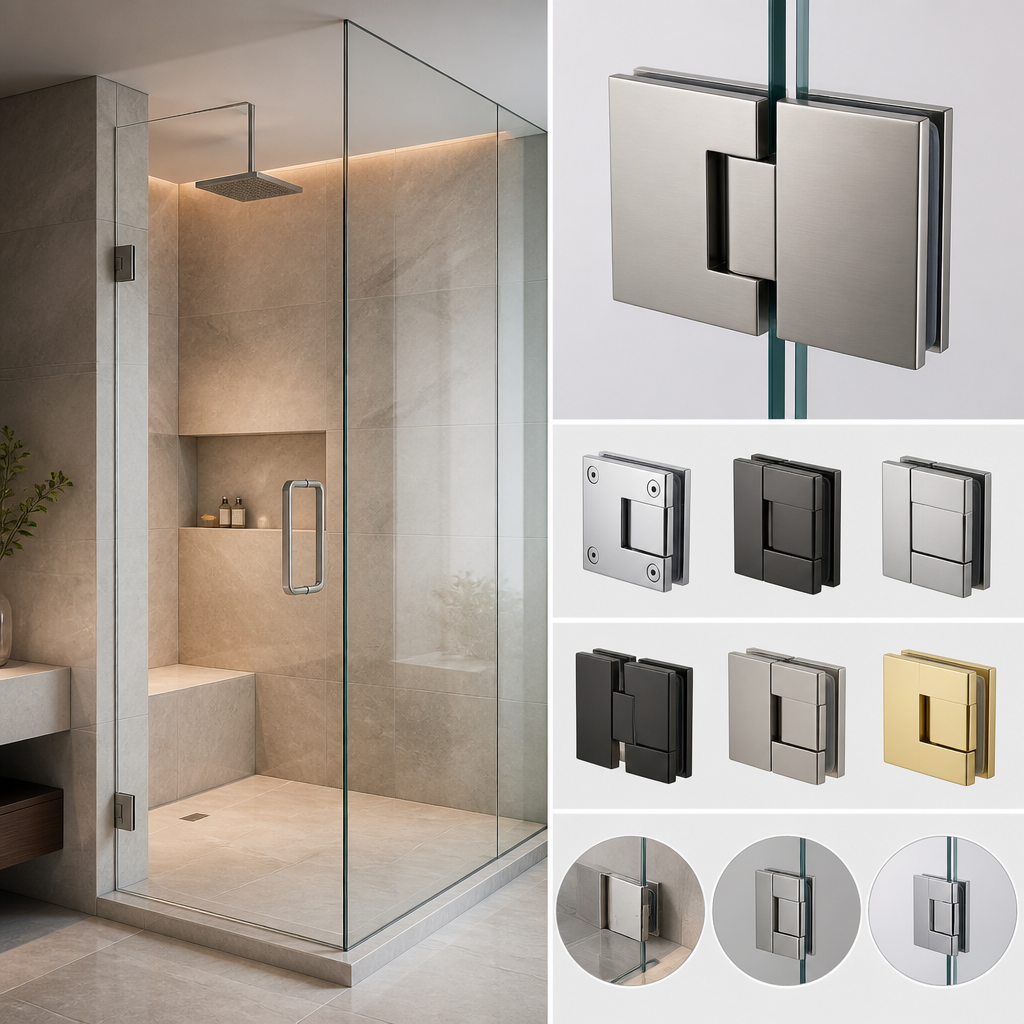
Identify the hinge connection
Wall-to-glass hinges attach a door panel to a specified wall or backing assembly. Glass-to-glass hinges connect a door panel to a fixed panel. Pivot fittings support the door at defined pivot points. These categories describe different layouts; the model drawings determine which glass preparation and mounting details are allowed.
Confirm whether the door opens inward, outward or both ways, and check the clearances through its full travel. The hinge must match the actual enclosure geometry and the supports around it. Do not assume a hinge can transfer load to a wall, adjacent panel or substrate that is not shown in its installation documentation.
Match glass, holes and edges to the product drawing
Record the glass type and nominal thickness from the approved schedule, then compare those details with the hinge’s current drawing. Check the hole or notch pattern, edge distance, gasket set, clamping surface and any specified tolerance. If the documentation does not list the required glass preparation, ask the supplier for written confirmation before the glass is ordered.
Glass dimensions and hinge configuration should be confirmed together by the responsible glass fabricator and hardware supplier. Do not estimate a panel limit from glass thickness alone or transfer a published rating from another hinge model. Our glass-to-hinge compatibility guide gives a drawing checklist.
Check wall support, fixing and installation access
For a wall-mounted hinge, identify the supporting substrate and approved fixing method behind the finished surface. Confirm the specified backing, anchor, fastener, embedment and drilling procedure from the current instructions. For a glass-to-glass hinge, verify both panel preparations and the alignment requirements. If any fixing or support detail is missing, ask the project designer or installer before drilling.
Plan the fitting sequence, glass protection, access for tightening and final adjustment. The installation guide for the frameless shower enclosure covers project checks to complete before installation begins.
Confirm ratings and finish for the exact model
If the supplier publishes a maximum door size, weight, cycle count or opening angle, verify which model, mounting arrangement, glass dimensions and number of fittings the data covers. Ask for the underlying technical document when a value is important to the project. A family-level statement or a rating without its test conditions is not a substitute for model-specific approval.
Match the base material, finish code and care instructions to the project specification. For wet or high-use installations, request the documents that describe the finish and the conditions represented by any test data. Do not treat finish names as proof of a service-life guarantee.
Do not modify tempered glass on site
Complete all cutting, drilling, notching and edge work before heat treatment. The National Glass Association states that heat-strengthened and fully tempered glass cannot be cut, drilled or edged after heat treatment. Review the NGA glazing manual and have the glass fabricator resolve any mismatch in the approved holes or cut-outs.
Frequently Asked Questions
Which hinge type should I choose for a frameless shower door?
Choose the type that matches the approved connection: wall to glass, glass to glass or a specified pivot arrangement. Confirm the exact model drawing and enclosure layout before ordering.
Can one shower hinge fit different glass thicknesses?
Only when the current model documentation lists those glass sizes with the supplied gaskets or clamping parts and the intended configuration. Do not infer compatibility from the hinge appearance.
How many hinges does a frameless shower door need?
Use the number and positions specified for the exact model and approved panel configuration. A generic hinge count does not establish a door’s allowable size or load.
Can a glass installer drill a hinge hole after tempering?
No. Fully tempered glass should not be drilled after heat treatment. The glass fabricator must prepare approved holes and cut-outs before tempering.