

Frameless shower door hardware is the small set of components — hinges, glass clamps, pivot fittings, handles and seals — that hold tempered glass panels in place without a metal frame. It decides how your enclosure looks, how it wears and, most importantly, how safe it is: a 10 mm tempered door panel can weigh 30–40 kg, and the hardware must support it through tens of thousands of open/close cycles without corrosion or play. This guide covers glass thickness, material grades, hinge and clamp selection, load ratings, sealing and the standards to specify against.
Glass: the foundation of a frameless enclosure
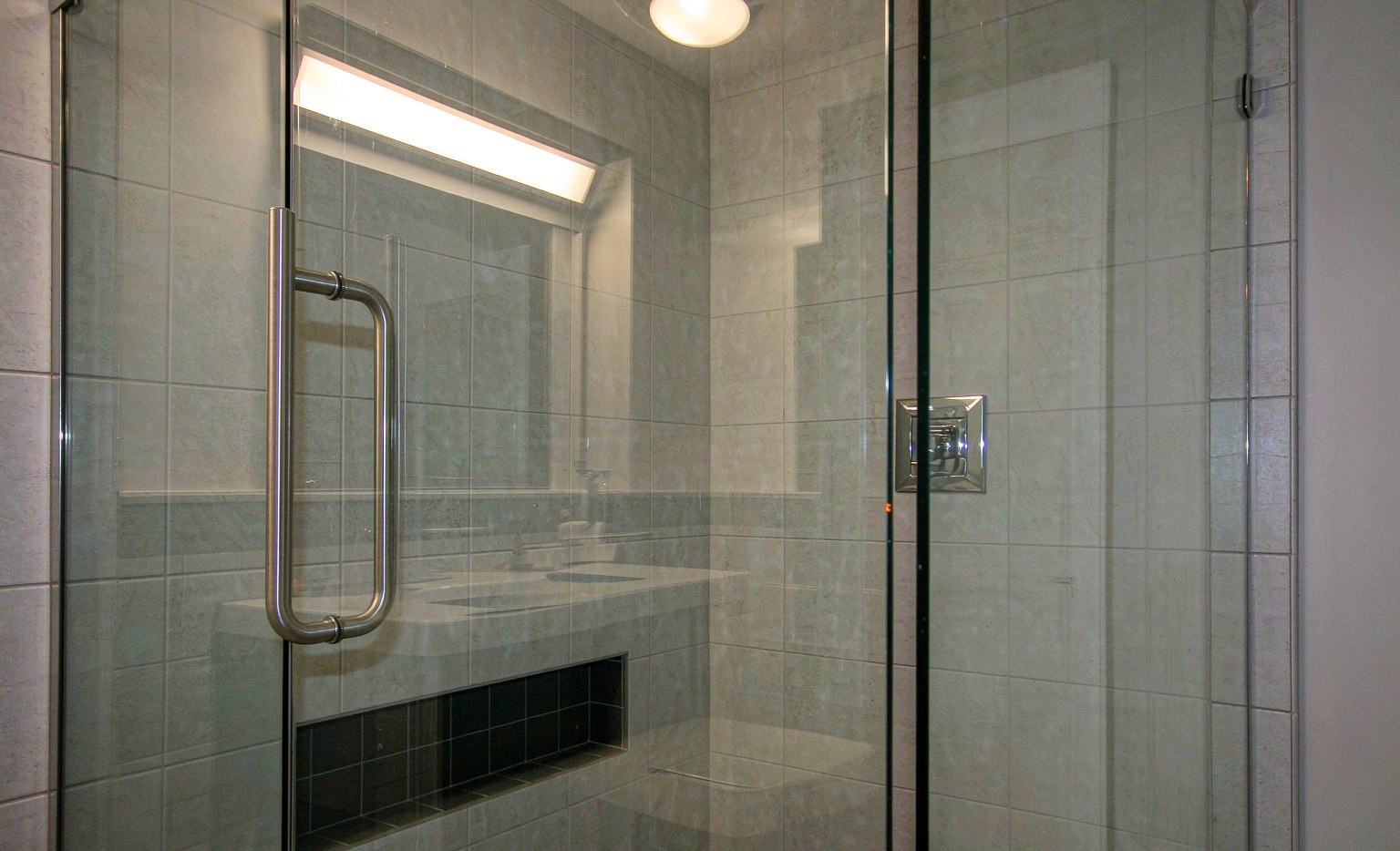
Frameless systems use tempered (toughened) safety glass in 8 mm, 10 mm or 12 mm thicknesses; 10 mm (3/8″) is the most common, while 12 mm (1/2″) suits larger or heavy-duty panels. Tempered glass is heat-treated so it fails safe into small granular pieces rather than shards.
| Property | Typical value |
|---|---|
| Thickness | 8 / 10 / 12 mm (commonly 10 mm) |
| Tempering standards | EN 12150, BS 6206, ASTM C1048, ANSI Z97.1, AS/NZS 2208 |
| Surface compression | ≥ 100 MPa |
| Impact resistance | 600–800 N |
| Thickness / size tolerance | ±0.2 mm / ±1.5 mm |
| Edge finish | CNC flat-polished edges, rounded corners R5–R8 mm |
Specification data referenced from frameless glass shower door manufacturers (Migo Glass and Deslano).
Hardware material: 304 vs 316 stainless vs brass
Material grade is where buyers most often cut corners — and where failures show up first. Zinc alloy and chrome-plated brass corrode quickly in humid bathrooms; specification-grade hardware uses stainless steel or solid brass.
| Material | Corrosion resistance | Best for |
|---|---|---|
| 304 stainless steel | High | Standard residential (inland) |
| 316 stainless steel | Very high (marine-grade) | Coastal homes, high-humidity/commercial — ~2–3× lifespan vs 304 in salt air |
| Solid brass | Very high (with PVD plating) | Luxury projects, glass > 12 mm |
| Zinc alloy / plated brass | Poor | Avoid in wet areas |
Finish popularity in 2025–2026 runs to matte black (hides water spots), brushed nickel, polished chrome and brushed gold. Premium suppliers apply PVD (physical vapour deposition) coatings that resist corrosion, UV fading and abrasion for 10+ years — important in rentals and hotels (Taky Hardware guide).
Hinge types and where to use them
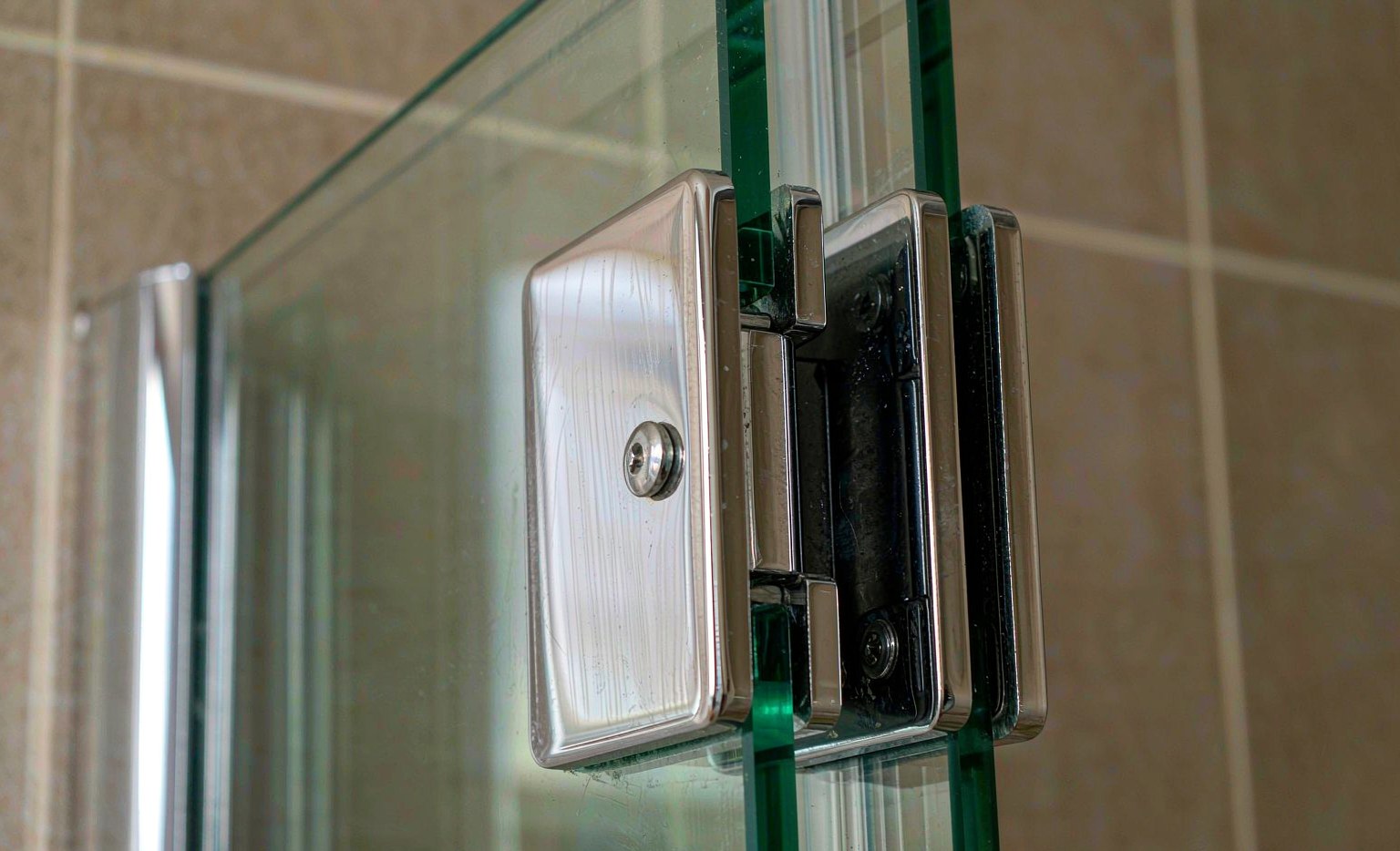
Choose the hinge by glass thickness, door swing and wall layout.
| Hinge type | Best for | Glass thickness | Opening angle |
|---|---|---|---|
| Wall-to-glass | Frameless shower doors (most common) | 8–12 mm | Up to 180° |
| Glass-to-glass | Corner enclosures | 8–10 mm | 90° or 135° |
| Floor-to-glass | Heavy pivot doors | 10–12 mm | Up to 360° |
| Patch fitting | Structural / high-end glass doors | 8–12 mm | 90–180° |
| Frameless pivot | Designer bathrooms | 10–12 mm | Up to 180° |
Load capacity matters more than looks: hinges should support 80–100 kg per door panel, and a 10 mm glass door needs a load rating of at least 75 lb (≈34 kg) per pair of hinges (Infinity Hardware). Adjustable 3-axis hinges (vertical, horizontal, depth) simplify installation and let you correct door alignment — aim for ±2 mm vertical tolerance.
Clamps, brackets and fittings
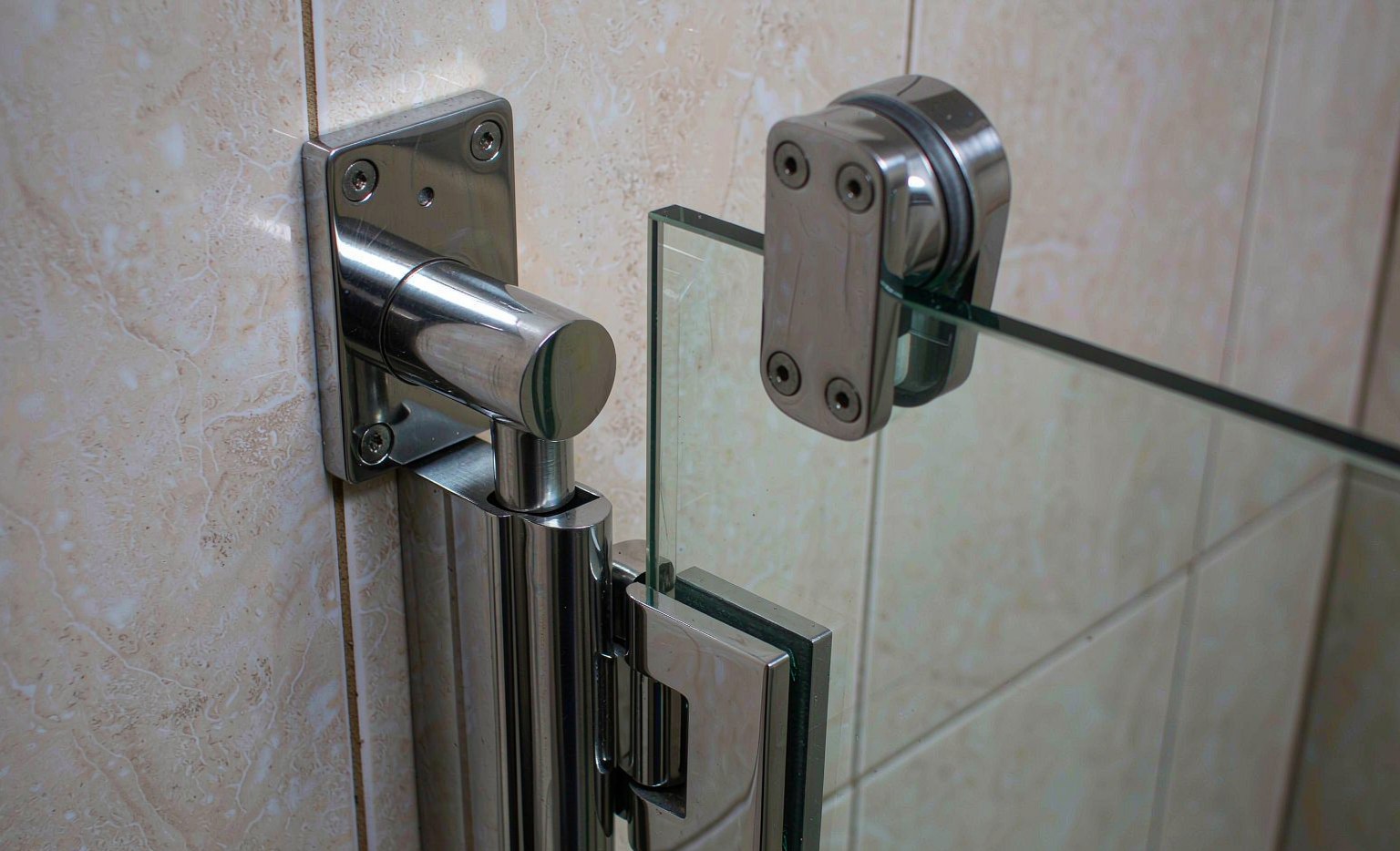
Glass clamps fix fixed panels and support shelves and return panels. The single most common specification error is a clamp/glass thickness mismatch:
- 3/8″ (10 mm) clamps — the residential standard, most widely available.
- 1/2″ (12 mm) clamps — heavy-duty, oversized panels.
- Adjustable clamps — accept 3/8″–1/2″ (10–12 mm) with interchangeable inserts.
Warning: using a 3/8″ clamp on 1/2″ glass will crack the panel; a 1/2″ clamp on 3/8″ glass leaves dangerous play. Always use nylon or rubber setting blocks inside the clamp — never direct metal-to-glass contact — and pre-drill with diamond-tipped bits, avoiding grout lines.
Load ratings, sealing and testing standards
Reputable hardware is backed by test data, not adjectives. Ask suppliers for:
- ASTM E2356 — durability under cyclic loading (100,000 open/close cycles).
- ANSI/BHMA A156.19 — load-bearing capacity (hinges supporting ≥ 200 lb).
- ASTM F2090 — tempered-glass compatibility (guards against nickel-sulphide inclusions).
- ASTM B117 salt-spray — 720 hours minimum for coastal use.
- Material test reports (MTRs) confirming the stainless grade.
For sealing, specify EPDM rubber water-seal strips and gaskets rather than plain silicone (which degrades faster under UV), plus transparent PVC strips for vertical and bottom edges. Leave a 3–5 mm gap between glass panels and use neutral-cure anti-mildew silicone at fixed joints. A well-specified enclosure should carry CE, ISO 9001 and SGCC/SGS certification, with a minimum 10-year residential / 5-year commercial warranty.
ADA and commercial compliance
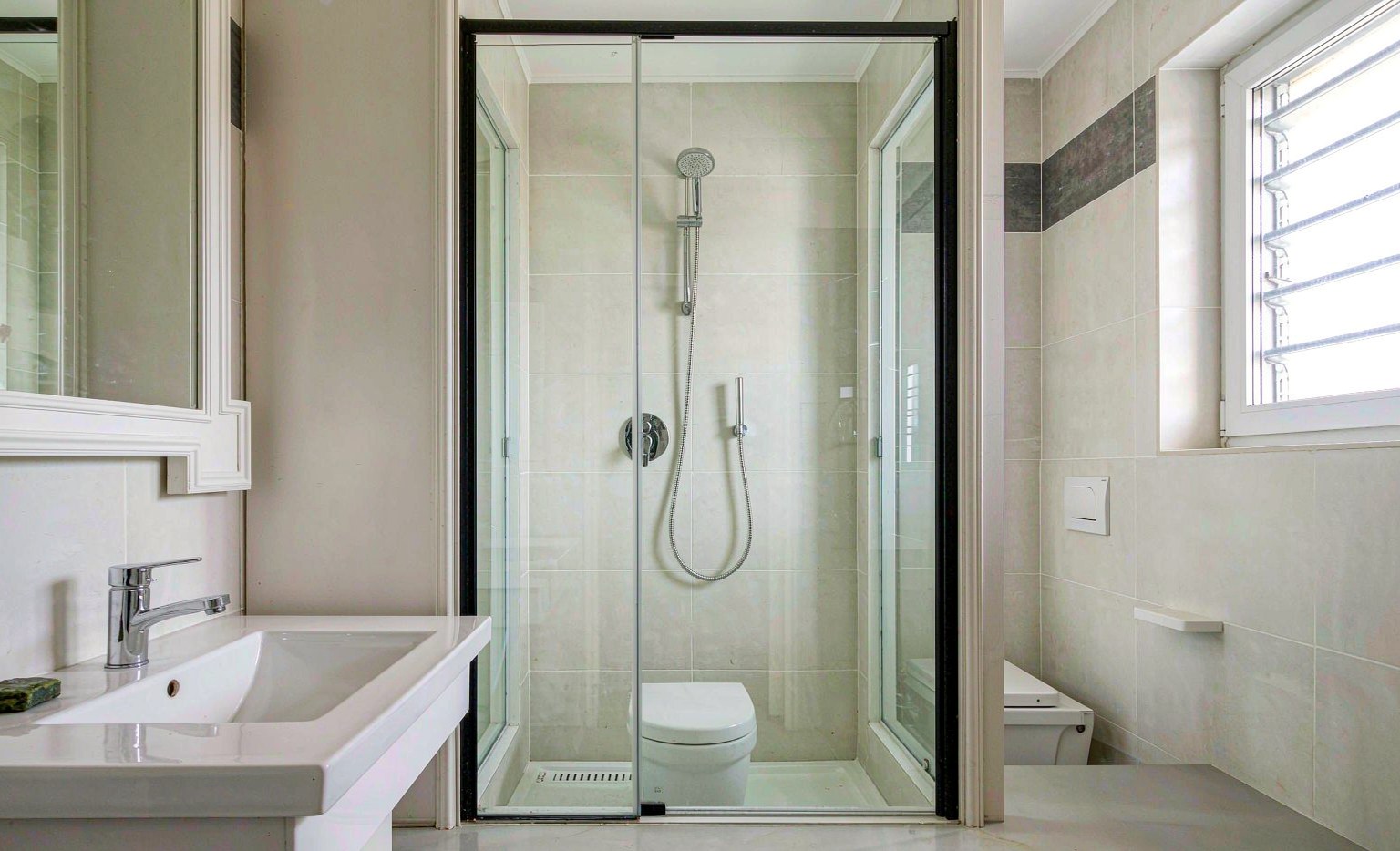
For public accommodation and multi-family housing, shower doors must meet ADA requirements:
| Requirement | Specification |
|---|---|
| Clear opening width | Minimum 32″ |
| Opening force | No more than 5 lb |
| Closing speed | At least 5 seconds from 90° to 12° |
| Threshold height | Maximum 1/2″ (roll-in showers) |
| Handle grip diameter | 1.25″–1.5″ (ADA §606) |
Offset or swing-clear hinges may be needed to reach the 32″ clear opening on in-swinging doors (Taky Hardware).
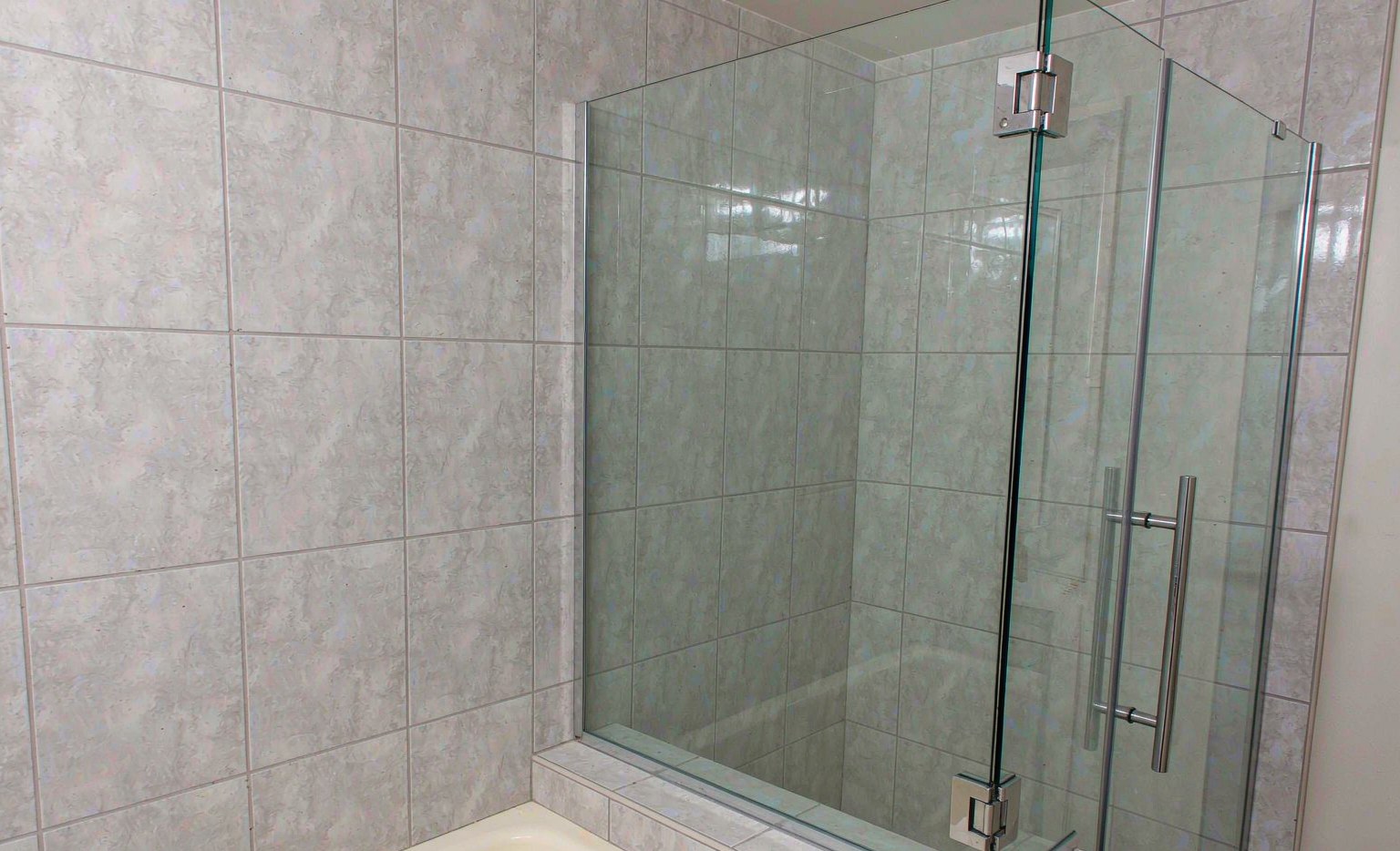
How to specify and source frameless shower hardware
- Lock the glass thickness first — it drives every clamp, hinge and seal choice.
- Match the material to the environment — 304 SS inland, 316 SS coastal/commercial, solid brass for luxury.
- Demand test data — cycle, load and salt-spray reports plus MTRs; treat vague “heavy-duty” claims as red flags.
- Check adjustability — 3-axis hinges and adjustable clamps absorb wall and tile irregularities.
- Budget realistically — residential sets (hinges + handles) run $150–$300; commercial/luxury specifications $400–$800+.
Installation detail matters as much as specification on commercial jobs: the towel bar and handle combo installation guide covers the fixing sequence, spacing, and finish protection trades ask about most.
Internal resources
Zimmor Hardware is a QCC-certified frameless shower door hardware factory producing OEM hinges, glass clamps and custom fittings since 1999. Related capabilities:
- Frameless shower door hardware — Zimmor Hardware
- Wholesale OEM shower hinges
- Glass clamps & fittings
- Custom bathroom hardware
Guide index: more from this series
Specifying hardware? The materials guide service page compares brass, stainless, zinc and aluminium, and our sample service lets you verify finish before volume.