

A shower hinge cannot be approved from nominal glass thickness alone. Confirm the exact hinge model against the glass schedule, cut-out drawing, panel arrangement, edge details and installation instructions before ordering or fabricating the glass.
Key Takeaways
- Check glass type, nominal thickness and fabrication tolerances from the approved glass schedule.
- Compare each hinge drawing with the actual hole pattern, notch, edge condition, gasket and mounting arrangement.
- Do not assume a hinge range, door limit or fitting count applies to another model.
- Resolve mismatches with the glass fabricator and hardware supplier before tempering or installation.
The details behind a compatibility decision
Compatibility is a property of the glass and hardware as a pair. The review should include the exact model number, glass type and thickness, panel dimensions, holes and cut-outs, edge work, gaskets, number and position of hinges, door swing and supporting structure. Keep the glass and hardware drawings at the same revision so each supplier reviews the same configuration.

Glass-to-glass hinges
For a glass-to-glass connection, compare the hinge drawing with both panel edges and every required hole or notch. Verify the gasket and clamping arrangement for the listed glass, the panel alignment, and the clearances during the door swing. Do not widen a published fit range or substitute a different cut-out based on visual similarity.
The glass fabricator should confirm the dimensions and tolerances of the prepared panels. If the drawings do not show the same hole pattern or edge condition, pause the order and obtain written confirmation from the hardware supplier before fabrication.
Wall-mounted hinges
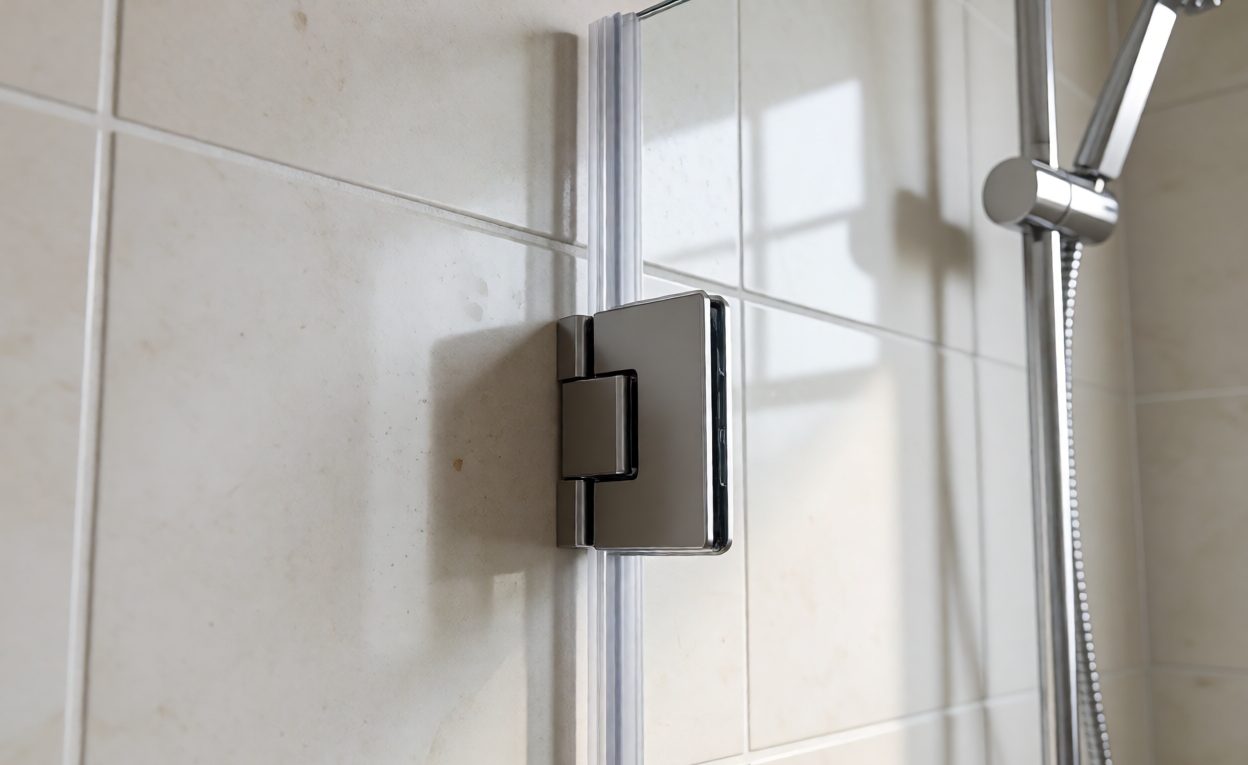
For a wall-to-glass hinge, verify the specified wall fixing, substrate and backing, as well as the hinge’s glass interface. Tile, framing, masonry and other wall assemblies need the fixing arrangement approved for that exact installation. Do not infer anchor type, embedment or load from the hinge category alone.
Pivot fittings and patch hardware
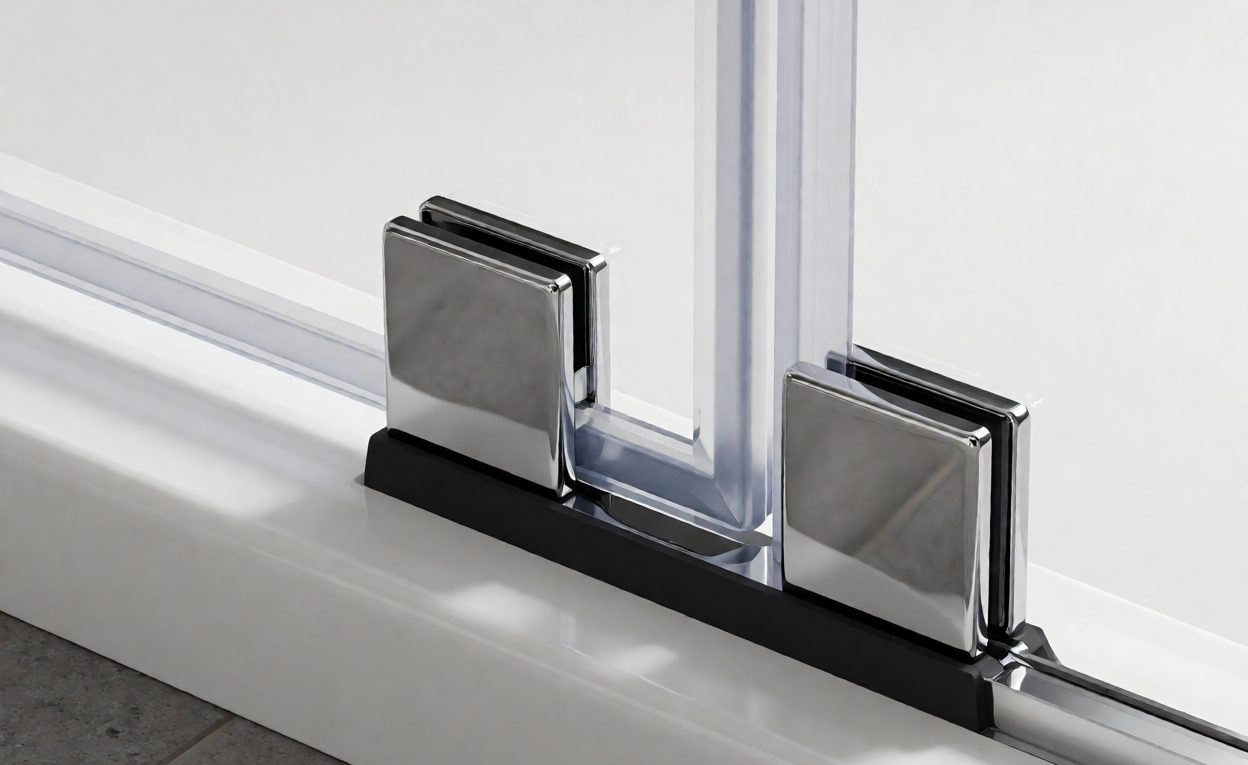
A pivot assembly has its own mounting points, clearances and documented panel configuration. Check the top and bottom fitting details, floor or header support, door travel, adjacent panels and any required preparation in the glass. A pivot is not inherently suitable for a larger or heavier door; use the model-specific documentation and project review.
Fabrication and safety checks
Agree on holes, notches and edge details before the glass is heat-treated. The National Glass Association’s glazing manual states that heat-strengthened and fully tempered glass cannot be cut, drilled or edged after heat treatment. For U.S. shower doors, the CPSC includes shower doors and enclosures within its architectural-glazing safety standard; requirements in other locations should be checked with the project designer or local authority.
See the glass cut-out and drilling tolerance guide, the glass thickness specification guide, and the professional installation guide.
Frequently Asked Questions
Can one hinge fit both 8 mm and 10 mm glass?
Only if the current drawing for the exact hinge model lists both sizes and identifies the supplied gasket or clamping configuration. Do not infer a range from the nominal size alone.
Which hinge type tolerates glass-thickness variation best?
No hinge type should be assumed to absorb unapproved variation. Match the glass tolerance to the model drawing and ask the supplier to confirm any permitted adjustment or gasket range.
Is tempered glass required for every shower enclosure?
Safety-glazing requirements depend on the project location and application. Confirm the applicable code and glass designation with the responsible designer or authority rather than applying one jurisdiction’s rule worldwide.
Why do glass cut-outs need careful review?
The cut-out shape, position, edge condition and hardware contact must match the approved drawing. A mismatch can prevent correct seating or create an unsafe installation; the glass fabricator and supplier should resolve discrepancies before production.
Are pivot hinges automatically better for heavier doors?
No. Use the documented limits for the exact pivot model and panel configuration. The hinge type alone does not establish an allowable door size or load.
Should glass thickness tolerance be shown on the order?
Yes. The glass schedule should state the nominal thickness and applicable dimensional tolerances so the fabricator and hardware supplier can confirm the intended fit.
How many hinges does a frameless door need?
Follow the specified hinge count and positions for the approved panel dimensions and exact product model. Do not use a generic count or weight formula instead of the manufacturer’s documentation.