

A supplier’s lead-time number is useful only when its start point, end point, included stages, product configuration and transport assumptions are clear. Work backward from the date the hardware must be ready for installation, then track the order through named approval, production, packing and delivery milestones.
Define what the quoted lead time covers
Ask whether the quoted period starts at purchase-order receipt, deposit, approved drawings, confirmed finish, material release or another event. Confirm whether it ends at factory completion, inspection release, dispatch, port departure or arrival at the named destination. State calendar days or working days and identify weekends, factory closures and holiday assumptions if they affect the quote.
Request a stage breakdown for the actual order. A plan may include order and drawing review, material or component availability, machining or forming, finishing, assembly, inspection, packaging, export documentation, pickup, port handling, transit, customs and final delivery. The specific stages and ownership vary by supplier, route, Incoterm and project.
Put dates and owners against milestones
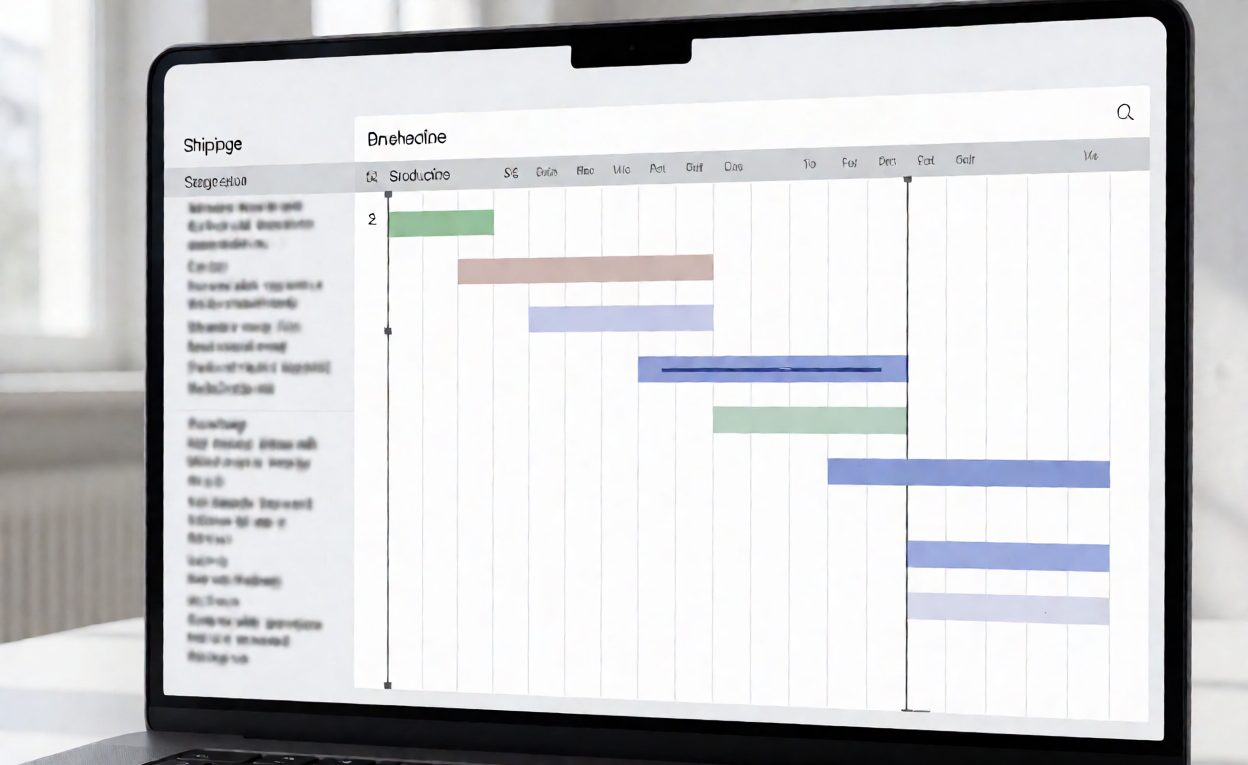
Use an order tracker with a planned date, current forecast, actual date, owner and evidence for each milestone. Record buyer approvals and supplier confirmations rather than relying on an informal “ready in 30 days” message. Typical approval evidence includes:
- Purchase order and agreed specification revision accepted by both parties.
- Approved product drawing, glass interface and finish reference.
- Packaging proof, identifiers and shipping marks where required for the channel.
- Production or first-article release, inspection status and packing list.
- Carrier booking, departure and arrival updates for the agreed route.
Complete the specification before release so open dimensions, finish choices, packaging or destination information do not become late clarifications. The sample approval checklist and packaging guide help define two approvals that often sit on the same project schedule.

Plan backward without inventing a universal buffer
Start from the date the installer or site actually needs the goods. Add the buyer’s receiving, inspection and staging time, then use current carrier and customs estimates for the selected route. Work backward through dispatch, final inspection, packing, production and approval. Add contingency based on the project’s risk and the reliability of the route and supplier; a fixed buffer does not fit every destination, season or order.
Ask the supplier to identify which dates are committed, estimated or still dependent on buyer approval or material availability. Review the forecast when a milestone changes. If the specification or quantity changes, request a written impact assessment for affected production and delivery dates.
Choose a recovery option before a delay happens
Discuss what can be split and what should stay together. A partial shipment may get urgent items moving but can add freight, handling, receiving and reconciliation work; a finish or revision split may also complicate visual consistency or traceability. Agree which SKUs and quantities may ship early, which documents travel with each shipment, how additional charges are approved, and which items must remain together.
For repeat programmes, compare project-by-project orders with a rolling forecast or buyer-held stock for stable, common configurations. Set stock levels from demand history, replenishment reliability, storage cost and obsolescence risk. Forecasts should identify what is indicative versus a firm purchase commitment.

Connect the delivery plan to the shipment plan
Confirm the named delivery point, packed carton dimensions, weight, carton count and receiving restrictions before booking transport. If several SKUs share a container, link the schedule to the mixed-container loading plan so that packaging, carton labels and dispatch readiness agree. Keep the supplier’s production estimate separate from the forwarder’s transit estimate, and keep both separate from customs or site-receiving time.
Frequently Asked Questions
What does a quoted shower hardware lead time usually include?
It depends on the supplier’s stated start and end points. Confirm whether it covers approvals, production, finishing, inspection, packaging, dispatch or transport, and name any excluded stage.
Which stage is most likely to delay an order?
There is no universal stage. Ask the supplier and forwarder to identify current dependencies for this order, such as approval, material availability, finishing capacity, carrier booking or destination handling.
How much buffer should I add to a project schedule?
Set contingency from the actual route, project tolerance, supplier history, current logistics estimates and receiving requirements. A fixed number of days cannot cover every order or destination.
Can an incomplete purchase order delay production?
It can create clarifications or prevent release if key configuration, drawing, finish, quantity or packaging details are unresolved. Confirm the order is complete and accepted before using the supplier’s production start date.
Is a split shipment a good fallback for a delay?
It may help with urgent items, but can add cost and create receiving, finish, revision or traceability complications. Agree the eligible SKUs, costs, documents and approval process before splitting.