

Wall-mount, glass-to-glass and pivot hinges describe common shower door arrangements, but the right option depends on the enclosure layout and the exact product system. Compare the mounting surfaces, glass preparation, opening path, support and manufacturer instructions before selecting a hinge.
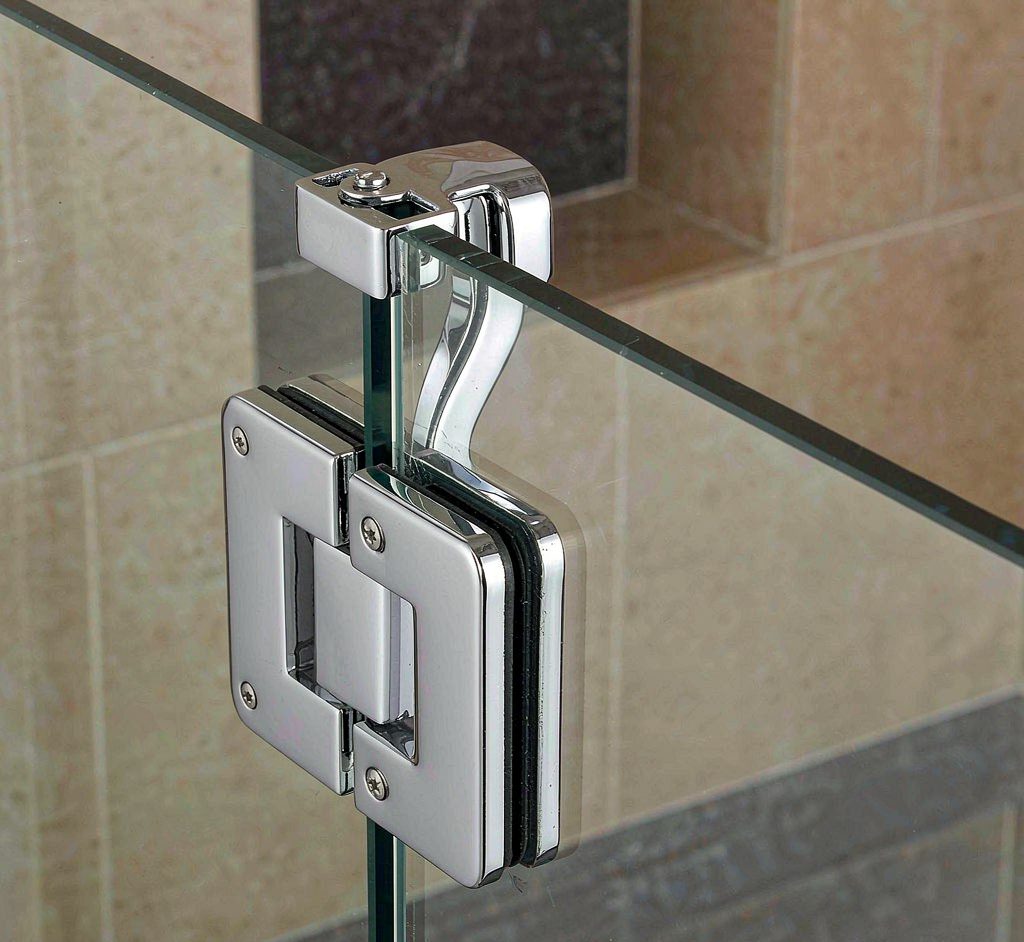
Key Takeaways
- Choose the hinge arrangement from the door and fixed-panel geometry.
- Check glass thickness, cut-outs, gaskets and edge requirements for the exact model.
- Confirm the wall substrate, adjacent panel and fastening details for the installation.
- Read any load or cycle rating with the model and test configuration it covers.
- Use current drawings and instructions; do not infer capacity from hinge type alone.
Compare the Common Hinge Arrangements
| Arrangement | Typical interface | Key checks |
|---|---|---|
| Wall-mount | Door panel connects to a wall or jamb | Substrate, anchor, wall connector, glass preparation and opening clearance |
| Glass-to-glass | Door connects to a fixed glass panel | Panel geometry, cut-outs, glass fit, gaskets and support |
| Pivot | Door rotates on a pivot arrangement specified by the system | Pivot location, support points, floor or header interface and movement clearance |
These labels describe broad configurations, not every hinge design. A manufacturer’s drawing determines the permitted mounting arrangement and dimensions for a specific model.
Check Glass and Installation Fit
Confirm the glass build and thickness, hole or cut-out pattern, edge finish, gasket set and fasteners. Compare them with the current drawing for the exact model. For dimensions and fabrication tolerances, see our shower hinge glass cut-out guide.
For a wall-mount hinge, have the installer verify the actual wall construction and approved anchor. For glass-to-glass hardware, confirm the fixed-panel support and compatible cut-outs. Do not modify tempered glass to make a different hinge fit.
Review Ratings and Project Requirements
If the supplier provides load, cycle or corrosion data, check the model, sample, installation, test method and acceptance criteria in the supporting document. A test result for one arrangement does not automatically apply to another hinge type, panel size or fixing method.
Compare the proposed hardware with the project schedule and applicable instructions. Confirm the opening direction, adjacent seals, handle clearance and service access before approving the final model.
Frequently Asked Questions
What is the difference between wall-mount and glass-to-glass hinges?
They connect the door to different support surfaces. Check the exact hinge drawing, mounting substrate, fixed-panel arrangement and glass preparation for the proposed enclosure.
Are pivot hinges suitable for every shower door?
No. Suitability depends on the pivot system, support points, panel geometry and installation details stated by the manufacturer.
Can the hinge type determine how many hinges are needed?
No universal count follows from the type name alone. Confirm the exact panel and hinge configuration with the manufacturer’s rated data and instructions.
What should be checked before ordering a shower door hinge?
Check the layout, glass thickness and cut-outs, mounting surface, opening movement, finish, supplied parts and model-specific instructions.