

Short answer: specify shower-hardware corrosion performance by the exact material and finish, site exposure, cleaning conditions and product-specific evidence. “Corrosion grade” can refer to different standards or project labels; identify the basis rather than assigning a universal grade to a bathroom type.
Coastal, poolside, hospitality and residential environments can differ in moisture, salts, cleaning chemicals, ventilation and use. These are inputs for a model-specific review, not a shortcut to a material or finish recommendation.
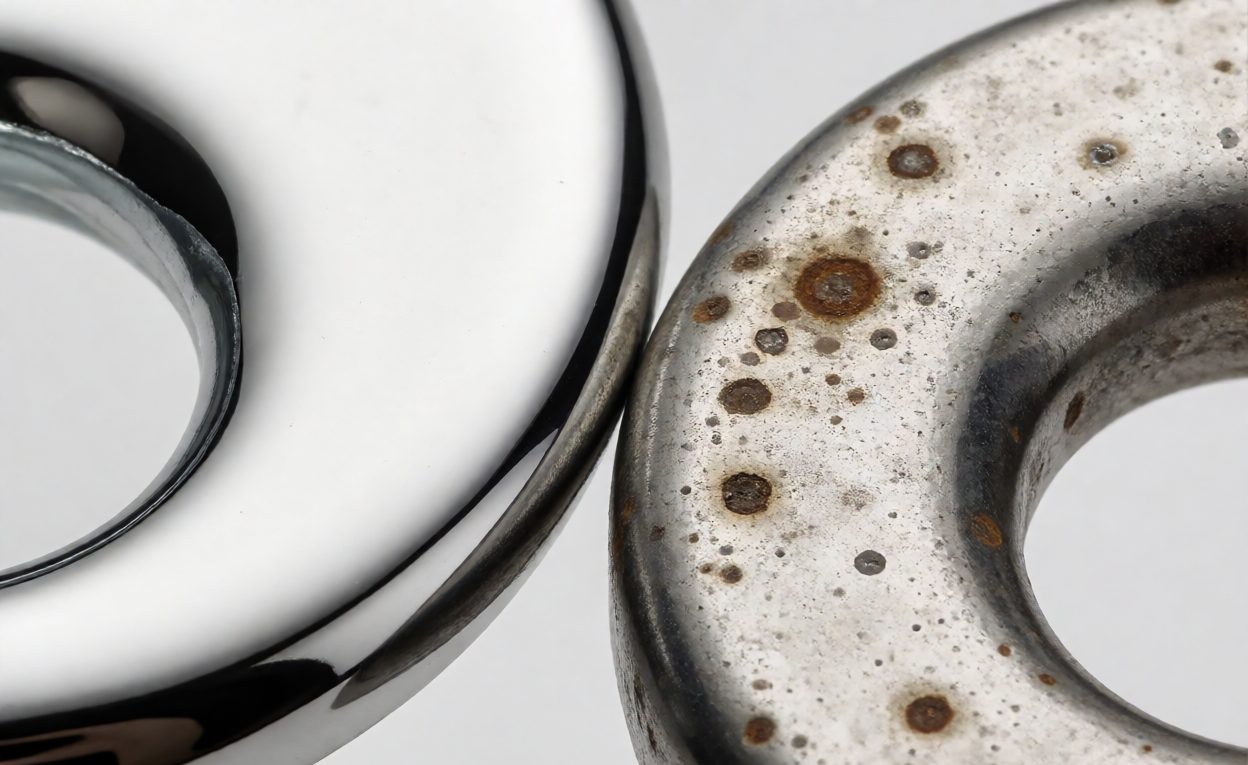
Describe the installed environment
| Project context | Conditions to record | Evidence to request |
|---|---|---|
| Residential or low-use interior | Ventilation, wetting and drying pattern, cleaning products, water chemistry if known | Material and finish statement, care instructions and applicable product data. |
| Hospitality or multi-unit project | Use frequency, cleaning schedule, replenishment plan and room variation | Exact model, approved sample, maintenance requirements and replacement availability. |
| Coastal, pool, spa or chemical exposure | Salt or disinfectant exposure, ventilation, distance/placement, rinsing and maintenance | Model-specific exposure data, full test report, finish limits and warranty terms. |
| Mixed metals or multiple finishes | Contact between materials, fasteners, water traps, adjacent finishes and cleaning agents | Component-level materials, compatibility information and installation details. |
Specify materials and finish by component
Ask for the material or alloy and finish system for the exact hinge, handle, fastener, spring, cover and other components where they differ. A marketing name such as “stainless,” “brass,” “PVD” or a color name does not identify every component or establish its performance in the project environment.
Confirm the cleaning products, maintenance steps, exclusions and expected replacement procedure in writing. If the supplier recommends a different model or finish for a particular exposure, request the product-specific basis for that recommendation.
Read salt-spray evidence in context
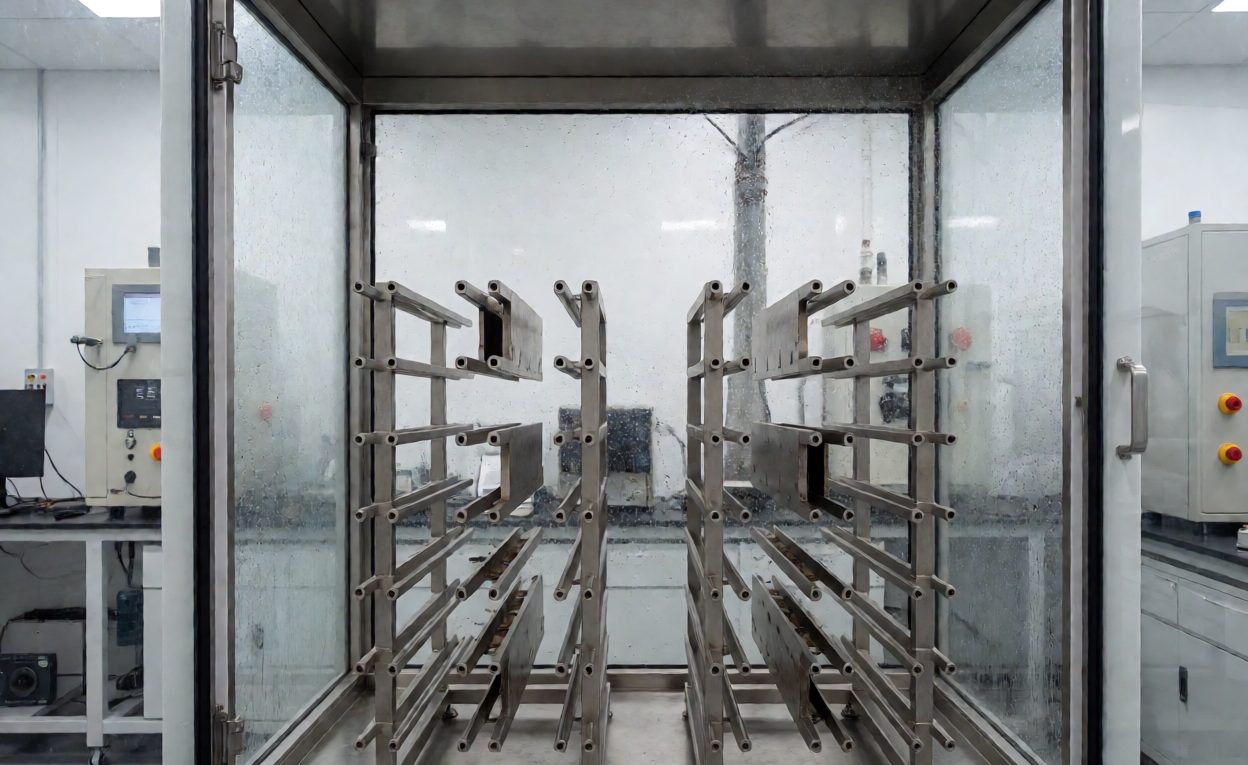
When a salt-spray result is used, request the test method and revision, specimen and finish details, preparation, exposure conditions, duration, inspection method, acceptance criteria and tested model. Do not convert exposure hours into years of service or treat one test result as a universal environmental rating. ASTM B117-26 describes the salt-fog apparatus and operating practice; it does not, by itself, define a product-specific acceptance limit or a field service life.
Write a project corrosion requirement
- Describe the room location, moisture/salt/chemical exposure and cleaning practice.
- Identify the exact hardware models, component materials and finish system.
- State which test method, sample preparation and acceptance criteria apply, if testing is required.
- Define care instructions, inspection, warranty coverage and replacement expectations.
- Approve a reference sample and record the product and finish revision for reorders.
For related choices, see the PVD coating specification guide and brass-versus-stainless hinge guide.
Frequently asked questions
What is a corrosion grade?
The term may refer to a named standard, a supplier category or a project-defined label. Ask which system is being used, what evidence supports the grade and whether it applies to the exact finished product.
Is 304 stainless steel suitable near the sea?
A material name alone does not answer that for every model or site. Confirm the exact components, finish, exposure, maintenance and supplier data for the planned installation.
How many salt-spray hours should I require?
There is no universal duration that corresponds to a guaranteed service life. Define the method, specimen, finish, acceptance criteria and reason for the test with the project team and supplier.
Can cleaning products invalidate a corrosion warranty?
Warranty and care terms differ by product. Obtain the current instructions and exclusions for the exact model, and confirm that the project’s cleaning products are compatible.
Summary
Replace generic corrosion grades with a project description, component-level material and finish data, product-specific test evidence, cleaning requirements and documented acceptance criteria. Keep the approved sample and model revision with the specification.