

Choosing between brass and stainless steel shower door hinges starts with the exact product, not the material label. Alloy, component design, finish, installation, panel geometry, cleaning and exposure all affect the assembly. For a project or wholesale order, compare documented information for the model and finish you plan to buy; a material name alone cannot confirm corrosion performance, compatibility or load capacity.
Key Takeaways
- Ask which alloy and finish are used for each hinge component.
- Compare corrosion information only when the samples, test method, finish and acceptance criteria are clear.
- Do not convert salt-spray hours into years of service or treat a pass as a universal guarantee.
- Verify glass fit and the complete hinge rating for the exact panel and installation.
- Keep the approved drawing, material statement, finish sample and care instructions with the purchase specification.
Start with the Exact Material and Finish
“Brass” and “stainless steel” each cover products with different compositions and processing. A product label does not identify the exact alloy, production route, finish system or the material used for every component. Ask for a material statement that names the body, pins, screws, springs and other parts that may contact water or cleaning products.
If the supplier offers stainless grades such as 304 or 316, request the grade information for the specific model and batch. Grade names are useful only when they correspond to the supplied material and the project’s exposure requirements. For brass, request the specified alloy or composition where it matters to the project. Check whether the visible finish is a coating, plating, brushed surface or another treatment, and whether the same finish is applied to all components.
Do not assume that a stainless fastener makes the hinge body stainless, or that two products with the same finish name use the same substrate. Record the material and finish against the product code and revision so later replenishment orders can be matched to the approved sample.
Compare Corrosion Evidence for the Intended Use
Write down the conditions the hardware will face: indoor or exposed installation, likely moisture and cleaning agents, rinsing and drying practices, and any project-specific chemical or chloride exposure. Ask the supplier to explain which parts of its evidence apply to those conditions. A recommendation for one environment should not be copied to another without supporting product information.
When a salt-spray result is provided, check what was tested: the base material, finished component, coating coupon or assembled hinge. Record the test method, sample preparation, exposure duration, evaluation criteria, number of specimens and the reported outcome. These details matter when comparing documents from different suppliers.
ASTM B117 describes a practice for operating a salt-spray apparatus. ASTM says the practice does not prescribe the specimen or exposure period for a particular product, nor how to interpret results; it also cautions that stand-alone results seldom predict performance in natural environments. Therefore, do not treat a larger hour count as a direct service-life ranking. For a practical checklist on test reports and finish evidence, see our shower hardware salt-spray testing guide.
Verify the Glass Fit and Load Rating
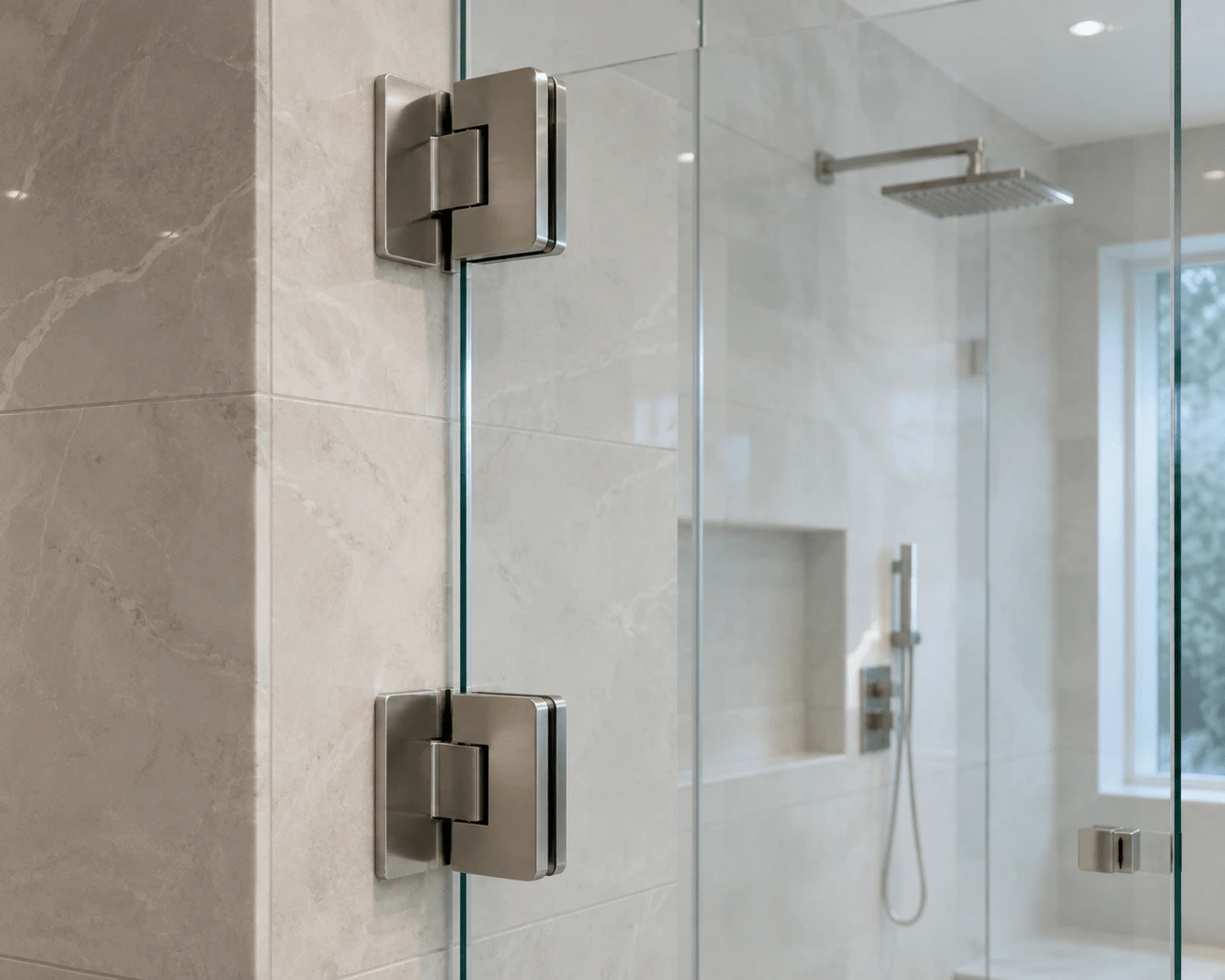
Ask for the current model drawing and installation instructions. Match the hinge to the glass type and measured thickness, edge preparation, cut-outs, gasket arrangement, mounting direction and opening path. Check the door dimensions and mass, the number and spacing of hinges, the substrate, anchors and any supporting hardware. Similar-looking hinges can have different geometry and approved configurations.
Request a load rating for the complete hinge model and its stated test or installation conditions. Do not estimate capacity by dividing the door weight by the number of hinges or transfer a rating from another material, finish, glass thickness or mounting arrangement. If the drawing or rating does not cover the proposed assembly, obtain written confirmation from the manufacturer and project professional before specifying it.
Our shower door hinge selection guide and complete shower hardware specification guide list the project details to provide when comparing models.
Review Finish, Sample and Care Requirements
Request a production-representative sample in the finish and material planned for the order. Inspect color, sheen, texture, edges and visible transitions under the lighting expected at installation. Agree how samples are identified, who approves them, and how a supplier will notify the buyer if the material, finish process or component changes.
Ask for care instructions that identify compatible cleaners and practices for the supplied finish. Keep the product drawing, approval record, material statement, finish details and maintenance guidance together. Where a project has its own environmental or durability requirements, put the acceptance criteria in the purchase documents rather than relying on a general phrase such as “coastal grade” or “premium material.”
Buyer Comparison Checklist
| Question | Evidence to request |
|---|---|
| What material is supplied? | Model-specific material statement for the body and relevant components |
| Which finish is approved? | Identified finish, production sample, revision and change-notice process |
| How was corrosion assessed? | Test method, specimen, preparation, duration, criteria and report |
| Will the hinge fit this panel? | Current drawing covering glass, cut-outs, gaskets and mounting arrangement |
| What load is supported? | Rating for the exact model and documented configuration |
| How should it be maintained? | Care instructions for the supplied material and finish |
Compare the evidence against the project specification and total installed requirements. Unit price by itself does not show whether a model is suitable; confirm material, finish, glass fit, rating, documentation, sample approval and service terms before placing a repeat order.
Frequently Asked Questions
Are brass or stainless steel shower hinges better?
There is no universal answer. Compare the exact material, finish, project exposure, glass configuration, documented rating, care requirements and supplier evidence for the models under consideration.
Can salt-spray hours predict how long a hinge will last?
No. A salt-spray result describes a specimen under a stated test method and evaluation. ASTM cautions that stand-alone results seldom predict performance in natural environments, so do not convert the hours into years of service.
Does a 316 stainless designation guarantee suitability for a coastal project?
No. Confirm that the exact supplied component is the stated grade and review the full assembly, finish, installation, exposure and maintenance requirements with the project specification.
Can I choose a hinge load rating from its material alone?
No. Use the rating and drawing for the exact hinge model and documented glass, mounting and installation configuration. Do not infer capacity from brass or stainless steel alone.
What should I request before approving a hinge sample?
Request the model drawing, material statement, finish identification, applicable test reports, installation instructions, load rating, care guidance and a way to track the approved sample and revision.
Conclusion
Choose a shower hinge by matching documented material, finish, fit and rating information to the project conditions. Keep the sample and technical records tied to the model and revision, then review any proposed changes before accepting a substitute. This gives buyers, fabricators and suppliers a clear basis for comparing brass and stainless steel options without relying on broad material claims.