
PVC shower door seals should be specified by their profile, glass interface, and project environment. This guide narrows the decision to the PVC seal itself rather than comparing every seal type in an enclosure.

Identify the profile before comparing material
Provide the glass edge location, panel thickness confirmed by the fabricator, and a sketch or sample of the required cross-section. Record the insertion depth, fin shape, length, and visible portion of the seal. Ask the supplier to identify the exact PVC profile and any options that change its geometry, rather than relying on a general material name.
Ask for material and care information
Request the supplier's description of the supplied compound, any stated limitations, and the cleaning guidance for the finished seal. If clarity, color, or appearance over time matters, ask what evidence is available for the named item and how the sample relates to production. Do not promise a service life or chemical resistance unless the supplier's documentation supports the exact configuration.
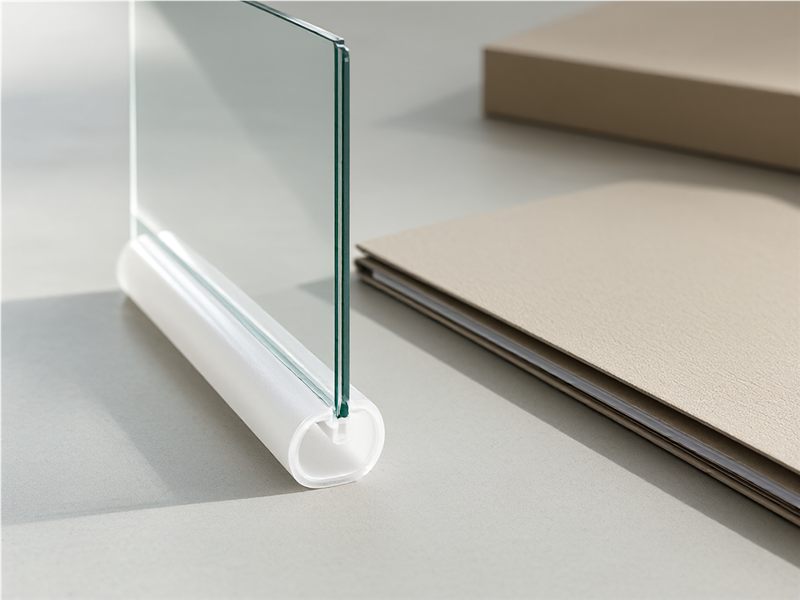
Check retention and water contact
Review how the seal engages the glass and whether it stays in place through door movement and cleaning. Check the position of each lip against the intended water path and adjacent surfaces. On a sample, observe insertion effort, fit, contact, and removal method. Record any installation tool or orientation needed to reproduce the approved result.
Set a replacement and purchasing reference
List the profile drawing, color, cut length, end treatment, quantity, and packaging needed for the order. Keep a labeled sample or clear cross-section photo with the model number. If the opening uses a different glass thickness or edge condition, request a separate confirmation rather than reusing the same seal identity by assumption.
PVC seal specification questions
Does PVC in the product name identify a complete seal fit?
No. The cross-section, glass interface, length, edge location, and supplier instructions still need to match.
Can a generic service-life figure be used?
Use only evidence supplied for the named item and conditions; otherwise state that the figure has not been confirmed.
Related resources: Zimmor glass hardware and fitting information; ANSI Z97.1-2026: Safety glazing materials used in buildings.
