

Picking shower hardware accurately depends on product records, location labels and checks that catch look-alike variants before dispatch. A hinge in the wrong finish or a seal for a different glass configuration can create rework, freight and customer delays. Review errors from actual orders to find where the warehouse process needs a clearer control.
Key Takeaways
- Keep model, finish, unit of measure and fit details consistent across the item master and pick list.
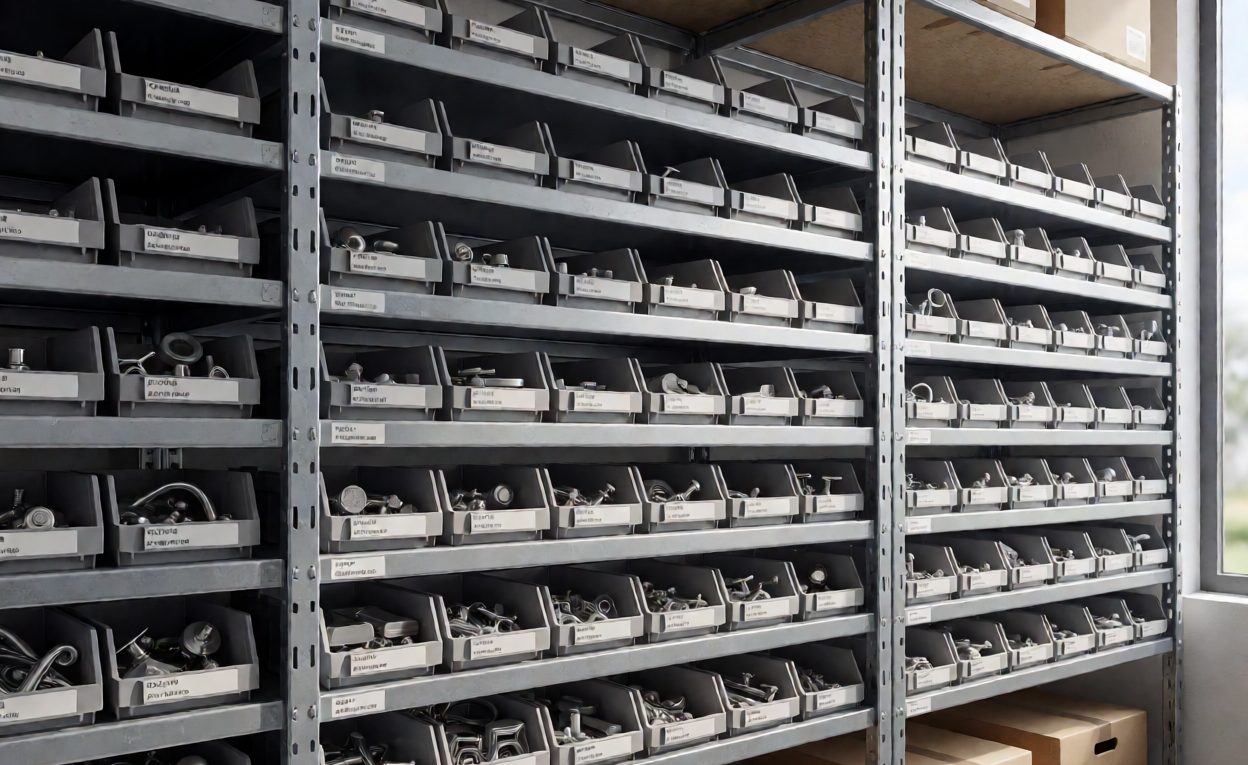
- Use clear location labels and separate products that are easy to confuse.
- Add scan or visual verification at the pick and pack steps where it fits the operation.
- Record picking errors by type, SKU and process step before changing the layout.
- Review inventory movements and label changes when product revisions occur.
Prepare Accurate Item Records
For each SKU, record the supplier part number, model, finish, unit of measure, pack quantity and fit attributes needed to distinguish it from similar products. Use approved product data for glass thickness, wheel profile or other compatibility fields. Do not rely on a shortened description that omits the difference between variants.
Keep the warehouse label, bin record, sales catalogue and purchase order aligned. If a supplier changes a part number or package quantity, update the mapping and tell staff which stock is affected before receiving new goods.
Set Locations and Pick Controls
| Control | What to check |
|---|---|
| Location label | Readable code that matches the warehouse system |
| Look-alike separation | Similar models, finishes or sizes are easy to distinguish during picking |
| Pick list | Shows the ordered SKU, description and quantity clearly |
| Verification | Barcode scan or a second check where the process requires it |
| Pack check | Item, quantity, finish and shipment label agree before sealing |
Choose shelf and bin locations based on the actual site, stock movement and safe handling requirements. Do not assume that one layout rule works for every warehouse or product mix. For dispatch planning after orders are picked, see our mixed container loading guide.

Measure Errors and Correct the Cause
Record the affected SKU, order, error type, discovery point and correction. If an error rate is useful, define its denominator and time period, such as incorrect lines against total lines processed. Keep the definition consistent when comparing periods and avoid conclusions from a small or incomplete sample.
Look for repeated causes such as an unclear item description, an obsolete label, a unit-of-measure mismatch or adjacent look-alike stock. Update the relevant record or work instruction, then review later orders to see whether the same error returns.

Frequently Asked Questions
What information should appear on a shower hardware pick list?
Include the SKU, clear product description, finish or fit attributes that distinguish variants, unit of measure and quantity. Use the item master as the source for those fields.
Should similar finishes be stored next to each other?
Choose locations based on the warehouse layout, but make similar products easy to distinguish with clear labels and verification steps.
How should a wholesaler measure picking accuracy?
Define what counts as an error, the unit being measured, the total processed and the time period. Apply the same method when reviewing later results.
What should happen after a picking error?
Correct the order, record where the error occurred and check whether item data, location labels, training or the verification step needs an update.