

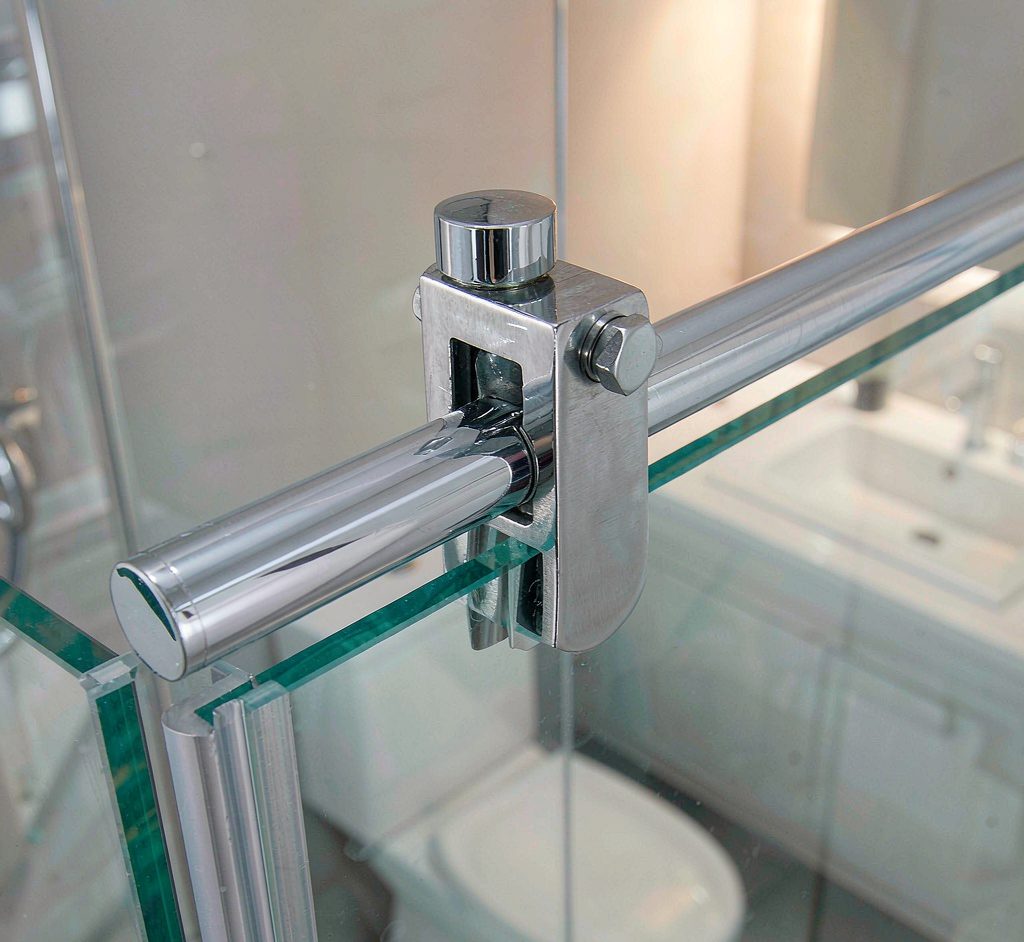
A stabilizer bar connects a glass panel to a wall, another fixed panel or a support point defined by the enclosure design. Select it for the actual panel geometry, mounting surfaces and approved hardware configuration. A nominal bar length or generic load figure cannot confirm that a proposed installation is suitable.
Key Takeaways
- Choose a bar for the actual glass-panel layout and support points shown in the product instructions.
- Measure the required connection points and adjustment range; do not order from a nominal opening size alone.
- Confirm end fittings, wall or panel substrate, fasteners and installation method for the exact model.
- Ask for model-specific load data and the test configuration behind any rating.
- Do not infer structural capacity from bar length, material or appearance.
Map the Panel and Support Points
Record the glass edge, intended connection points, clearances and opening movement before selecting a bar. Measure between the actual mounting points and identify the end fitting at each side. A wall connector and a glass connector may have different ranges or orientation limits.
Check the drawing for adjustment travel and confirm that the selected length can reach both approved points without forcing the panel or changing the intended angle. If the geometry falls outside the published drawing, ask the system supplier to review it before ordering.
Check the Support and Fixing Arrangement
Confirm the wall construction or fixed-panel configuration and the fasteners required by the manufacturer. A fixing into a solid substrate may require a different detail from one into a framed or finished wall. The installer should verify the actual substrate and use the specified anchor and installation sequence.
For a glass-to-glass connection, check the approved glass thickness, cut-out and gasket arrangement. Do not drill or alter tempered glass to make a bar fit. If the proposed geometry differs from the product drawing, obtain written confirmation from the system supplier and responsible project professional.
Review Materials, Finish and Adjustment
Compare the material and finish with the project specification and surrounding hardware. Confirm whether the bar can be cut or adjusted; some models have fixed dimensions or require a specific end fitting. Record the approved finish reference and check how replacements will match the installed product.
Where corrosion performance matters, request evidence for the finish and test conditions relevant to the intended environment. Our salt spray testing guide explains why a test result should be read with its method and scope rather than treated as a universal service-life promise.
Ask What a Load Rating Covers
If the manufacturer provides a load rating, match it to the exact model, end fittings, span, fixing arrangement and direction of force. Ask how the rating was established, what specimen and installation were tested, and which acceptance criteria were used. A rating for one configuration should not be transferred to a different span, wall fixing or glass connection without evidence.
Use the current drawing and instructions during installation, then inspect the connections and panel movement as specified by the manufacturer. This guide does not set a universal capacity or replace a project-specific structural assessment. For a coordinated project schedule and product data, see our shower hardware specification guide.
Frequently Asked Questions
How do I measure for a shower door stabilizer bar?
Measure between the intended mounting points shown by the enclosure design and compare the result with the exact model drawing and adjustment range. Do not rely only on the opening width.
Does a longer stabilizer bar have a higher load rating?
Not necessarily. Capacity depends on the complete model, span, end fittings, fixing substrate and test configuration. Check the manufacturer’s data for the proposed arrangement.
Can a stabilizer bar be fixed to any wall?
The wall substrate and anchor must match the manufacturer’s instructions and site conditions. Have the installer verify the fixing surface before installation.
Can I use a stabilizer bar to compensate for an unsuitable hinge?
Do not use it as a substitute for a compatible hinge or approved enclosure design. Confirm the complete assembly with the hardware supplier and project professional.