

A stabiliser bar is the horizontal or diagonal support that keeps a frameless shower door panel from flexing. It is one of the cheapest parts on a shower enclosure and one of the few that prevents an expensive one. This guide covers when one is required, how to size it, and how to install it without cracking the glass.
What a stabiliser bar does
A frameless panel is held by hinges at one vertical edge. That makes it a cantilever: every time the door swings, the free edge moves. On a narrow panel the movement is invisible. On a wide one, the panel flexes, the hinges take load they were not designed for, and the glass eventually develops stress at the holes.
A stabiliser bar ties the free edge back to a fixed point — a wall, the opposite panel, or the ceiling — and converts that cantilever into a supported structure. The door stops moving as a whole, the hinge load drops, and the panel stops flexing.
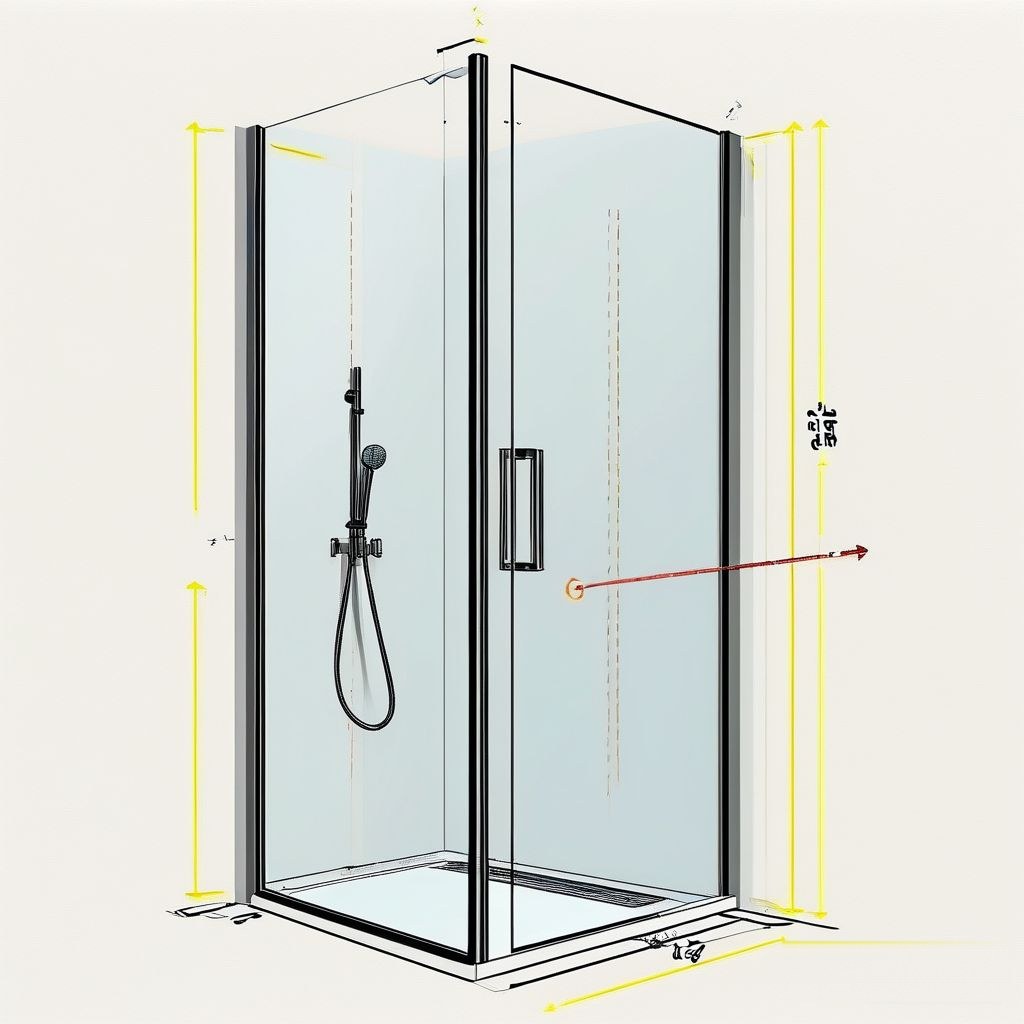
When one is required
The general guidance is that a panel beyond a certain width or weight needs support, and the exact threshold depends on glass thickness and hinge count. The practical rules:
- Panel width. Wide panels flex more than narrow ones. Width is the single biggest factor.
- Glass thickness. Thicker glass resists flex, so it tolerates a wider unsupported span.
- Hinge count and position. Three well-placed hinges support more than two, and hinge spacing matters more than hinge count.
- Door weight. Heavy hardware, thick glass, or an attached panel all add load.
If you are replacing hardware on an existing installation and the panel already shows movement at the free edge, a stabiliser bar is usually the fix rather than heavier hinges. Heavier hinges move the load without removing the flex.
Sizing
Stabiliser bars are sold by the distance they span, measured between mounting centers. Sizing is a measurement job, not a guess.
| Span | Typical bar type | Note |
|---|---|---|
| Short span to a wall | Fixed-length bar | Measure center to center, not overall |
| Medium span between panels | Adjustable bar | Adjustment range, not max length, is the spec that matters |
| Wide span with no wall | Ceiling-mounted support | Needs structure above, not just tile |
Measure twice with the panel closed, and measure to the mounting surface rather than to the glass edge. An adjustable bar covers a range; a fixed-length bar does not.
Tools and parts
- Stabiliser bar sized to your span, with its mounting hardware
- Drill with a tile or glass-appropriate bit, plus a smaller pilot bit
- Masking tape and a pencil for marking
- Level
- Silicone sealant suitable for wet areas
- Soft cloths to protect the glass
The mounting hardware matters more than the bar. Anchors that are rated for tile, not for drywall, and a bar whose finish matches your existing hinges so the installation looks intentional.
Installation sequence
- Mark with the door closed. With the panel shut, mark the mounting position on both the glass and the receiving surface. Working with the door closed means you are marking the position it will actually sit in.
- Protect the glass. Cloth under the bar, cloth under the drill. The most common installation damage is a drill slipping onto the glass.
- Drill the fixed surface first. Pilot hole, then the anchor. Doing the fixed side first means the adjustable side can absorb any error.
- Mount to the glass. Tighten by hand until snug, then a final quarter turn. Over-tightening is the second most common cause of cracked glass.
- Check alignment. Open and close the door fully. The bar should not bind at any point in the swing.
- Seal the penetrations. Silicone both mounting points on the wet side.
- Recheck after a week. Settling can loosen a mount. A quick retighten prevents a slow leak.
Common mistakes
- Over-tightening the glass mount. Glass fails in compression at the clamp, not in tension. Snug is enough.
- Mounting to tile without an anchor rated for it. Tile cracks, the anchor pulls, and the bar fails under load.
- Ignoring the swing path. A bar that binds will eventually loosen or crack something.
- Treating the bar as the fix for a hinge problem. If the hinges are failing, replace the hinges. For hinge selection, our hinge replacement guide covers that decision, and shower glass brackets covers the fixed-panel side of the same enclosure.
Frequently asked questions
Do I need a stabiliser bar on my shower door?
If the panel flexes at the free edge when it swings, yes. Panel width and glass thickness decide it, and a bar is much cheaper than replacing a cracked panel.
Can I install one without drilling the tile?
Only with adhesive mounts rated for the load and the surface, and only on sound tile. Drilled anchors are the reliable option.
How tight should the glass clamp be?
Snug, plus about a quarter turn. Over-tightening is the most common cause of cracked glass during installation.
Will a stabiliser bar stop my door from sagging?
It reduces flex, which is what causes sag. If the door already sags, check the hinges first — our frameless shower door installation guide walks through that check.