

Short answer: a leak below a frameless shower door does not automatically mean the bottom sweep has failed. Water may escape at the meeting edge, jamb, hinge-side gap, threshold or an adjacent enclosure joint. Locate the path and confirm the exact seal profile before ordering a replacement.
This guide is for homeowners, facilities teams and trade buyers who need to describe the problem accurately. Replacing a seal can involve working near heavy glass; follow the product instructions and use a qualified installer if the door must be lifted, supported or removed.
Locate the water path first
After the area is dry, observe where water first crosses the enclosure during normal use. Record the panel position and the location where water reaches the floor. Water found at one point may have travelled along a seal or threshold from another point, so do not select a part from the puddle location alone.
| Where water appears | Possible areas to inspect | What to record |
|---|---|---|
| Below the moving door | Bottom sweep profile, glass fit, door-to-threshold clearance and threshold layout | Measured glass thickness, gap and sweep position. |
| At the closing edge | Meeting-edge seal, closing angle, panel alignment and magnetic pairing where used | Closed-door angle and the profile where the two sides meet. |
| At the wall or jamb | Jamb profile, wall alignment, attachment and adjacent surface | Wall-to-glass geometry and contact line. |
| Near a hinge or fixed panel | Panel position, hinge-side clearance, adjacent seal and installation condition | Any movement, looseness or visible glass/fitting damage. |
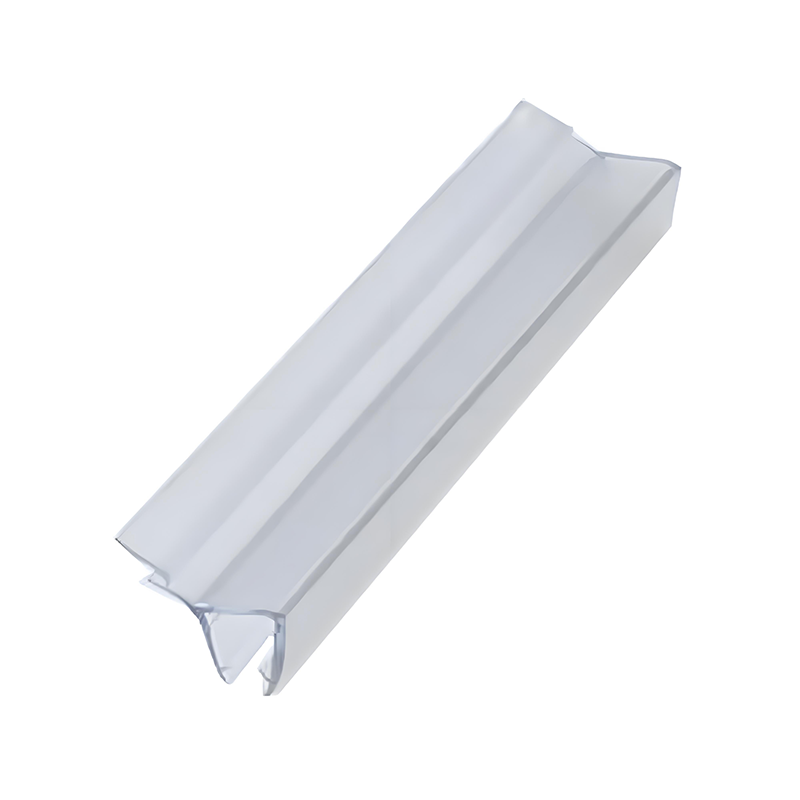
Match the replacement to the enclosure
Before ordering, identify the seal’s location and profile, measure the actual glass edge, record the joint angle and confirm the available clearance. Compare these details with the exact product drawing and intended position. A profile intended for a different glass thickness or joint can fail to seat or meet correctly.
Zimmor’s shower seal specification guide explains the differences between common profile positions and materials. Product pages describe examples in the current range, but confirm the exact SKU and variant before purchasing.
Replacement work depends on the exact profile
Some seals are designed to push onto an accessible glass edge; others or their installation conditions may require a different sequence. Do not assume a seal can be removed or fitted with the door hanging, or that a particular tool, adhesive or cutting method applies to every profile. Follow the manufacturer’s instructions for the selected model.
If the panel is sagging, shifting, cracked, chipped, rubbing another surface or held by loose hardware, stop using the enclosure and contact a qualified glass or shower-door installer. Do not lift or loosen a loaded glass panel as a trial repair.
When the sweep is not the cause
Water can also escape because of door alignment, a mismatched meeting-edge seal, a gap at the jamb, or the way the threshold and drain manage water. If a correctly specified seal does not solve the issue, inspect the full enclosure rather than replacing several profiles at random. The gap-by-gap leak guide and hinge diagnosis guide cover related checks.
Frequently asked questions
Can I replace a shower-door bottom sweep without removing the door?
That depends on the seal profile, access and manufacturer instructions. Some profiles may be serviceable in place; others require the door to be supported or removed. Do not assume a method applies to every door, and use a qualified installer where glass handling is involved.
Why does a new bottom sweep still leak?
The replacement may have the wrong profile or fit, or the escape path may be at a different edge, jamb, hinge-side gap or threshold. Recheck the water path and the enclosure geometry before choosing another part.
Do I need to replace the side seal at the same time?
Not automatically. Inspect the side profile and confirm its condition, fit and connection with the bottom sweep. Replace parts as a compatible set only when the product design or the enclosure assessment calls for it.
How do I choose the correct sweep?
Record the seal position, measured glass thickness, gap, closing angle and profile shape, then compare them with the exact product drawing. Ask the supplier to confirm the SKU and variant before ordering.
Summary
Find where water crosses the enclosure, identify the profile at that location and verify its fit against the measured glass and current product drawing. A leak may involve more than the bottom sweep. Stop use and arrange qualified inspection if glass or supporting hardware is damaged or unstable.