

Short answer: a frameless shower enclosure can leak at the moving-door edge, jamb, hinge-side gap, threshold or another joint. The location where water appears may not be the point where it escaped. Trace the path, record the enclosure layout and inspect the relevant seal, alignment and drainage details before replacing parts.
This guide provides a gap-by-gap checklist for project teams, installers and facilities staff. It does not assume that all leaks are caused by seals or that a hinge adjustment is an appropriate repair.
Where water can cross the enclosure
| Leak zone | Possible items to review | Useful project information |
|---|---|---|
| Meeting edge between door and fixed panel | Seal profile, closed-door angle, alignment and compatibility of magnetic components where specified | Door swing, closed position, joint angle and exact seal model. |
| Wall jamb | Jamb profile, wall condition, panel position and contact line | Wall-to-glass geometry and the installed panel dimensions. |
| Hinge-side gap | Hinge arrangement, glass position, clearances and any seal intended for that edge | Hinge model, glass preparation and approved enclosure drawing. |
| Threshold or below the door | Bottom sweep, door-to-threshold clearance, threshold layout and drainage | Measured gap, floor/threshold detail and where water reaches the floor. |
| Outside the enclosure without a clear edge path | Water source, spray direction, adjoining construction and the route to the drain | Observed water path and project/site conditions. |
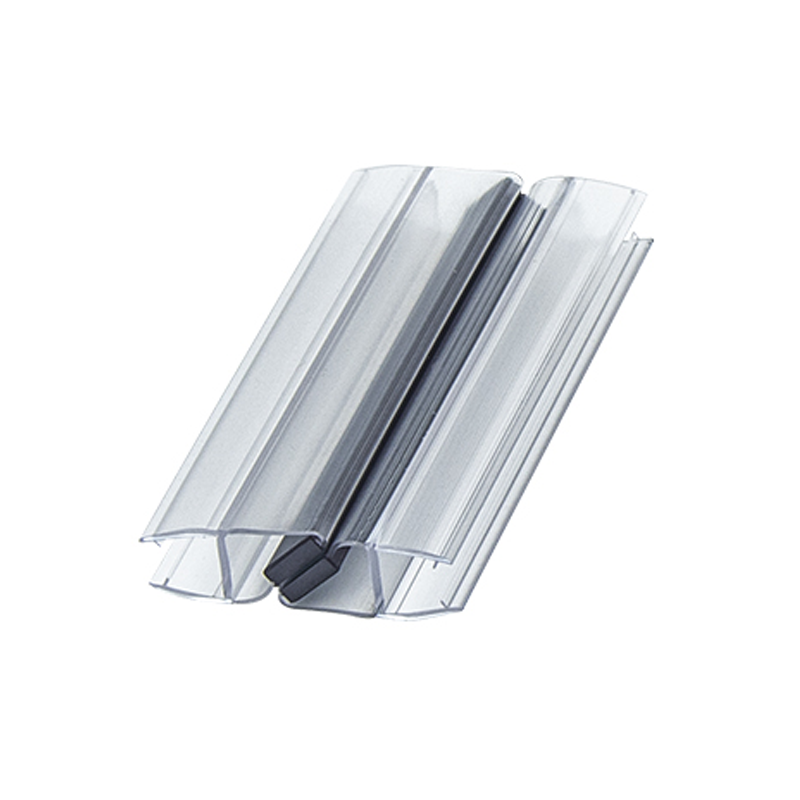
Trace the leak before selecting a part
Dry the area and observe where water first crosses the enclosure during normal operation. Record where it appears, but also inspect the edges above and beside that point because water can travel along a profile or surface. If the source remains unclear, ask an installer to investigate rather than replacing seals at random.
Compare the existing seal with the enclosure drawing and the exact product profile. A product that looks similar may have a different glass fit, angle or intended position. See the seal specification guide for the measurements to provide.
Check door geometry and hardware as a system
A change in panel position can change a gap, but a leak alone does not prove that the door has sagged or that a hinge needs adjustment. Check for visible movement, glass contact, loose hardware or damage. Do not loosen fittings on a loaded panel; refer adjustment and repair to a qualified installer and the exact product instructions. The hinge diagnosis guide explains what information to gather.
Include threshold and drainage details
Water management depends on the full bathroom layout, including the threshold, floor surfaces and drain position. Confirm these details against the project design and applicable local requirements. A door seal cannot compensate for an unsuitable threshold or drainage arrangement.
Plan new builds and retrofits differently
For a new enclosure, coordinate the glass schedule, panel layout, hinge and bracket models, seal schedule, mounting details and threshold before fabrication. For a retrofit, identify the existing products and actual dimensions first; do not order a replacement from nominal glass thickness or a photo alone. The glass thickness guide, support-bar guide and installation checklist cover related coordination.
Frequently asked questions
Why does water leak from the bottom of a frameless shower door?
The bottom sweep or its fit may be involved, but water can also travel from a meeting edge, jamb, hinge-side gap or threshold. Locate the path and inspect the full enclosure before choosing a repair.
Will replacing a magnetic seal stop a leak at the meeting edge?
Only if the leak path and enclosure use call for that profile and the selected pair is compatible. Confirm the exact closing geometry, magnetic option and product drawing before ordering.
Which seal material lasts longest?
Service life cannot be inferred from a material label alone. Ask for data and care instructions for the exact profile, cleaning products and site conditions, and compare them with the project requirements.
Can a leaking enclosure be fixed without replacing the door?
Some leaks may be addressed by correcting a compatible seal or installation issue, while others involve the door, threshold or surrounding construction. An installer should diagnose the cause and confirm that the proposed repair matches the enclosure.
Summary
Trace the water path, identify the gap, and compare the seal and hardware with the enclosure drawing. Consider alignment and drainage as well as seals. If the glass is damaged or the panel or fittings move, stop using the enclosure and arrange qualified inspection.