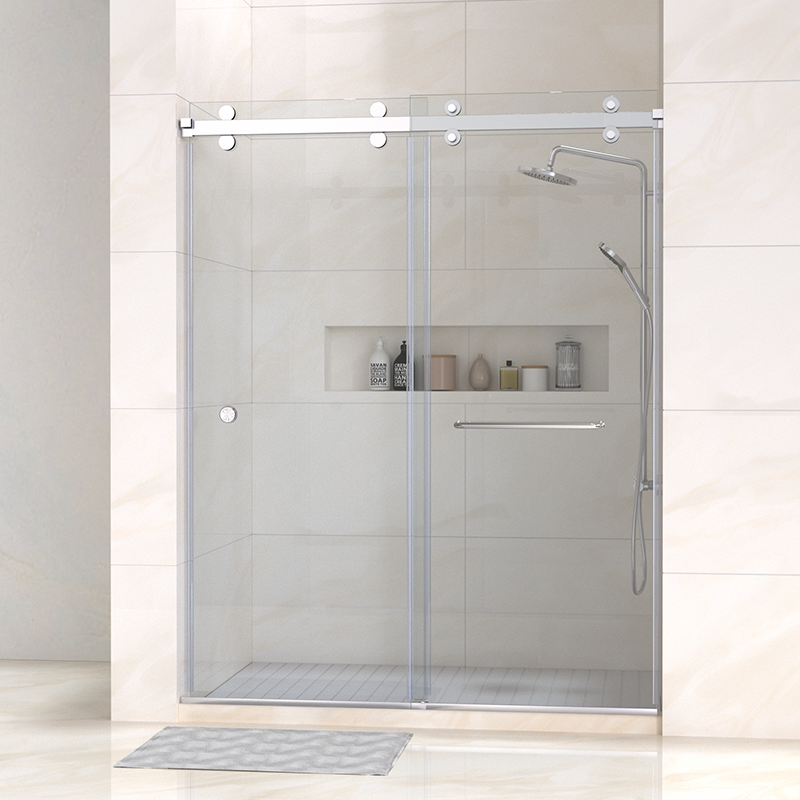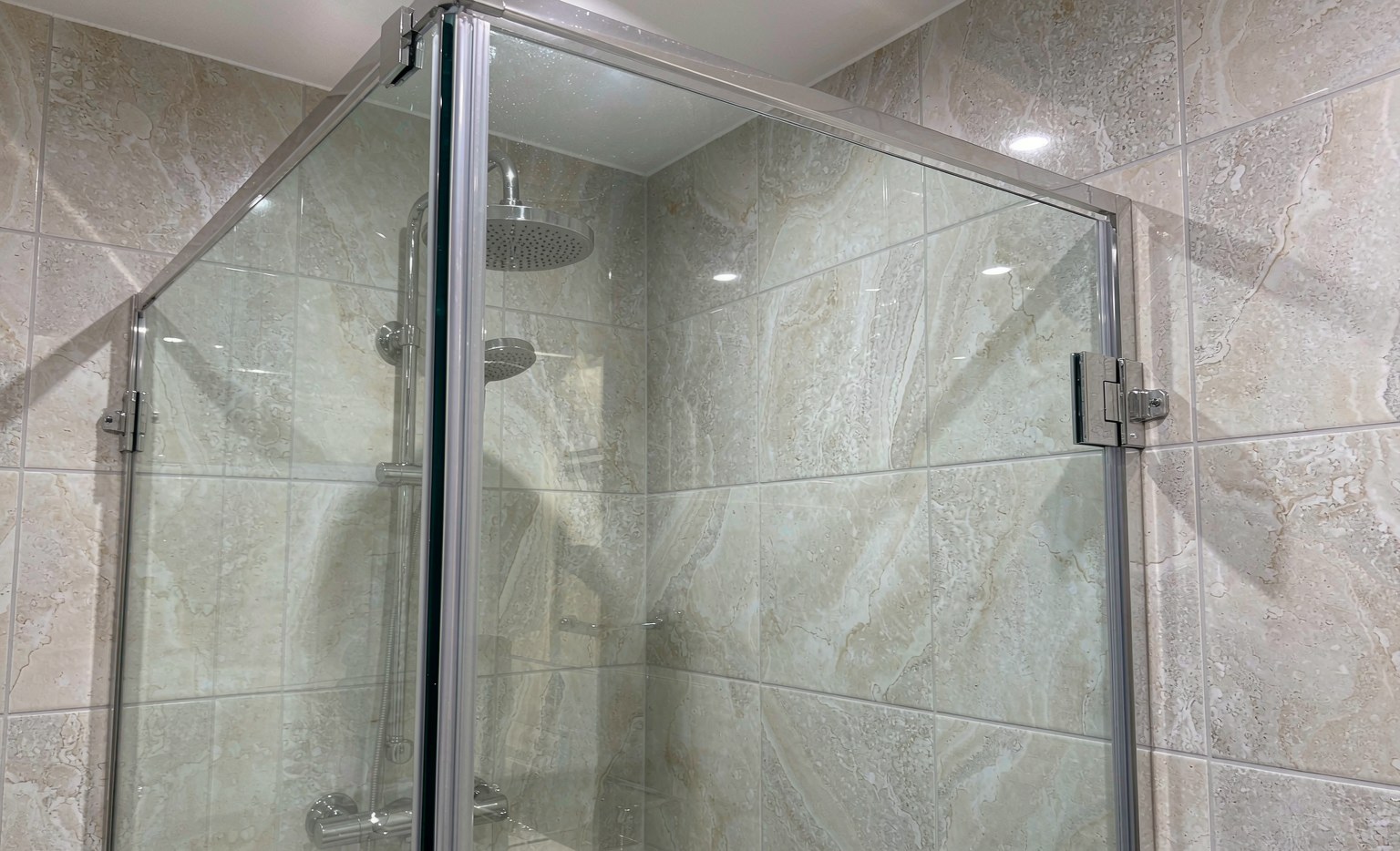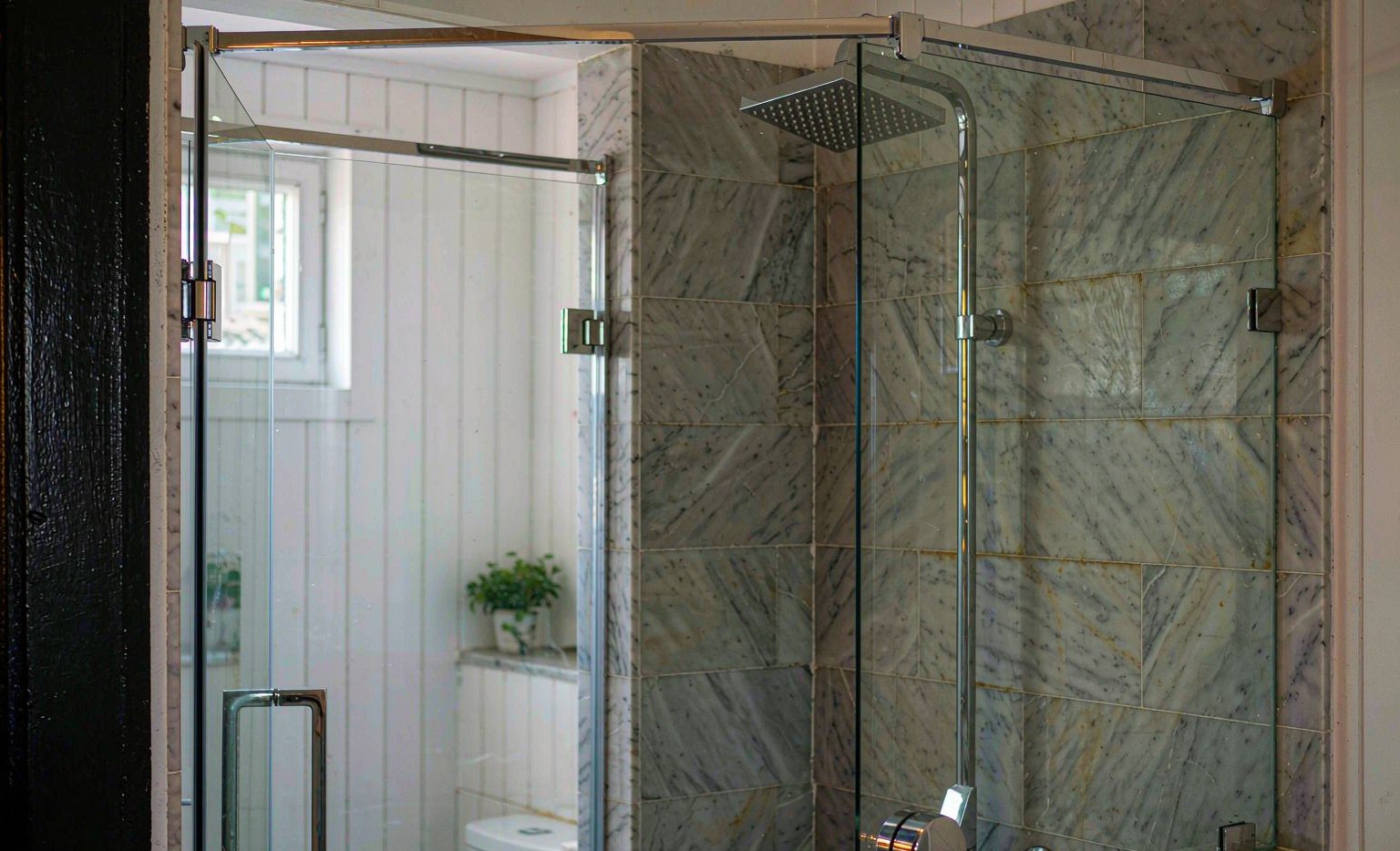

Shower glass brackets are the hardware that holds frameless glass in place, and they are specified far more often than they are chosen deliberately. The difference shows up within a year: brackets matched to glass thickness, wall type and load carry silently for a decade, while mismatched ones loosen, tilt and occasionally let a panel wander. This guide covers the bracket types, how load ratings actually work, and the wall-mounting decisions that decide whether the hardware earns its decade.
The Bracket Family: What Each Type Does
| Bracket type | Where it works | Selection note |
|---|---|---|
| Wall-mount clamp (square/round) | Glass panel fixed to finished wall | Wall construction, not the bracket, decides capacity |
| Glass-to-glass clamp | Panel to panel at 90° or 180° | Notch depth and glass thickness must match |
| Slotted/adjustable clamp | Out-of-plumb walls, retrofit work | Adjustment range absorbs wall reality |
| Support fin / bar bracket | Long panels needing lateral restraint | Pair with support bars for tall glass |
The wall-mount row carries the guide’s most useful warning: a heavy frameless panel anchored into drywall without blocking fails at the wall, not the bracket — and no bracket quality rescues it. Specifying brackets therefore starts with the wall: tile over block, tile over stud with backing, or solid substrate each want different anchors, and the honest supplier states the substrate requirement rather than a universal load figure. The glass-to-glass row is the aesthetic favourite and the tolerance-sensitive one — both panels must be measured after set, not from drawings, because millimetres drift and clamps do not stretch. The hardware around these clamps — hinges, channels, seals — is compared in our frameless shower door hardware guide.
Load Ratings: Reading Them Honestly
Bracket load figures describe the metal, not the installation. A clamp rated for 40 kg assumes its anchor holds, the glass panel is within the thickness window, and the load direction matches the design. Buyers should ask suppliers three questions: what load the bracket carries into the specified substrate, what glass thickness range the clamp accepts, and what the failure mode looks like — a bracket that lets go cleanly is an inconvenience, one that fails the glass is a hazard. Stainless 304 or 316 bodies with solid brass or stainless internals age best in wet environments; zinc-alloy bodies with plated finishes price better and age worse, a trade worth making knowingly. Surface treatment matters too — PVD-coated brackets hold their finish through humid years where standard plating fades.
Wall Mounting: The Steps That Decide Everything
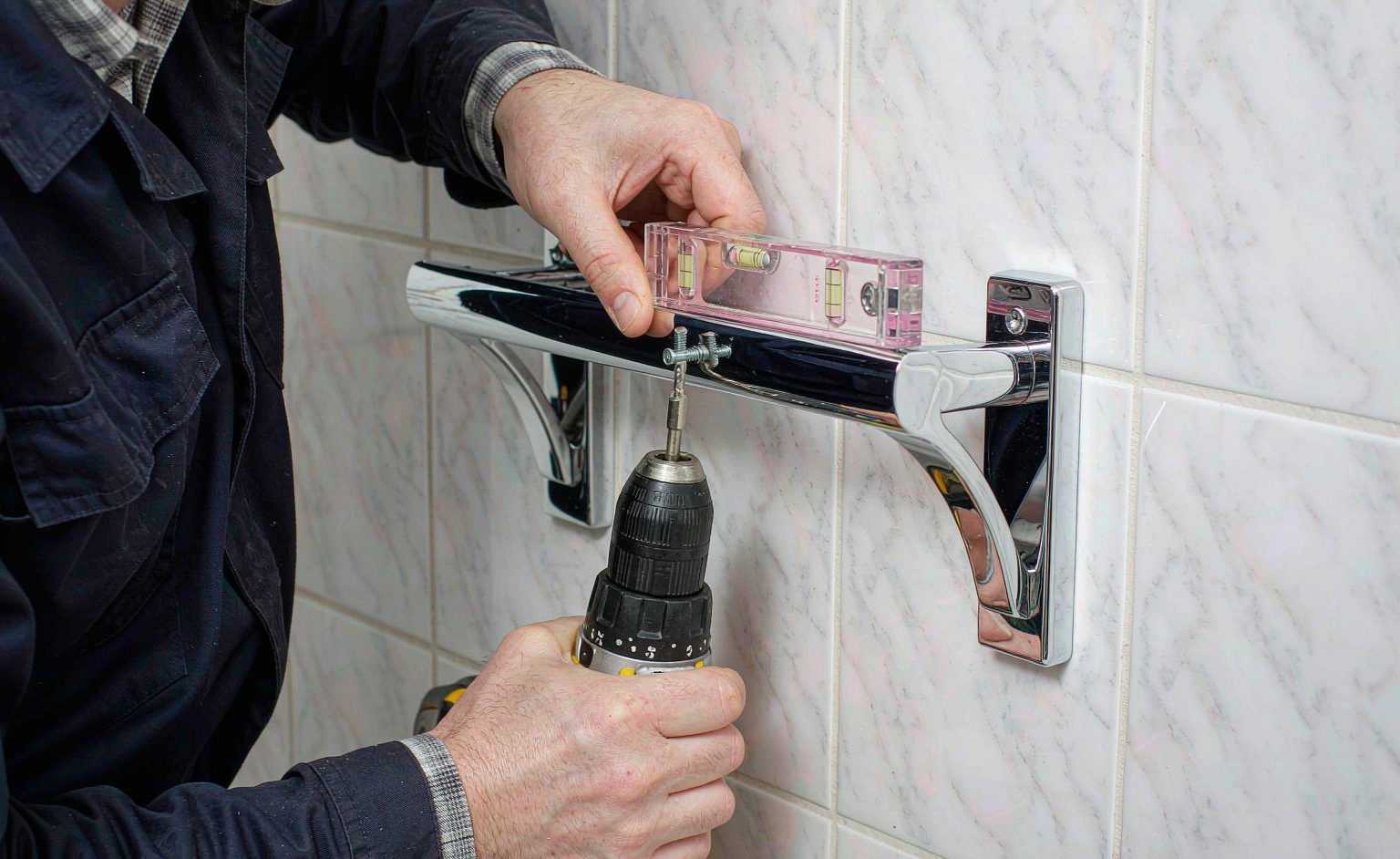
Mounting done well follows a rhythm. Locate the blocking or solid substrate and mark it — never anchor into unknown wall. Drill to the anchor’s specification, not the drill bit’s mood, and verify the anchor seats before any torque. Set the bracket with a level against the glass line, not the wall line, since walls lean and glass should not. Then hang the panel with temporary support, check plumb on both faces, and torque the set screws progressively — clamping glass is about even pressure, not strength. Tall or heavy panels add a final step: pair brackets with support and stabilizer bars so lateral loads travel into the bar, not the clamp’s set screws. Installers who follow this rhythm report fewer callbacks in year one than any other single habit.
Style and Finish: Where Vintage Meets Frameless
Brackets are visible hardware, and their finish carries the bathroom’s design. Vintage and classic designs lean on rounded profile clamps in brushed brass, oil-rubbed bronze or polished nickel — finishes that read deliberate next to period fixtures. Modern frameless designs use low-profile square clamps in matte black or brushed stainless. The finish decision should match the room’s other hardware at purchase time, because brackets age slowly and matched sets from one supplier age together. Buyers mixing suppliers should compare finishes under bathroom light, not showroom spotlights — the difference between brushed and satin, brass and champagne, is invisible in a catalogue and obvious at home.
Frequently Asked Questions
How many brackets does a fixed glass panel need? Two for panels under roughly a metre tall mounted to solid substrate; taller or heavier panels add a third bracket or a support bar. The panel’s weight and the wall’s quality decide, not a fixed rule.
Can brackets fix glass to tile directly? Through tile into blocking or masonry, yes. Into tile alone, no — the tile carries nothing; the substrate behind it carries everything.
Which finish lasts longest in a shower? PVD over stainless or brass leads; quality electroplated 304 follows; plated zinc trades years for price and should be a knowing choice.
For the full bracket family overview — clamp types and selection flow — pair this guide with our shower glass bracket types and selection guide.
Technical background: tempered glass behaviour and anchor fastening principles explain the load and fixing concepts referenced above.