

Short answer: evaluate a soft-close shower-hardware test by the exact model, complete door setup, method, operating conditions and acceptance criteria. A cycle count without those details does not establish how long a different hinge or installation will last.
Use this guide to prepare a supplier test request or review a report before approving a product. Soft-close designs vary; ask the supplier to identify the tested mechanism and model rather than assuming a universal internal design.
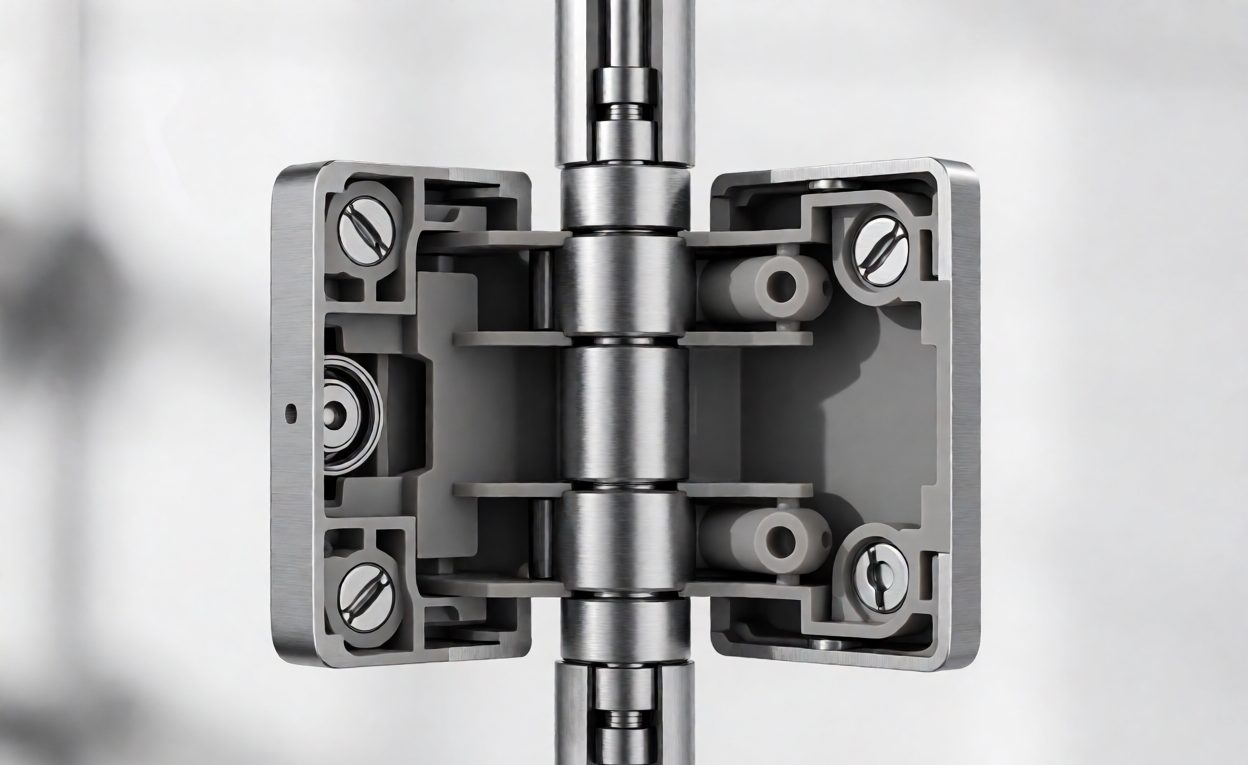
Define the product and test configuration
Record the hinge model and revision, number and position of hinges, glass type and thickness, finished panel dimensions and weight, mounting arrangement, opening direction and installation clearances. If the project will use a different configuration, ask whether the report covers that arrangement or what additional validation is needed.
Agree the test method before testing begins
| Test-plan item | What the protocol should identify |
|---|---|
| Sample | Model, revision, quantity, production status and any sample preparation. |
| Assembly | Door mass and dimensions, glass, mounting, hinge count, alignment and installation instructions used. |
| Operation | What counts as a cycle, opening and closing path, speed or user action, and any dwell or adjustment. |
| Environment | Temperature, moisture, cleaning exposure or other conditions included in the project test. |
| Inspection | Measurement intervals, observations, adjustments or repair permitted during the test, and how deviations are recorded. |
| Acceptance | Required closing behavior, operation, leakage or other measured outcomes and the criteria for pass, failure or retest. |

Read the report within its scope
Check that the report identifies the tested model and setup, the test procedure and revision, equipment or laboratory, actual results, deviations and acceptance criteria. Distinguish a complete hinge-and-door test from a component-only test. If a report omits the configuration or criteria, ask the supplier what the result can and cannot support.
Potential observations may include a change in closing behavior, incomplete closure, inconsistent movement, leakage or visible damage. Define in advance which outcomes matter to the project and how they will be measured; do not treat a cycle count alone as a guarantee against field failure.

Do not convert cycles directly to years of service
A laboratory cycle count is tied to its test conditions and operating profile. It does not automatically account for a different door weight, installation, cleaning practice, temperature, maintenance plan or user behavior. If a service-life estimate is needed, agree on the assumptions and use product-specific field and warranty data in addition to the test report.
Put the acceptance plan in the purchase specification
For a qualification test, identify the sample, procedure, inspection intervals, functional criteria, failure definition, reporting format and disposition of failed samples. For production orders, separately define incoming or lot inspection and how changes to the hinge or process will be approved.
See Zimmor’s soft-close hinge specification guide and shower hardware specification guide for related model-selection checks.
Frequently asked questions
How many cycles should a soft-close shower hinge survive?
Set the target for the project and identify the test setup and acceptance criteria. A cycle count without the model, door configuration, method and pass/fail definition cannot be compared reliably with another test.
Should cycle testing use the actual door size?
The test should represent the intended model and relevant project configuration. State the panel dimensions, weight, glass, hinge arrangement and mounting in the protocol; ask the supplier to explain any difference from the project.
Can a soft-close damper be replaced on site?
That depends on the exact model and its service instructions. Confirm whether a replacement part is approved, who may install it and whether the hinge or glass must be supported during service.
How often should durability be retested?
Set retesting triggers through the project’s quality plan, such as a material, design, process or supplier change, or a defined review of field performance. There is no universal interval for every product and supply arrangement.
Summary
Request a report for the exact soft-close model and door configuration, with the test method, operating conditions, inspections and acceptance criteria stated. Keep cycle results within their test scope and define the project’s approval plan before production.