

Commercial shower hardware is specified under three pressures at once: accessibility codes, corrosion from continuous moisture, and abuse from high-traffic use. A residential hinge that is fine at home fails in a hotel within a year. This guide covers the ADA-relevant dimensions that actually show up in inspections, the grab-bar and hinge specs that survive commercial use, material selection, and how to procure hardware that passes first time rather than on the second audit.
Key Takeaways
- Commercial hardware must satisfy accessibility dimensions, corrosion resistance and high-traffic durability together.
- ADA-relevant numbers (grab-bar height/reach, clearance) are what inspectors check — spec to them, not to taste.
- Stainless (316 in wet/coastal) outperforms brass for longevity in continuous moisture.
- Grab bars must be structural, not decorative — blocking and fastening decide compliance.
- Procure as a system: hinge, bracket, bar and seal specified together to avoid on-site mismatches.
Accessibility Dimensions That Get Inspected
The dimensions that surface in an accessibility audit are concrete: grab-bar height and reach, transfer clearances, and the approach space at the shower. Specifying to these numbers — not to what “looks right” — is what separates a passed inspection from a punch-list item. The full hardware scope is in our complete specification guide. Note accessibility rules vary by jurisdiction; confirm the local edition before committing a SKU.
| Element | What inspectors check | Spec implication |
|---|---|---|
| Grab bars | Height, continuity, structural fixing | Blocking behind substrate required |
| Clearance | Transfer and approach space | Layout fixed before hardware order |
| Hinge operation | Usable without fine grip | Smooth pivot, low effort |
| Slip resistance | Floor and threshold | Coordinates with hardware spec |
Material: Stainless vs Brass in Wet Environments
Continuous moisture is the enemy of decorative finishes. In commercial wet rooms, 316 stainless resists corrosion far better than brass, which tarnishes unless heavily coated. For coastal or pool-adjacent facilities, 316 is effectively mandatory. The finish decision is explored in our frameless hardware guide and the supplier landscape in our manufacturer overview.
Grab Bars Must Be Structural
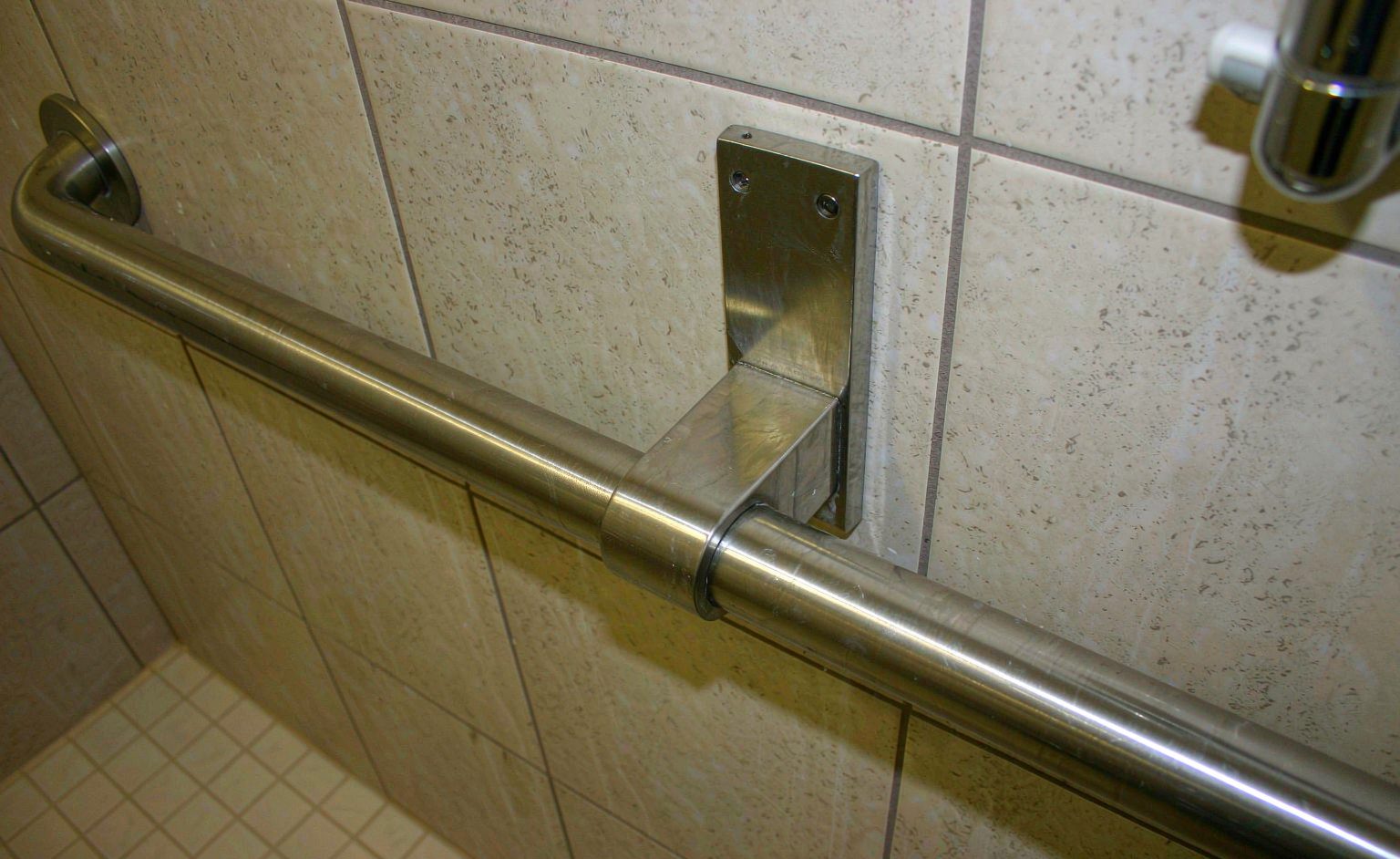
The most common commercial failure is a “grab bar” that is decorative — fixed to tile with no blocking behind it. Accessibility compliance requires the bar to resist a defined load, which means blocking in the wall and through-fixing into structure. The bracket that connects glass to wall carries the same logic: our bracket guide covers the load paths that keep glass safely retained under use.
Procuring as a System
Commercial projects fail on mismatches: a hinge ordered without the matching bracket, a bar whose centres do not match the blocking. Specify hinge, bracket, bar and seal together as one hardware package, confirm finishing and load ratings against the local code edition, and audit the supplier’s documentation. A system order passes first time; piecemeal orders generate punch lists.
Frequently Asked Questions
What ADA numbers actually get checked?
Grab-bar height and reach, transfer/approach clearances and hinge operability — concrete dimensions, not aesthetics.
Is brass acceptable in commercial wet rooms?
It tarnishes in continuous moisture; stainless (316 in coastal/pool sites) is the durable choice.
Why do decorative grab bars fail inspection?
They are not structurally fixed — compliance needs blocking and through-fixing into structure to resist the load.
Should I order hardware piecemeal?
No. Specify hinge, bracket, bar and seal as one system to avoid on-site mismatches and punch-list rework.
Do accessibility rules vary?
Yes by jurisdiction; confirm the local code edition before committing a SKU.
What is the biggest commercial durability risk?
Corrosion of decorative finishes and loose fixings from high-traffic use; both are avoided by material and fixing specification.
Technical background: building codes, stainless steel and glass cover the relevant standards and materials.